
Hydraulic Massage Bed Selection Guide for Spa Treatment Rooms
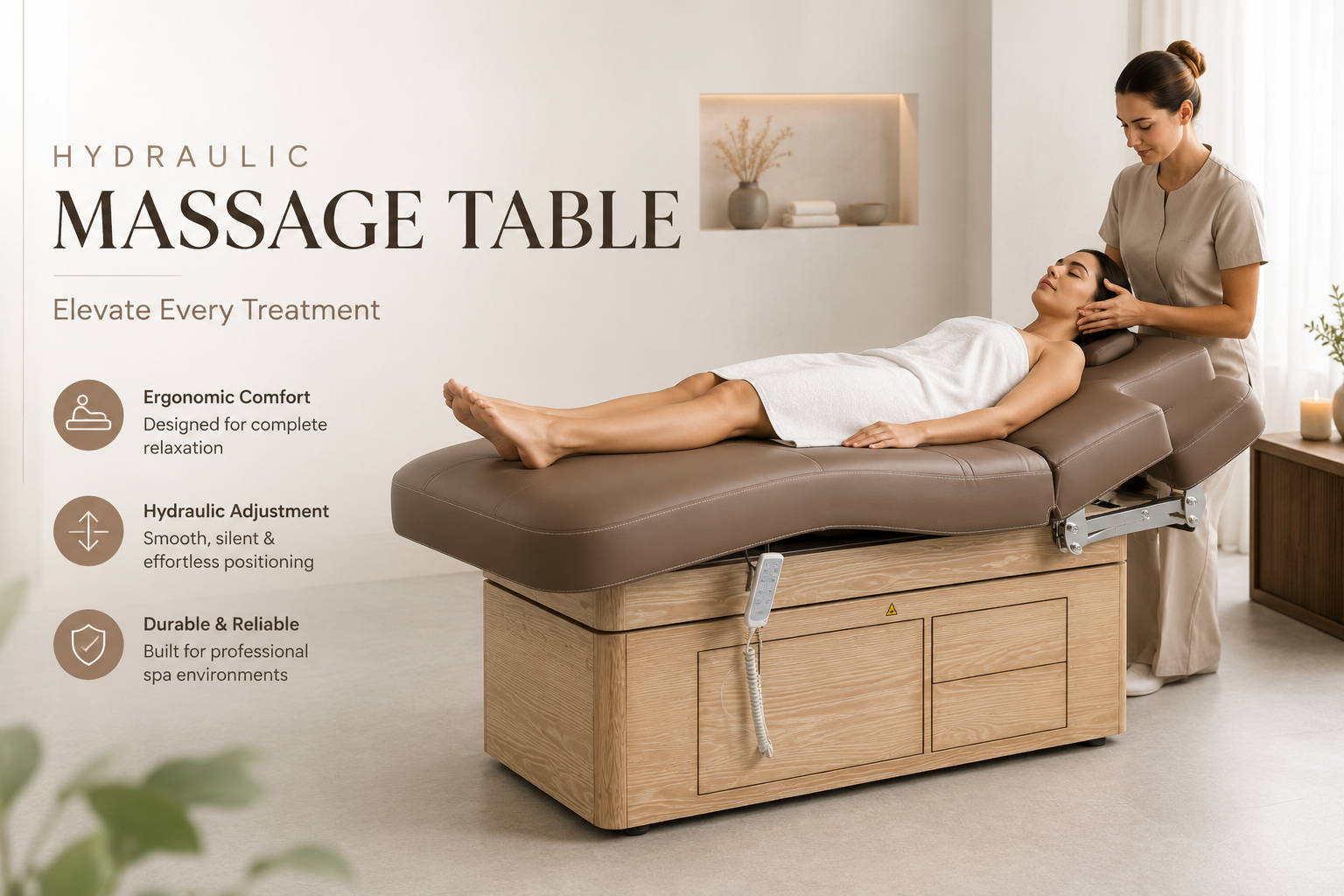
Choosing treatment furniture is about more than how a spa room looks. The bed affects therapist posture, client positioning, cleaning routines and how efficiently the room can be used. A hydraulic massage bed can be a practical option for treatment rooms where adjustable height matters but powered movement across multiple sections isn’t essential.
For spas, salons, and wellness centres, the decision also needs to consider room size, treatment types, and daily use. Comparing the bed’s actual functions with the services offered can help avoid paying for features that may rarely be used.
When Hydraulic Height Adjustment Makes Sense
A hydraulic system typically uses a foot-operated or lever-operated pump to raise and lower the treatment surface. The therapist can adjust the working height without relying on an electrical motor.
This can be useful when the main requirement is changing the height rather than repeatedly changing the backrest, legrest and seat angle. Some professional hydraulic treatment tables use a hydraulic pump for height adjustment while keeping other sections manually adjustable. The important question is therefore not whether hydraulic adjustment is newer or more advanced. It is whether the adjustment it provides matches the treatment workflow.
Hydraulic vs Motorised Beds
Both systems can support professional treatments, but they approach adjustment differently.
| Factor | Hydraulic Massage Bed | Motorised Treatment Bed |
| Height adjustment | Pump-operated | Electric motor |
| Power requirement | Usually no electrical power for height | Requires electrical connection |
| Adjustment during treatment | Generally manual pumping | Can be controlled electronically |
| Maintenance | Hydraulic mechanism requires servicing | Motors and electrical components require servicing |
| Treatment flexibility | Depends on manual sections and model | Often offers several powered positions |
| Suitable for | Treatments needing height adjustment | Multi-position treatments requiring frequent changes |
A hydraulic model can therefore make sense when height adjustment is the primary requirement. A multi-motor electric bed becomes more relevant when therapists frequently need to alter several sections while the client remains on the bed.
Therapist Positioning Should Drive the Decision
One of the most practical reasons to adjust treatment-bed height is to create a workable position for the therapist. A bed that is too low can require more forward bending, while a surface that is too high can make reaching difficult.
Research on massage therapy ergonomics has identified awkward postures, repetitive movements and prolonged static positions among occupational concerns for massage therapists. Adjusting the work environment is one approach used to reduce physical strain.
A hydraulic massage bed allows the height to be changed according to the therapist and treatment. This becomes particularly useful in rooms where practitioners of different heights share the same equipment.
Three Things to Check Before Installation
The bed should be assessed as part of the entire treatment room rather than as an isolated piece of furniture.
- Measure the working footprint: Check the bed’s length and width along with the space needed for the therapist to move around it.
- Check the adjustment range: A bed that only offers a limited height range may not suit every practitioner or treatment.
- Plan equipment access: Towels, carts, stools and treatment equipment should remain accessible without restricting movement around the bed.
Think About Manual Adjustments Too
Hydraulic height adjustment does not mean every other movement has to be fixed. Some treatment beds combine hydraulic height adjustment with manual backrest or legrest positioning.
This can create a useful middle ground for treatments where the therapist needs occasional changes but does not need powered adjustment of every section.
For example, a massage may require a relatively flat surface while a facial treatment may need the upper section raised. If those positions can be achieved manually without disrupting the treatment, additional powered functions may not provide much practical value.
Where a Pedicure Station Changes the Room Plan
A spa that offers both massage and foot treatments needs to think about how different treatment stations interact. When looking at a pedicure chair for sale, the chair’s footprint should be compared with the space required around the massage bed.
Pedicure stations can require water supply and drainage depending on their configuration. A plumbed chair connects to the building’s water and drainage system, while other configurations may use separate or non-plumbed basins.
This makes plumbing access an important part of room planning. Installing a chair without considering drainage routes can create problems later, particularly in an existing salon where major plumbing changes may be difficult.
Four Questions to Ask Before Buying
A practical comparison becomes easier when the decision is based on actual usage:
- How often will the height change? Frequent adjustment makes a reliable hydraulic mechanism particularly useful.
- Do treatments need multiple positions? If therapists regularly alter the backrest and legrest, a multi-position electric model may be more suitable.
- Who will use the bed? Different therapist heights can make a wider height range more valuable.
- How much room is available? Leave sufficient clearance for therapists, clients and supporting equipment.
The same approach applies when comparing a pedicure chair for sale. Consider the station’s dimensions, plumbing requirements, basin configuration and access for cleaning before looking at its appearance or additional features.
Conclusion
Choose a hydraulic massage bed when dependable height adjustment is the main requirement and most other positioning changes can be handled manually. If treatments demand frequent multi-section adjustments, consider a motorised alternative. For UAE treatment rooms, the final decision should also account for space, cleaning, therapist ergonomics and the wider station layout.