Solar Battery Storage Solutions and Commercial Solar Panel Installation in Melbourne | Alltrics Energy

1. Introduction to Solar Energy Solutions in Melbourne
Businesses and property owners across Melbourne are increasingly exploring renewable energy to manage electricity expenses, improve energy efficiency, and reduce their environmental impact. Solar power offers a practical way to generate electricity on-site, while battery storage can help make that energy available when solar panels are not producing enough power.
Alltrics Energy provides solar energy solutions across Melbourne, including solar panel installation, battery storage systems, and commercial solar installations. The company focuses on helping homes and businesses select systems suited to their energy requirements, property characteristics, and long-term objectives.
Choosing the right system involves more than installing panels on a roof. Energy consumption, available roof space, equipment quality, installation requirements, and future electricity needs all influence the design. For commercial properties, understanding when electricity is consumed is particularly important because it affects how much generated solar power can be used directly.
With suitable system planning, solar battery storage solutions in Melbourne can help businesses make better use of renewable electricity and reduce their dependence on grid power.
2. Understanding Solar Battery Storage Solutions in Melbourne
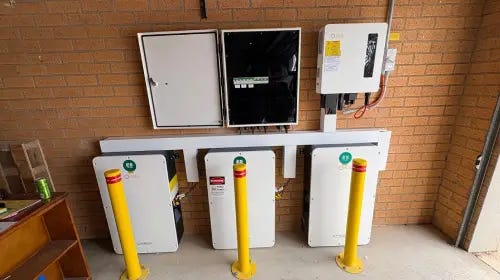
Solar panels generate electricity from sunlight and convert it into usable power through an inverter. When a property produces more solar electricity than it immediately needs, the excess may be exported to the grid or stored in a compatible battery system.
A solar battery stores energy for later use, such as during the evening or periods when solar generation is low. Depending on the system design, it may also provide backup power to selected circuits during an outage. Backup operation is not automatic for every installation and depends on compatible equipment and configuration.
Alltrics Energy offers battery storage options alongside solar installations, helping customers explore solutions that match their electricity usage and property requirements.
The main benefits of solar battery storage include:
- Greater use of solar electricity: Store surplus daytime generation for use later.
- Reduced grid electricity purchases: Use stored energy instead of buying as much electricity from the grid.
- Support for evening energy needs: Supply compatible household or business loads after sunset.
- Potential peak-demand management: In suitable commercial applications, batteries may help reduce electricity demand during expensive peak periods.
- Energy resilience: Appropriately configured systems may provide backup for selected loads during outages.
The financial value of a battery depends on its upfront cost, usable capacity, electricity tariffs, solar generation, usage patterns, and warranty conditions. A professional assessment helps determine whether battery storage is likely to provide worthwhile benefits for a particular property.
3. Commercial Solar Panel Installation in Melbourne
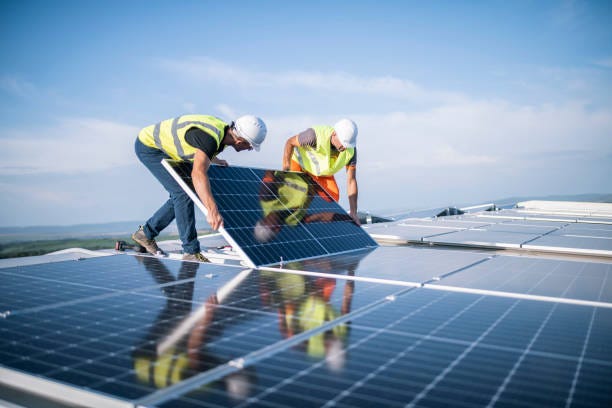
Commercial solar panel installation in Melbourne gives businesses the opportunity to generate renewable electricity at their premises. Offices, warehouses, factories, retail outlets, hospitality venues, and other commercial facilities may have suitable roof areas for solar photovoltaic systems.
Electricity is a major operating expense for many businesses. Installing a correctly sized solar system can reduce the amount of electricity purchased from the grid, particularly when the business uses significant power during daylight hours.
Alltrics Energy provides commercial solar solutions and promotes system planning based on business requirements, with a focus on energy savings and long-term performance.
Commercial solar installations can support several business objectives:
- Reduce daytime electricity costs by using solar generation on-site.
- Improve control over long-term energy expenditure.
- Reduce reliance on conventional grid electricity.
- Support corporate sustainability initiatives.
- Prepare for future electricity needs, including equipment upgrades and electric vehicle charging.
However, the ideal system varies from one property to another. A warehouse operating mainly during the day may use a large proportion of its solar generation directly, while a business with substantial evening operations may need to evaluate battery storage or other energy-management options.
Before installation, businesses should assess electricity bills, interval consumption data, roof condition, structural suitability, shading, switchboard capacity, and any network connection requirements. These factors help establish a realistic system size and financial forecast.
4. How Businesses Benefit from Commercial Solar Energy
Commercial solar can offer operational and financial advantages when the system is designed around actual electricity demand. Instead of relying entirely on electricity purchased from the grid, businesses can use solar generation to power lighting, computers, refrigeration, machinery, air conditioning, and other equipment during operating hours.
The greatest benefit often comes when solar generation aligns with the property’s electricity consumption. Businesses that operate during daylight hours may be able to use a substantial portion of their generated electricity directly, although actual results depend on the site’s load profile and solar production.
For example, a Melbourne warehouse with daytime machinery and lighting requirements may use solar power throughout its working hours. A retail business could use solar generation to support lighting, cooling, point-of-sale systems, and other equipment. A hospitality venue may benefit from solar electricity for refrigeration and food preparation equipment.
Commercial solar can also support environmental objectives by reducing the amount of grid electricity a business consumes. The actual emissions reduction depends on system performance and the electricity displaced.
To assess the potential return, businesses should consider:
- Current electricity costs and tariff structure.
- Electricity consumption during daylight hours.
- Available and suitable roof area.
- Installation costs and expected maintenance.
- Export tariffs for surplus electricity.
- Potential incentives and applicable eligibility conditions.
- Changes expected in future energy consumption.
The Australian Government’s business solar guidance also identifies system size, hardware quality, installation complexity, and electricity usage as important factors affecting costs and potential savings.
5. Choosing the Right Solar Battery for Your Property
Selecting a battery requires careful consideration of how much energy the property uses and when it needs that energy. A larger battery is not automatically the best choice. The objective is to choose a suitable balance between storage capacity, power output, cost, and expected usage.
For homes and businesses, a battery assessment should consider the following factors.
Usable capacity: Measured in kilowatt-hours (kWh), capacity indicates how much energy the battery can store and make available for use. The required capacity depends on the loads that need to operate when solar generation is insufficient.
Power output: Measured in kilowatts (kW), power output determines how much equipment a battery can support at one time. A battery with adequate capacity may still be unsuitable for high-power equipment if its output rating is too low.
System compatibility: The battery must work with the solar inverter and other electrical components. When adding storage to an existing solar system, the installer should assess whether the current equipment can support the proposed configuration.
Warranty and product support: Customers should review warranty duration, capacity-retention terms, cycle or throughput limits, and the availability of local technical support.
Backup requirements: If backup electricity is important, the system design must specify which circuits can operate during an outage and for how long under expected loads.
Alltrics Energy lists battery storage options, including Tesla Powerwall and AlphaESS systems, among its available solutions. Product selection should be based on site requirements, compatibility, availability, and the manufacturer’s current specifications.
6. Solar System Design and Installation Process
A well-planned installation begins with an assessment rather than a standard package that assumes every property has identical needs. Alltrics Energy provides end-to-end solar services, including support with relevant connection approval processes where required.
A typical project involves several stages:
- Initial consultation: Discuss energy goals, electricity costs, property type, budget, and future requirements.
- Energy assessment: Review electricity bills and usage patterns to understand demand.
- Site inspection: Evaluate roof space, shading, access, electrical infrastructure, and installation constraints.
- System design: Select suitable panels, inverters, battery capacity, and system configuration.
- Quotation and approvals: Explain the proposed equipment, costs, applicable incentives, and any required network approvals.
- Professional installation: Install the equipment using appropriately qualified and accredited professionals.
- Testing and commissioning: Verify system operation and complete the required documentation.
- Monitoring and support: Explain how to monitor generation, battery operation, and energy consumption.
Commercial projects may require additional planning for structural assessments, workplace safety, access arrangements, and the continuity of business operations during installation.
In Victoria, solar and battery work must follow applicable electrical safety requirements and relevant Australian standards. Battery systems require particular care because incorrect installation can create electrical and other safety hazards.
7. Government Incentives and Solar Rebates
Government incentives may reduce the upfront cost of eligible solar or battery installations. However, eligibility depends on the type and size of the system, the property, the installer, the equipment, and the rules applying at the time of installation.
Victoria’s Energy Upgrades program includes a commercial and industrial solar PV discount for qualifying systems in the specified 30 kW to 200 kW range, subject to program requirements and accredited-provider conditions.
Eligible smaller systems and battery installations may also fall under relevant Commonwealth schemes, but businesses should not assume that every installation qualifies for the same incentive. Requirements can change, and some programs have limits on system size, battery capacity, installer accreditation, and approved products.
Alltrics Energy states that it assists customers with applicable government rebate processes and relevant installation arrangements.
showing the full system cost, any incentive applied, eligibility assumptions, installation inclusions, and the amount payable. Confirming the current rules before signing a contract helps avoid unexpected costs.
8. Maintaining Solar Panels and Battery Storage Systems
Solar systems are designed for long-term operation, but regular monitoring and appropriate maintenance help identify performance problems before they become more significant.
Solar panels can accumulate dust, leaves, and other debris. Inverters may display faults, while batteries and monitoring systems can generate alerts if a component is not operating as expected. Commercial properties should establish a maintenance approach that reflects system size, site conditions, and manufacturer recommendations.
Useful maintenance practices include:
- Review system monitoring data for unexpected drops in generation.
- Keep panels clear of avoidable shading where practical.
- Arrange professional inspections when faults or damage are suspected.
- Check inverter alerts and follow manufacturer guidance.
- Maintain installation records, warranties, and electrical documentation.
- Use qualified professionals for electrical repairs and battery servicing.
Owners should not open electrical equipment or attempt battery repairs themselves. Energy Safe Victoria provides guidance for safe solar and battery installations, including requirements relating to electrical work and stored-energy hazards.
A well-maintained system can help businesses understand energy performance and make informed decisions about future capacity or equipment upgrades.
9. Why Choose Alltrics Energy in Melbourne?
Choosing a solar provider involves evaluating more than the initial price. Customers should look for a company that understands their energy requirements, explains equipment options clearly, and provides appropriate installation and after-sales support.
Alltrics Energy offers residential and commercial solar solutions, battery storage, and energy-efficiency services across Melbourne and surrounding areas. Its approach includes helping customers understand system options and relevant connection requirements.
Businesses considering commercial solar panel installation in Melbourne can benefit from discussing their electricity consumption, available roof space, operating schedule, and future energy plans before selecting a system.
A suitable provider should explain:
- The recommended system size and why it suits the property.
- The expected solar generation and assumptions behind savings estimates.
- Equipment specifications, warranties, and compatibility.
- Installation requirements and any necessary approvals.
- Available incentives and their eligibility conditions.
- Monitoring arrangements and ongoing support.
Clear communication helps customers compare proposals and make informed decisions based on long-term value rather than headline prices alone.
10. Conclusion
Solar battery storage solutions in Melbourne offer homes and businesses an opportunity to make better use of renewable electricity, while commercial solar panel installation can help businesses reduce grid electricity purchases and support sustainability objectives.
The right solution depends on energy consumption, solar generation potential, roof suitability, system costs, battery requirements, and future operating needs. Careful planning and compliant installation are essential for achieving reliable performance.
Alltrics Energy provides solar panels, battery storage, and commercial solar solutions designed around customer requirements. By assessing energy usage and choosing suitable equipment, Melbourne property owners and businesses can take practical steps toward more efficient energy management and a cleaner energy future. For more visit us!