Wholesale Sportswear: How to Choose the Right Supplier for Your Business
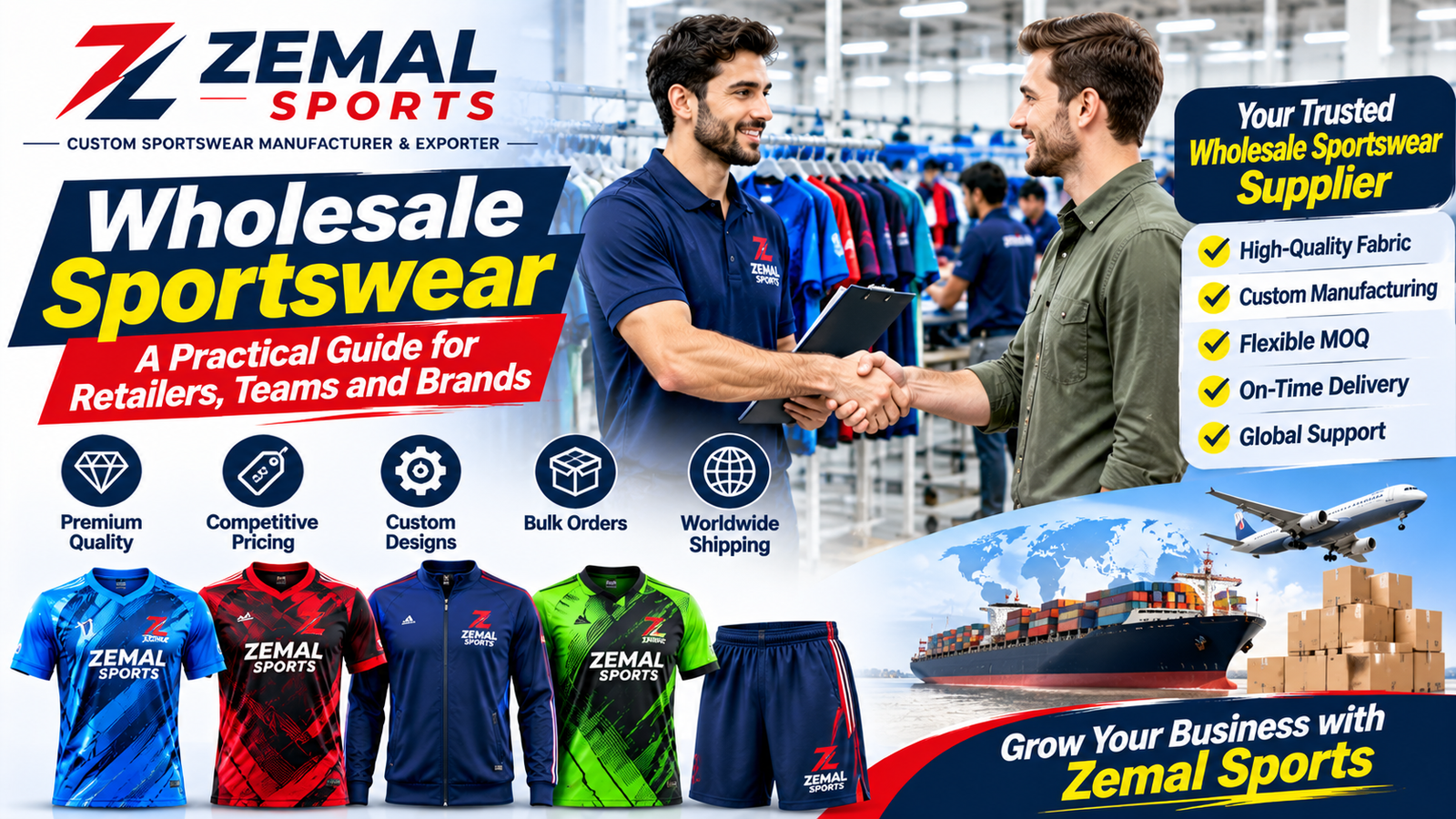
Wholesale Sportswear – A Practical Guide for Retailers, Teams and Clothing Brands
Introduction
The demand for sportswear continues to create opportunities for retailers, sports clubs, clothing brands and distributors. Customers look for garments that combine comfort, practical design and attractive appearance. Businesses that offer suitable products can serve a wide range of markets, from professional sports teams to fitness enthusiasts.
Wholesale sportswear provides an effective way to purchase garments in larger quantities. Instead of sourcing individual pieces from different retailers, buyers can work directly with manufacturers or wholesale suppliers to organise bulk orders.
However, finding the right supplier requires careful research. Product quality, pricing, minimum order quantities, customisation options and delivery arrangements can all affect a business’s results.
1. Understanding Wholesale Sportswear
Wholesale sportswear refers to athletic clothing purchased in larger quantities, usually at prices structured for business buyers.
Common wholesale products include:
- Football jerseys and shorts
- Basketball uniforms
- Training shirts
- Tracksuits
- Gym wear
- Running apparel
- Yoga clothing
- Team uniforms
- Casual sportswear
Some suppliers offer ready-made products, while manufacturers may provide custom designs and private-label production.
The right sourcing model depends on the buyer’s business. A sports retailer may prefer standard products, while a clothing brand may need garments produced with its own labels and artwork.
2. Identify Your Target Market
Before contacting suppliers, determine who will purchase your products.
Different customers have different expectations. Sports clubs may prioritise team colours, numbers and durable construction. Fitness customers may prefer flexible garments and comfortable fabrics. Retail customers may focus more on appearance, price and available styles.
Consider these questions:
- Which products will you sell?
- Who is your target customer?
- What price range suits your market?
- Will you sell online or through physical stores?
- Do you need custom branding?
- What quantities are realistic for your first order?
A clear market plan helps prevent unnecessary inventory and makes supplier selection easier.
3. Compare Product Quality
Low prices are not useful if the garments fail to meet customer expectations. Quality should be assessed before placing a large wholesale order.
Important factors include:
Fabric: Check weight, softness, breathability and suitability for the intended activity.
Stitching: Examine seams, hems and stress points for consistent construction.
Printing: Review the clarity, placement and finish of graphics.
Sizing: Compare measurements against the supplier’s size chart.
Finishing: Inspect collars, cuffs, labels and other garment details.
Where possible, request samples before approving bulk production.
4. Choose Suitable Sportswear Fabrics
Different activities require different fabric characteristics.
Polyester is widely used in football jerseys and training garments because it is lightweight and suitable for many printing methods.
Stretch fabrics may be appropriate for fitted gym clothing, leggings and other garments that require flexibility. Cotton blends can be useful for casual sportswear where a softer everyday feel is preferred.
The choice should reflect the product’s purpose rather than simply following a trend.
5. Understand Minimum Order Quantities
Manufacturers may establish minimum order quantities, often called MOQs, to make production commercially practical.
MOQ requirements vary depending on the product, fabric, customisation and manufacturing process.
Before ordering, ask the supplier:
- What is the minimum quantity per design?
- Can sizes be mixed within an order?
- Are different colours available?
- Does custom printing affect the MOQ?
- Can repeat orders use the same specifications?
Understanding these details helps buyers plan inventory and manage cash flow.
6. Consider Customisation and Private Labelling
Many businesses want sportswear that reflects their own brand rather than generic products.
Customisation may include:
- Brand logos
- Printed designs
- Embroidered details
- Custom colours
- Names and numbers
- Woven labels
- Packaging options
Private-label manufacturing is particularly useful for businesses building their own clothing brands. Buyers should provide clear artwork, logo files and garment specifications to reduce production misunderstandings.
7. Evaluate the Supplier’s Production Capabilities
A wholesale supplier should be able to handle the type and quantity of products your business requires.
Ask about manufacturing experience, production equipment, available garment categories and quality inspection procedures.
It is also useful to understand whether the supplier manages the complete production process or relies on outside partners for certain services.
A manufacturer with experience in several sportswear categories may make it easier to source jerseys, tracksuits, activewear and other related products through one production relationship.
8. Calculate the Total Cost
The garment price is only one part of the total purchasing cost.
Wholesale buyers should also consider:
- Sample expenses
- Customisation charges
- Packaging
- Freight
- Import duties and taxes
- Currency exchange
- Warehousing
- Potential defective-product costs
Comparing suppliers on the total landed cost provides a more realistic picture than comparing unit prices alone.
9. Plan Shipping and Delivery
International wholesale orders require careful coordination.
Confirm production timelines, packaging requirements, shipping methods and destination details before approving an order.
Buyers should also clarify how tracking information will be provided and what documentation is required for international shipment.
A realistic delivery schedule helps businesses plan product launches and avoid promising customers dates that cannot be guaranteed.
10. Build a Long-Term Supplier Relationship
A reliable manufacturing relationship can support business growth over time.
Maintain clear records of approved samples, measurements, artwork, fabric choices and previous orders. Share feedback after receiving products and communicate changes before placing repeat orders.
This makes future production more consistent and reduces the time needed to organise new collections.
Conclusion
Wholesale sportswear can help retailers, clubs and clothing brands source athletic apparel in a more organised and cost-effective way. Success depends on choosing suitable products, evaluating quality, understanding MOQs and working with a dependable supplier.
Zemal Sports is a Sialkot-based custom sportswear manufacturer and exporter offering products such as football jerseys, team uniforms, activewear, casual wear and yoga clothing for international buyers.