Retractable Roofs: Types, Benefits, Designs & Complete Buying Guide for Indian Homes
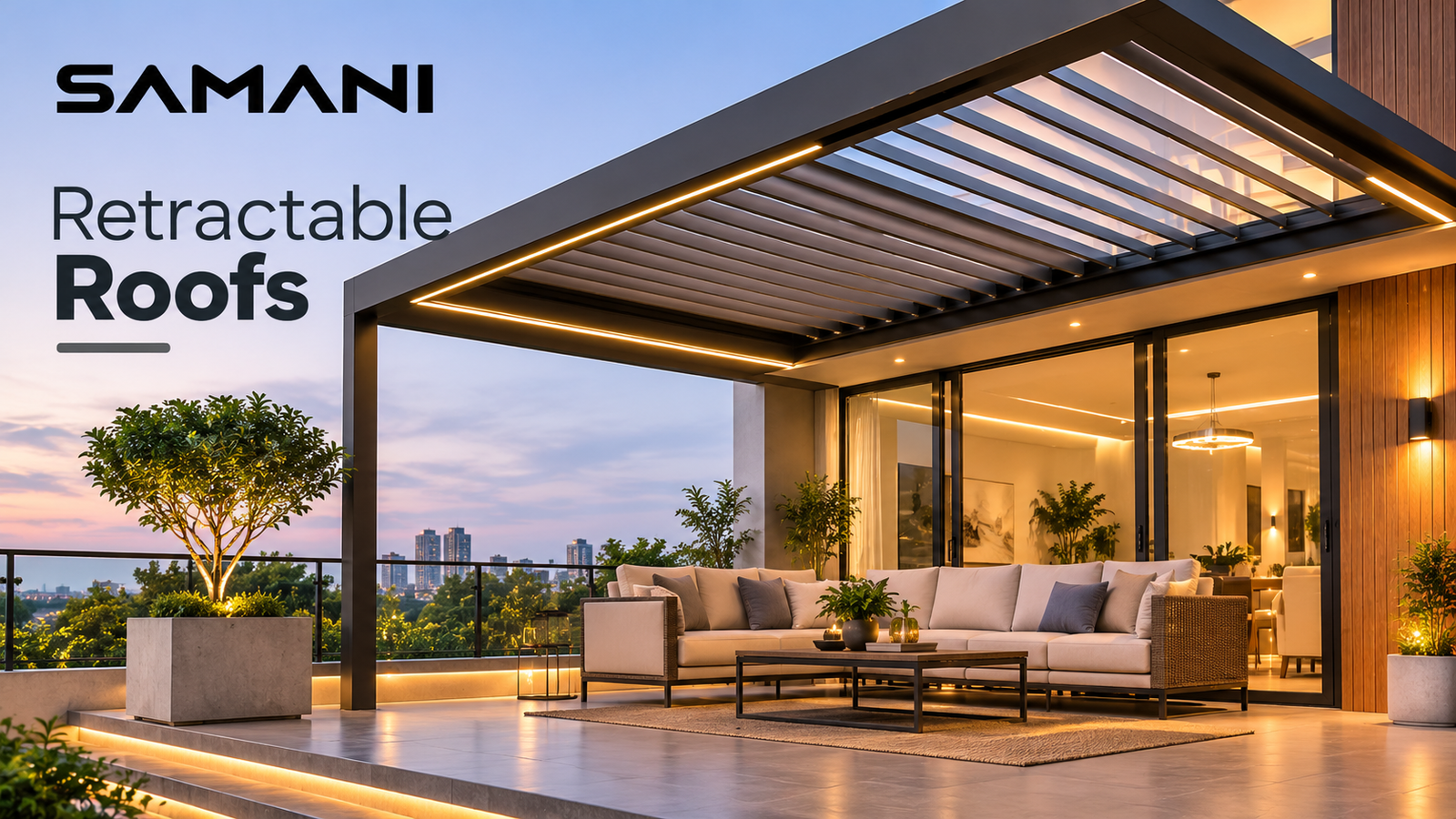
Imagine enjoying an open terrace on a pleasant day and having a covered space when the sun becomes too strong or rain starts. Retractable roofs make this possible by allowing you to open or close the roof according to your requirements. They offer a flexible way to use balconies, terraces, patios, gardens, restaurants and other outdoor areas throughout the year.
Unlike permanent roofing structures, retractable roof systems are designed with movable sections that can slide, fold or roll back when an open space is preferred. Depending on the design, they can be operated manually or with a motorised mechanism.
Whether you are planning a retractable roof for a balcony, a modern terrace covering or an outdoor patio roof, selecting the right system depends on your available space, weather conditions, material preferences and intended use.
In this guide, we will explore different types of retractable roofs, their benefits, applications, materials, operating mechanisms and the factors that influence their overall cost.
What Is a Retractable Roof?
A retractable roof is a movable roofing structure that can be extended to cover an area and retracted to create an open space. It uses a system of tracks, supporting frames, sliding panels or folding materials to control how much of the roof remains covered.
Retractable roofs are commonly used in residential and commercial properties where flexibility, natural light and outdoor comfort are important. They allow users to adjust the covered area according to changing weather and personal preferences.
Modern retractable roof systems are available in different configurations, including aluminium structures, fabric coverings, sliding panels and motorised designs. Some systems are operated manually, while others use electric motors and remote controls for convenient operation.
What Are the Different Types of Retractable Roofs?
Retractable roofs are available in several designs to suit different architectural requirements. The right option depends on the opening size, desired appearance, material, operation and level of weather protection.
1. Retractable Sliding Roof
A retractable sliding roof uses movable panels that travel along tracks to open or close the covered area. The panels slide over one another or move towards a designated side, depending on the system configuration.
This design is suitable for larger terraces, patios and outdoor seating areas where users want the flexibility to switch between an open and covered space.
Key features:
- Sliding operation along supporting tracks.
- Flexible opening and closing arrangements.
- Suitable for selected large outdoor spaces.
- Available with different structural and covering materials.
2. Retractable Fabric Roof
A retractable fabric roof uses a flexible fabric covering that extends and retracts through a supporting frame or mechanism. It is a popular option for creating shaded areas without installing a completely solid roof structure.
The fabric can be selected according to the required appearance, sunlight control and intended application. The suitability for rain protection depends on the fabric specification, slope and overall system design.
Key features:
- Lightweight covering option.
- Helps provide shade from direct sunlight.
- Available in different colours and fabric finishes.
- Can be operated manually or through a motorised system, depending on the design.
3. Manual Retractable Roof
A manual retractable roof is operated by hand using a suitable handle, crank or mechanical arrangement. It is a practical choice for smaller installations where an electrical operating system may not be necessary.
Its operation is generally straightforward, but the ease of use depends on the roof dimensions, mechanism and weight of the moving components.
4. Motorised Retractable Roof
A Motorised Retractable Roof uses an electric motor to move the roof sections. Users can typically open or close the system using a remote control, switch or compatible control arrangement.
It is particularly useful for larger installations, commercial spaces and locations where frequent operation is expected.
Key features:
- Convenient powered operation.
- Suitable for larger or frequently used installations.
- Can be integrated with selected control systems.
- May support additional automation features depending on the configuration.
5. Aluminium Retractable Roof System
An aluminium retractable roof system uses aluminium structural components to support the movable roof arrangement. Aluminium is valued for its strength, design flexibility and resistance to corrosion when appropriately specified and finished.
The covering may use compatible panels or other materials depending on the system design. The supporting structure, tracks and moving components must be selected according to the opening dimensions and expected loads.
This option can suit contemporary homes, terraces, commercial buildings and outdoor entertainment spaces.
What Are the Benefits of Retractable Roofs?
Retractable roofs offer more flexibility than conventional fixed coverings because users can adjust the roof according to their requirements.
1. Flexible Open and Covered Spaces
One of the main advantages of retractable roofs is the ability to change the space whenever required. You can enjoy an open terrace during pleasant weather and extend the roof when shade or shelter is needed.
2. Better Control Over Sunlight
A retractable roof can help control the amount of direct sunlight entering an outdoor area. When the roof is extended, it provides shade, while retracting it allows more natural light into the space.
3. Improved Outdoor Usability
Balconies, patios and terraces often remain underused because of excessive sunlight or changing weather. A suitable retractable roof can make these areas more comfortable and functional for relaxation, dining and gatherings.
4. Modern Architectural Appearance
Retractable roof systems are available in contemporary designs, finishes and structural configurations. They can complement modern residential and commercial architecture without making the outdoor space feel permanently enclosed.
5. Convenient Operation
Depending on the selected system, the roof can be operated manually or through a motorised mechanism. Motorised options can make opening and closing easier, particularly for larger roof installations.
6. Customised Design Options
Retractable roofs can be designed according to the available space, dimensions, supporting structure and architectural requirements. This flexibility makes them suitable for different types of residential and commercial projects.
Which Materials Are Used in Retractable Roof Systems?
The materials used in a retractable roof affect its appearance, weight, durability and maintenance requirements.
Aluminium: Commonly used for supporting frames, tracks and structural components because it offers a combination of strength, lightweight construction and design flexibility.
Fabric: Used in retractable fabric roof designs to provide shade. The fabric should be selected according to sunlight exposure, water resistance, maintenance requirements and the intended application.
Glass: Selected roof designs may use glass panels to allow natural light into the covered space. The glass type, support arrangement and safety specifications need careful consideration.
Polycarbonate: Some roofing configurations use polycarbonate panels because they are relatively lightweight and allow daylight transmission. Their suitability depends on the panel specification and supporting system.
The complete system should be designed with compatible materials rather than selecting the covering independently of its frame and operating mechanism.
How Much Does a Retractable Roof Cost?
The retractable roof cost depends on several project-specific factors. There is no single price that applies to every installation because a small balcony covering and a large motorised terrace roof have very different requirements.
The main factors affecting retractable roof price include:
- Size of the installation: Larger roof areas generally require more material and supporting components.
- Material selection: Aluminium structures, fabric coverings, glass and polycarbonate have different specifications and costs.
- Operating mechanism: Manual systems and motorised systems have different hardware and installation requirements.
- Design complexity: Customised shapes, multiple sections and specialised track arrangements can influence the total cost.
- Installation conditions: Site accessibility, existing structures and installation complexity can affect labour requirements.
- Additional features: Automation, sensors, control systems and customised finishes may add to the overall investment.
To get an accurate retractable roof quotation, provide the installation dimensions, preferred design, location, material requirements and operating preference. A site assessment may also be necessary to evaluate the supporting structure and installation conditions.
How to Choose the Right Retractable Roof?
Before selecting a retractable roof system, evaluate the following points:
- Identify the application: Decide whether the roof is intended for a balcony, terrace, patio, garden or commercial space.
- Measure the available area: Check the width, length, height and movement clearance required for the system.
- Select the right material: Consider aluminium, fabric, glass or polycarbonate according to your requirements.
- Choose the operating mechanism: Decide between manual and motorised operation based on the roof size and frequency of use.
- Consider weather conditions: Check sunlight exposure, rainfall, wind loads and drainage requirements.
- Review structural support: Ensure the existing structure can safely accommodate the proposed roof system.
- Check maintenance needs: Understand how the tracks, fabric, panels and moving components should be maintained.
A properly selected system should match the building’s design, intended usage and local environmental conditions.
Why Choose Samani ECC for Retractable Roof Solutions?
Choosing the right retractable roof is about more than selecting an attractive design. The structure, materials, movement mechanism, dimensions and installation requirements all contribute to the overall performance of the system.
Samani ECC offers aluminium and uPVC architectural solutions and can help customers explore suitable options for their building requirements. Whether you are planning a retractable terrace roof, a balcony covering or an outdoor space enhancement, discussing the project requirements before finalising the design is important.
From understanding the available space to considering material and operating preferences, the right planning can help you select a roof solution that complements your property.
Planning to install a retractable roof? Contact Samani ECC to discuss your project requirements and explore a suitable solution for your space.