Did you know that your brain and your reproductive organs communicate through a relay race of chemical messengers where the starting runner never actually meets the finisher? This complex chain, known as the Hypothalamic-Pituitary-Gonadal (HPG) axis, dictates everything from your energy levels to your ability to father children. When men undergo hormone replacement, this relay race often stops, leading to a physical shrinking of certain tissues and a total halt in natural production. Understanding where a specific intervention interacts with this chain is the difference between a temporary fix and a sustainable biological environment.
You might feel overwhelmed by the technical jargon surrounding testosterone and fertility. To keep it simple, think of your hormonal system as a corporate ladder. The “Upstream” signals are the executive orders coming from the brain. The “Downstream” signals are the local managers carrying out those orders in the testes. When you choose between Human Chorionic Gonadotropin (HCG) & Gonadotropin Releasing Hormone (GnRH) analogs like Gonadorelin, you are choosing which level of the ladder to talk to. Each choice has a different impact on how your body maintains its internal balance over long periods.
Understanding Upstream Hormone Signaling
Upstream signaling begins in the hypothalamus, a small but vital region at the base of your brain – this area acts as a master thermostat, constantly sensing if your blood has enough testosterone. If levels are low, it releases GnRH – this is the ultimate “Upstream” move. It tells the pituitary gland to get to work. Without this initial pulse, the rest of the hormonal cascade never happens, which is why researchers look closely at background on longevity peptides & GnRH analogs to see if they can jumpstart the entire system from the top down.
The pituitary gland responds to GnRH – secreting two specific hormones – Luteinizing Hormone (LH) & Follicle Stimulating Hormone (FSH) – these travel through your bloodstream to reach their destination – this process is rhythmic and pulsatile. Your body does not dump these hormones all at once – it releases them in waves. Maintaining this natural rhythm is often a priority for those who want to avoid the “shut down” effect often seen in traditional hormone therapies.
When the system works correctly, the feedback loop is perfect. As soon as the testes produce enough testosterone, the brain senses it and slows down the GnRH release – this prevents your body from overproducing. When you take synthetic testosterone, the brain thinks you have plenty and stops the upstream signal entirely – this leads to the common side effect of testicular atrophy, as the “local managers” no longer receive instructions from the “executive office”
How HCG Mimics Natural Signals
HCG is an interesting molecule because it is not actually a primary male hormone. It is a hormone produced during pregnancy but it happens to look almost exactly like Luteinizing Hormone (LH) to your body. Because of this chemical similarity, HCG can bypass the brain entirely. It travels straight to the testes and docks into the LH receptors – this is a “Downstream” action. You are essentially skipping the executive office and giving orders directly to the factory floor.
Because HCG mimics LH so effectively, it keeps the Leydig cells in the testes active – this prevents the physical shrinking that occurs when the HPG axis is suppressed. Many men use this during testosterone replacement therapy (TRT) to maintain their fertility and testicular volume. It is effective because it works quickly and reliably, providing a clear signal for the testes to produce a small amount of their own testosterone and maintain sperm production.
However, there is a catch to this downstream approach – Because HCG is “mimicking” a signal rather than restoring the natural one, it does not restart the brain’s communication. In fact, because HCG causes the testes to produce testosterone, the brain continues to sense that testosterone levels are high and stays “turned off” You are keeping the factory running but the corporate office is still closed – this distinction is vital for anyone looking for a detailed overview of peptide research regarding long term fertility protocols.
The Role of GnRH & Gonadorelin
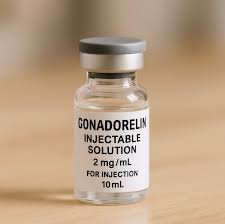
Gonadorelin is a synthetic version of the naturally occurring GnRH. Compared to HCG, it works at the very top of the chain. When you use a GnRH analog, you are asking the pituitary gland to release its own LH besides FSH – this is considered a more “physiological” approach because it encourages the body to use its own hardware to create the necessary signals. It is an attempt to keep the entire relay race running rather than just jumping in at the finish line.
The primary benefit of an upstream approach is the involvement of FSH. While HCG mostly mimics LH, actual GnRH stimulation triggers both LH or FSH. FSH is the primary driver of sperm production (spermatogenesis). By stimulating the pituitary, you potentially get a more balanced hormonal output that closer resembles what a healthy male body does on its own. It keeps the “executive office” and the “middle management” (the pituitary) engaged in the process.
Key differences in GnRH signaling
- It stimulates the release of both LH next to FSH, not just an LH mimic.
- It has a very short half life, meaning it leaves the body quickly.
- It requires more frequent pulses to mimic the natural rhythm of the brain.
- It avoids the potential desensitization of the testes that can happen with high dose HCG.
Comparing Direct Stimulation & Systemic Recovery
When you compare these two, you are really looking at “stimulation” versus “replacement” HCG is a replacement for the LH signal. It is strong, it lasts a long time in the blood and it is very effective at what it does – but it is still an external signal. Gonadorelin is a stimulant for the pituitary. It asks your own body to do the work – this nuance is why some doctors prefer one over the other depending on if the goal is simply maintaining size or fully restoring a broken feedback loop.
One major hurdle with GnRH analogs is their duration of action. Natural GnRH pulses every 60 – 90 minutes. Synthetic versions often require frequent administration to be effective for fertility. HCG, on the other hand, stays active for days – this makes HCG much easier to manage for the average person. The who are sensitive to the “estrogen spikes” sometimes associated with HCG might find that the more natural rise in hormones from a GnRH-based approach is easier on their system.
Reasons to consider the Upstream (GnRH) path
- You want to keep the pituitary gland active and functional.
- You are concerned about the long term desensitization of LH receptors.
- You need both FSH besides LH for specific fertility goals.
- You prefer a signal that is processed and cleared by your body rapidly.
Practical Implications for Hormonal Balance
Choosing between the pathways is not a one-size-fits-all decision. For many, the ease of use makes the downstream approach the standard choice. It is predictable and well documented – but for those who find that their body does not respond well to HCG – perhaps because of mood swings or skin issues – moving upstream to the pituitary level offers a different biological route. It changes the conversation from “how much hormone can I add” to “how can I get my system to talk to itself again”
The science of male hormonal health is moving toward more personalized interventions. We are learning that merely checking a testosterone number on a lab result is not the whole story. The health of the receptors, the pulsatility of the signals and the balance between LH or FSH all play a role in how a man feels. If you are looking at a broader guide to peptide science or specific clinical protocols, the goal is always the same – achieving a stable internal environment that supports both vitality and long term health.
Always remember that these hormones are powerful tools – They influence your heart health, your bone density and your mental clarity. Working with a professional who understands the difference between upstream and downstream signaling ensures that you aren’t just fixing a symptom but actually supporting your underlying biology. If you choose the direct path of HCG or the systemic path of GnRH, the focus remains on keeping the relay race of your HPG axis in motion.
FAQ
Is HCG the same thing as testosterone?
No, HCG is a signaling hormone that tells your testes to produce their own testosterone. It is often used alongside testosterone replacement to keep the natural production sites active but it is a distinct substance with different effects on the body.
Why do some people prefer Gonadorelin over HCG?
Some prefer it because it stimulates the pituitary gland to release both LH next to FSH naturally – this can lead to a more balanced hormonal profile and avoids the “artificial” LH signal that HCG provides, which some believe is better for long term pituitary health.
Can you use both at the same time?
While technically possible, it is rarely done because they target the same pathway from different angles. Using both can make it very difficult to stabilize your levels and might lead to overstimulation of the tissues. Many protocols choose one based on the specific needs of the individual.
Does HCG affect the brain?
Directly, HCG acts on the testes – However, because it increases testosterone and estrogen levels, it sends a signal back to the brain to stay “off” It does not “restart” the brain’s natural signaling – it actually keeps it suppressed while maintaining the health of the testes.
How long does it take to see results from these signals?
HCG works quite quickly, often within hours or days, to stimulate the testes. GnRH analogs may take longer to show effects on lab tests because they rely on the pituitary gland’s ability to respond and produce its own hormones, which can be sluggish if it has been suppressed for a long time.