Trezor dApp Browser: Complete Guide 2026
Learn how to use a Trezor dApp browser with Onchain. Step-by-step guide for Ethereum users. Connect via Rabby, sign Permit2 approvals, and pay zero gas
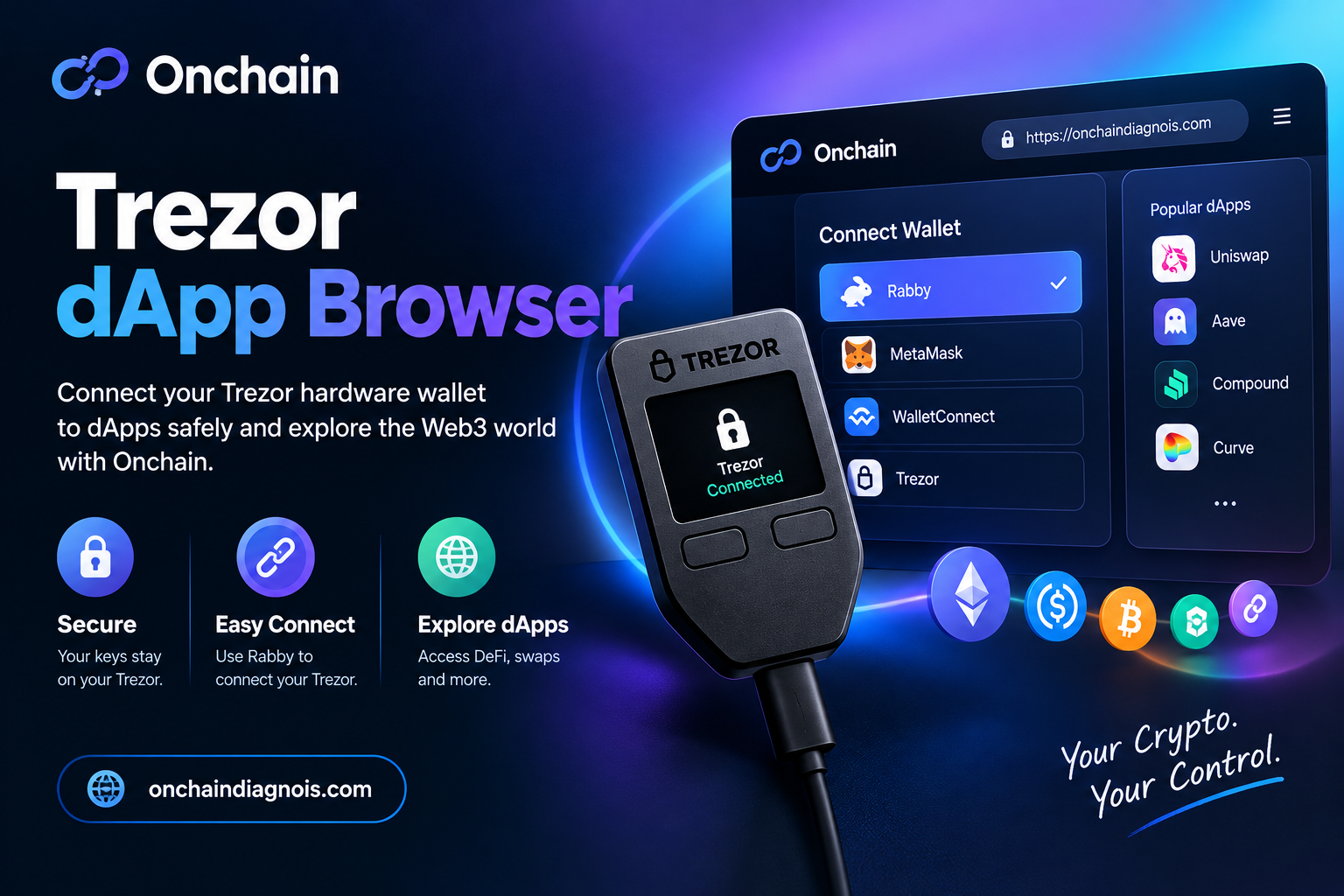
A Trezor dApp browser is not a standalone app — it is the combination of your Trezor hardware wallet and a software interface that connects it to Ethereum applications. Trezor does not ship its own browser. Instead, you connect through supported wallets and tools. Onchain lets you grant Permit2 token permissions with one off-chain signature. Try Onchain at onchaindiagnois.com.
Trezor dApp Browser: What You Need to Know
Trezor hardware wallets secure private keys offline. To use those keys with Ethereum dApps, you need a bridge between the device and the application. Trezor offers two main paths: WalletConnect inside Trezor Suite, and Trezor Connect through third-party wallets like MetaMask and Rabby.
The WalletConnect integration in Trezor Suite (available via Experimental Features) connects your device directly to over 70,000 dApps. No browser extension is required for this method. The connection is end-to-end encrypted, and every transaction must be confirmed on your Trezor screen.
For dApps that do not support WalletConnect directly, you use a third-party wallet as the bridge. MetaMask and Rabby both support Trezor Connect. Rabby is particularly useful for onchain Permit2 approvals because it displays clear signing data and lets you revoke permissions from a single dashboard.
The table below compares the main connection paths available to Trezor users today.
| Connection Method | Best For | Requirements | Key Limitation |
| WalletConnect in Trezor Suite | Direct dApp access without extensions | Trezor Suite v25.6.3+, Experimental Features enabled | Feature is still experimental |
| Trezor Connect via MetaMask | EVM dApps and smart contract interaction | MetaMask extension + Trezor device | Blind signing prompts on complex data |
| Trezor Connect via Rabby | Permit2 approvals and DeFi safety | Rabby extension + Trezor device | Requires separate wallet install |
Step-by-Step: How to Connect Trezor to a dApp
- Update Trezor Suite and your firmware. Open Trezor Suite and install the latest version. Update your device firmware when prompted. Outdated firmware is the most common cause of connection failures.
- Enable WalletConnect in Experimental Features. Go to Settings in Trezor Suite. Find Experimental Features and toggle on WalletConnect. This unlocks the built-in dApp browser connection.
- Choose your connection path. For direct dApp access, stay in Trezor Suite and use WalletConnect. For Permit2 approvals on Onchain, install Rabby and connect your Trezor through Rabby’s hardware wallet option.
- Connect to the dApp. Open the dApp in your browser and select “Connect Wallet.” Choose WalletConnect or your bridge wallet. Scan the QR code or follow the pairing prompt.
- Approve the connection on your Trezor. Your device screen will display the connection request. Verify the details and confirm physically on the device. Your private key never leaves the hardware.
- Sign the Permit2 authorization on Onchain. When prompted, review the off-chain signature request. Confirm on your Trezor. You pay zero gas for this signature — the server wallet covers gas costs.
Common Issues and How to Fix Them
- Trezor not detected by MetaMask or Rabby: Ensure your device is unlocked, the correct app is open, and no other application is using the device. Close competing browser tabs and retry.
- WalletConnect pairing fails in Trezor Suite: Confirm WalletConnect is enabled under Experimental Features. Clear your browser cache and reload Trezor Suite. Disable VPNs and ad blockers temporarily.
- Blind signing warning on complex Permit2 data: Rabby and MetaMask may show raw hex for some signature requests. Never approve data you cannot read. Use Onchain’s plain-language prompts instead of blind signing.
- Transaction stuck as pending: Check the transaction on a block explorer. If it is not found, the broadcast failed. Resubmit through your wallet. Hardware wallet confirmations are required for every transaction.
- Wrong account or address shown in MetaMask: Trezor accounts appear in a fixed order. If you selected the third address during setup, the second address will not display until you use it. Match the account index carefully.
How to Contact Onchain Support Safely
Onchain does not offer phone support. Anyone claiming to be Onchain phone support is a scammer. The only official support channels are the in-app chat widget (bottom-right corner of the Onchain dApp) and the official Telegram group.
Never share your seed phrase, private key, or 2FA code with anyone. Onchain staff will never ask for your seed phrase, private key, or 2FA code. Fake support accounts on social media often impersonate legitimate projects. Always verify you are on the official URL: https://onchaindiagnois.com.
If someone contacts you first claiming to be support, treat it as a scam. Legitimate support does not initiate contact. Report suspicious accounts to the Telegram group administrators.
Frequently Asked Questions
Does Trezor have a built-in dApp browser?
No, Trezor does not have a standalone dApp browser. Trezor Suite includes WalletConnect integration that connects your device to dApps directly. For other dApps, you use Trezor Connect through third-party wallets like MetaMask or Rabby. The connection method depends on which dApp you want to use.
How do I connect my Trezor to a dApp on Ethereum?
Connect your Trezor through Rabby or MetaMask for Ethereum dApps. Install the wallet extension, select “Connect Hardware Wallet,” and choose Trezor. Approve the connection prompt on your device. Your Trezor signs transactions while the software wallet provides the interface.
Can I use Trezor with Onchain for Permit2 approvals?
Yes, Onchain supports Trezor via Rabby. Connect your Trezor to Rabby, then connect Rabby to Onchain. Review the Permit2 authorization on your Trezor screen and confirm. You pay zero gas for the signature — the server wallet covers that cost.
What is the Trezor Suite WalletConnect dApp connection?
It is a built-in feature that pairs Trezor Suite with WalletConnect-compatible dApps. Enable it through Experimental Features in Trezor Suite settings. It provides an encrypted connection to over 70,000 dApps without browser extensions. Every transaction still requires physical confirmation on your Trezor device.
Is it safe to use a Trezor hardware wallet dApp access?
Yes, when you verify every prompt on your device screen. Hardware wallets keep private keys offline. The risk is blind signing — approving data you cannot read. Always check the transaction details on your Trezor before confirming. If the data looks like hex code you do not understand, stop and investigate.
Key Takeaway Box
A Trezor dApp browser is not a product — it is the bridge between your hardware wallet and Ethereum applications. Whether you use WalletConnect in Trezor Suite or Trezor Connect through Rabby, every signature and transaction must be confirmed on your device. For Permit2 approvals, connect your Trezor to Rabby and use Onchain to grant token permissions with a single off-chain signature. You pay zero gas. Try Onchain at onchaindiagnois.com.
Final CTA
Ready to try Onchain?
Connect your Trezor through Rabby and grant Permit2 permissions with one off-chain signature. No gas fees for signing. Full hardware wallet security.