Kirschner Bow: Reliable Tension for Precise Skeletal Traction
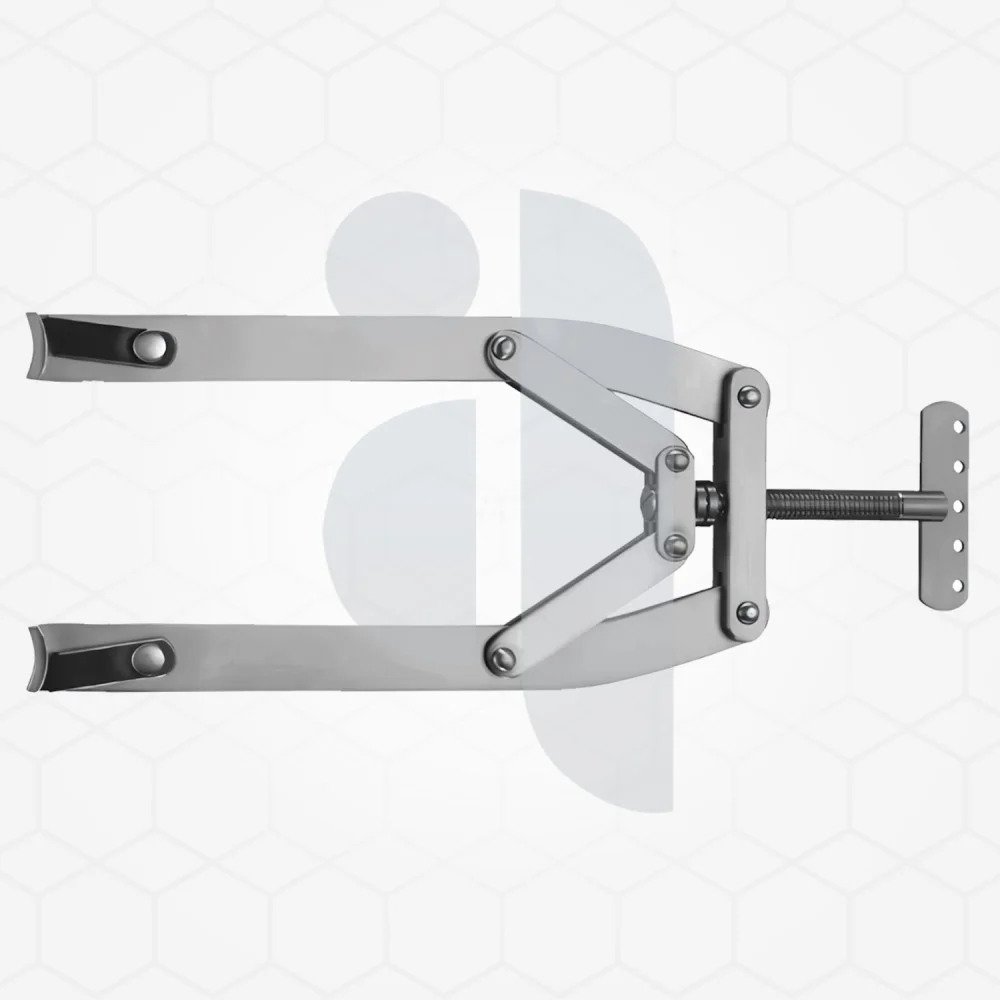
Some fractures need a steady, constant pull to heal in the right position. Skeletal traction provides that pull, and it depends on hardware that holds firm for days or even weeks. The kirschner bow makes this possible by keeping a thin surgical wire tight and secure. What kirschner bow does, where surgeons use it, and why quality matters.
Understanding the Instrument
The kirschner bow is a U-shaped traction stirrup made to work with Kirschner wires, the thin, smooth steel pins named after the German surgeon Martin Kirschner. After the surgeon passes a wire through the bone, the wire ends are clamped into the arms of the bow. A tensioning mechanism, usually a threaded screw or wing nut, then draws the wire tight. This step is essential because a slender wire would bend under load without tension.
Its Role in Orthopedic Care
Orthopedic and trauma surgeons rely on this instrument in many situations. The wire is often placed through the proximal tibia, distal femur, or calcaneus to manage femoral shaft, pelvic, acetabular, or tibial fractures. The bow spreads the pulling force evenly across the wire, which helps align bone fragments and ease muscle spasm. In emergency settings, a kirschner bow can stabilize an injured limb while the patient waits for definitive surgery. It also supports patients who cannot undergo internal fixation right away.
Why Precision and Tension Matter
Traction only works when the wire stays taut. A loose wire can flex, shift inside the bone, or irritate the pin sites, which raises the risk of pain and infection. A well-made kirschner bow holds tension steadily over long periods, so the pull on the bone stays consistent. Smooth threads let the surgeon adjust tension in small, controlled steps. Secure clamps grip the wire without slipping. Together, these details give the care team confidence and give the patient a more comfortable recovery.
The Marks of a High-Quality Instrument
Material and craftsmanship make a real difference. Surgical-grade stainless steel resists corrosion and stands up to repeated autoclave sterilization. A rigid frame keeps its shape under heavy traction loads. Precise machining keeps the clamps aligned and the tensioning screw turning freely. A dependable instrument to cut skin also comes in several sizes, so you can match it to the limb and the patient.
Crafted With Care by AzeeMed
AzeeMed focuses on making surgical instruments of the highest quality for the medical community around the globe. Since we have experience of over two decades, we furnish you with an array of instruments for various surgical specialties, including plastic, dental, ophthalmic, neuro and spine, and orthopedic surgeries. Every kirschner bow we produce is shaped by skilled hands, inspected closely, and built to perform reliably in demanding clinical settings.
Conclusion
Effective skeletal traction depends on steady tension, secure grip, and lasting strength. A precise and durable kirschner bow keeps the wire firm, delivers even force to the bone, and supports proper healing. Explore AzeeMed’s range of surgical instruments today and see how more than two decades of craftsmanship can support your orthopedic team.