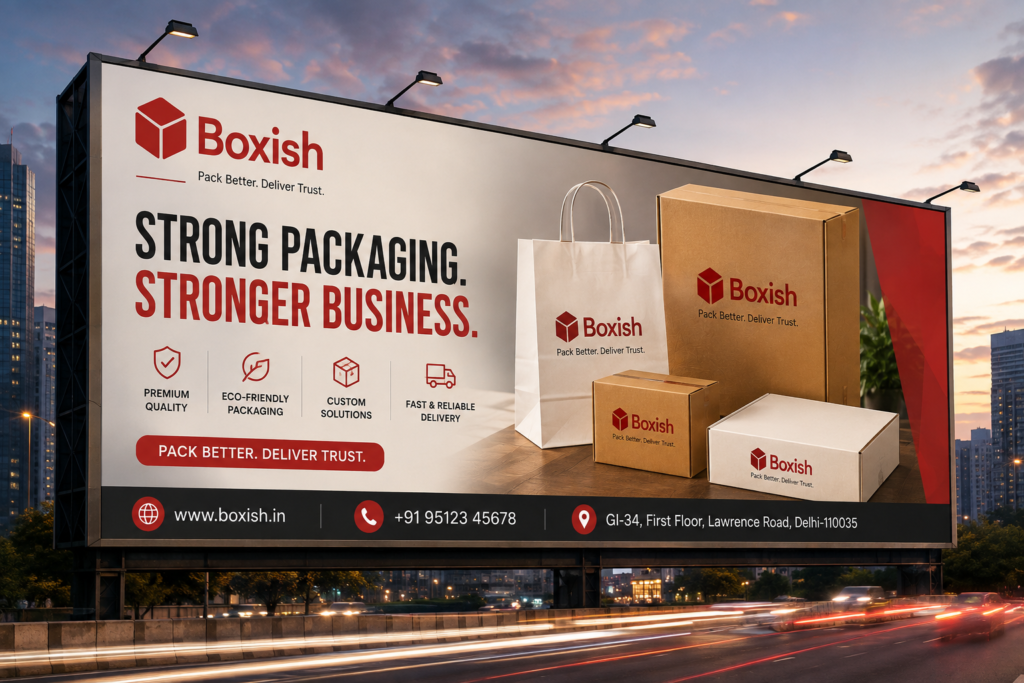
Packaging is changing rapidly as businesses look for better ways to protect products, control costs, and reduce unnecessary waste. For growing retail and ecommerce brands, packaging must now balance durability, efficiency, sustainability, and customer expectations.
A corrugated cardboard box continues to be an important packaging choice because it can provide structural protection while supporting efficient storage, transportation, and recycling. New approaches to box design, sizing, customization, and material efficiency are helping businesses build more practical packaging systems for modern supply chains.
Why Corrugated Packaging Is Evolving
Traditional packaging decisions often focused mainly on product protection. Today, businesses also consider transportation costs, warehouse space, material consumption, branding, and environmental impact.
Modern packaging strategies focus on:
- Better product-to-package fit
- Reduced unnecessary material
- Improved stacking efficiency
- Recyclable packaging options
- Easier warehouse handling
- Consistent branding
- Lower packaging waste
These changes are especially important for ecommerce businesses that process large numbers of shipments every day.
Right-Sized Packaging for Better Efficiency
One of the most useful innovations in packaging is the focus on right-sized boxes.
Oversized packaging creates empty space around products and may require additional fillers. It can also increase the volume of shipments and consume more warehouse space.
A properly sized package can help businesses:
- Reduce empty space
- Minimize cushioning requirements
- Improve product stability
- Optimize storage
- Reduce unnecessary material consumption
Businesses should regularly review their most frequently shipped products and identify whether current packaging sizes are appropriate.
Improved Board Strength and Material Efficiency
Packaging does not always need to become heavier to become more effective.
Manufacturers are increasingly focusing on how board construction, flute design, and material combinations can provide appropriate strength without excessive material use.
The right construction should be selected according to:
- Product weight
- Fragility
- Stacking requirements
- Shipping distance
- Handling conditions
For example, lightweight products may not require the same structural strength as heavy industrial products.
Choosing packaging based on actual requirements can help businesses avoid over-packaging.
Better Protection Through Structural Design
Packaging innovation is also moving beyond simple rectangular boxes.
Businesses can use structural features that improve product stability and reduce the need for additional protective material.
These can include:
- Internal partitions
- Product-specific compartments
- Folding structures
- Reinforced sections
- Protective inserts
For fragile products, internal organization can prevent items from moving and colliding during transportation.
This approach combines protection with material efficiency.
Sustainable Packaging for Ecommerce
Sustainability has become increasingly important for ecommerce brands.
Online orders can generate significant packaging consumption because every shipment requires protective material. Businesses can reduce unnecessary waste by improving the efficiency of their packaging systems.
Practical steps include:
- Choosing appropriate box sizes
- Reducing unnecessary fillers
- Avoiding excessive packaging layers
- Using recyclable paper-based materials
- Managing packaging inventory efficiently
- Reducing product damage and returns
Sustainable packaging should not compromise product safety. A damaged product may require a replacement shipment, creating additional packaging and transportation impact.
Packaging as a Branding Tool
Packaging can also contribute to brand recognition.
Ecommerce businesses can use suitable packaging to communicate:
- Brand identity
- Product information
- Care instructions
- Website details
- QR codes
- Customer messages
A simple and consistent design can make deliveries more recognizable without making packaging unnecessarily expensive.
For growing brands, packaging should provide a balance between visual appeal and operational practicality.
Customization for Different Product Categories
Different products require different packaging approaches.
A cosmetics business may need compact packaging with internal protection, while an apparel company may prioritize lightweight and space-efficient solutions.
Businesses should consider:
- Product shape
- Product dimensions
- Weight
- Fragility
- Number of products per order
- Shipping conditions
Custom dimensions can be particularly useful when a business has a consistent product range and predictable order volumes.
Combining Different Packaging Formats
A complete packaging strategy does not need to rely on one format.
Retail businesses may use paper-based bags for customer purchases while ecommerce operations use protective shipping boxes.
Businesses that purchase paper bags wholesale can maintain consistent retail packaging for stores, boutiques, bakeries, and other suitable applications.
Using different formats for different situations helps businesses avoid overusing heavy packaging where it is not necessary.
Sustainable Solutions for Food Businesses
Food businesses have their own packaging requirements because products may be affected by heat, moisture, grease, and handling.
For restaurants and delivery businesses, pizza box packaging needs to provide suitable protection while supporting food presentation and transportation.
Businesses should consider:
- Pizza size
- Box construction
- Ventilation
- Stacking
- Moisture
- Grease
- Delivery distance
A food business should test its packaging with actual products before purchasing large quantities.
Improving Warehouse Storage
Packaging innovations can also improve warehouse efficiency.
Flat-packed packaging can be stored before assembly, allowing businesses to maintain inventory without using the full volume of assembled boxes.
However, warehouse teams should still organize packaging by:
- Size
- Product category
- Usage frequency
- Reorder level
Fast-moving packaging should remain easily accessible near packing stations.
Better organization can reduce picking and packing time.
Reducing Packaging Costs Through Better Design
Sustainable packaging and cost efficiency can often work together.
A business can reduce expenses by improving:
- Box dimensions
- Material utilization
- Storage efficiency
- Packing speed
- Inventory planning
- Shipping volume
Instead of simply searching for the cheapest packaging, businesses should evaluate the total cost of the packaging system.
A slightly higher-quality package may provide better value if it reduces product damage, returns, or packing time.
Smart Packaging Procurement
Growing brands should use actual demand data when purchasing packaging.
Before placing a wholesale order, businesses should review:
- Monthly packaging consumption
- Seasonal demand
- Product launches
- Current stock
- Supplier lead times
- Storage capacity
This helps businesses avoid both packaging shortages and excessive inventory.
Buying too much packaging can tie up working capital, particularly when designs or product dimensions change.
Testing New Packaging Before Scaling
Packaging innovations should be tested before being adopted across the entire business.
A practical test can examine:
- Product fit
- Structural strength
- Internal movement
- Stacking
- Sealing
- Transportation
- Customer opening experience
Ecommerce brands should consider sending test packages through their regular courier network.
Real-world testing can identify weaknesses that may not be visible during warehouse inspection.
How Boxish Packaging Supports Growing Brands
Growing retail and ecommerce businesses often need packaging that can adapt as product ranges and order volumes increase.
Boxish Packaging provides packaging solutions for retail, ecommerce, food businesses, and other commercial applications. Businesses can evaluate packaging according to product requirements, order volumes, customization needs, shipping conditions, and storage capacity.
A reliable packaging partner can help maintain consistent quality while allowing businesses to adjust packaging as their operations grow.
Practical Tips for More Sustainable Packaging
Businesses looking to improve their packaging strategy should:
- Measure products accurately.
- Select appropriate package dimensions.
- Match material strength with actual requirements.
- Reduce unnecessary empty space.
- Use protective material only when required.
- Maintain organized packaging inventory.
- Test packaging before bulk procurement.
- Monitor product damage and returns.
- Review packaging costs regularly.
- Select recyclable materials where practical.
Common Mistakes to Avoid
Choosing Packaging Only by Price
The cheapest option may create higher costs if it increases product damage or returns.
Using Oversized Packaging
Large packages can increase empty space, material consumption, and transportation volume.
Ignoring Product-Specific Requirements
Different products require different levels of protection.
Overstocking Packaging
Excess inventory consumes storage space and can become difficult to use when packaging requirements change.
Skipping Real-World Testing
Packaging should be tested under actual shipping conditions before large-scale adoption.
Conclusion
Innovations in the corrugated cardboard box industry are helping retail and ecommerce businesses improve product protection while making packaging more efficient and sustainable. Right-sized designs, improved structural construction, internal protection, better material utilization, and smarter procurement can all contribute to a more effective packaging system.
Businesses can also combine different formats according to their applications. Paper bags wholesale can support retail packaging requirements, while pizza box packaging provides a specialized solution for food delivery businesses.
The future of sustainable packaging is not simply about using less material. It is about using the right material, in the right quantity, for the right product and application. By adopting practical packaging strategies and working with a dependable partner such as Boxish Packaging, growing brands can improve operational efficiency, reduce unnecessary waste, protect their products, and deliver a stronger customer experience.