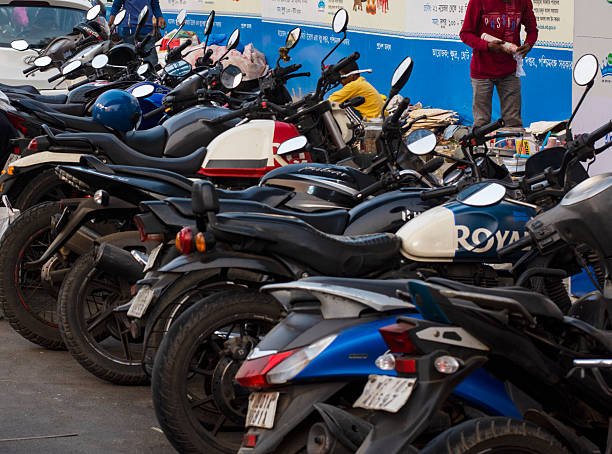
Two-wheelers have become an important part of transportation across South America, supporting everyday commuting, personal mobility, commercial activities, and access to employment. Their relatively compact size can make them practical in congested urban environments, while their flexibility allows riders to travel through areas where larger vehicles may be less convenient.
According to the supplied Vyansa Intelligence analysis, the South America two-wheeler sector was valued at USD 7 billion in 2025 and is projected to reach USD 13.29 billion by 2032, representing a 9.59% CAGR from 2026 to 2032.
Two-Wheelers Play an Important Role in Mobility
Motorcycles can provide an accessible transportation option for people who need flexible and reliable mobility. Research from the Development Bank of Latin America and the Caribbean (CAF) has examined motorcycle use across cities including Buenos Aires, Bogotá, Barranquilla, Caracas, and São Paulo, identifying factors such as acquisition costs, congestion, transportation availability, and the importance of motorcycles for employment and mobility through its CAF research.
These characteristics help explain why two-wheelers can become an important component of urban transportation systems.
For many users, motorcycles offer a combination of maneuverability, accessibility, and convenience that can be particularly useful for daily travel.
Urban Congestion Supports Flexible Transportation
Traffic congestion is an ongoing challenge for major South American cities. Two-wheelers can provide riders with greater flexibility when navigating crowded roads and can reduce the physical space required for individual transportation.
Their role is not limited to commuting. Motorcycles can also support delivery services, small businesses, and other activities that depend on frequent movement through urban areas.
The continued development of cities is therefore closely connected with changing transportation requirements, creating opportunities for two-wheeler manufacturers and related service providers.
Motorcycles Support Commercial Mobility
Two-wheelers are increasingly relevant to commercial activities that require frequent short-distance travel.
Delivery workers, independent businesses, service providers, and other commercial users can rely on motorcycles for transportation. Their ability to move through congested areas can make them particularly useful for activities where travel time and route flexibility are important.
This creates a different set of requirements from those of private riders. Commercial users may place greater emphasis on vehicle durability, operating efficiency, carrying capacity, maintenance, and reliability.
Manufacturers can respond by developing models and configurations suited to specific commercial applications.
Affordability Can Influence Adoption
The cost of transportation is an important consideration for households and individual workers. Motorcycles can offer an alternative to larger vehicles where users need personal transportation without the size and expense associated with some other forms of mobility.
CAF research has identified the relatively low acquisition cost of motorcycles as one factor contributing to their increased use in Latin American cities.
This economic dimension can make two-wheelers relevant to a broad range of users, particularly where reliable public transportation is limited or where personal mobility is closely connected with employment.
Safety Is Becoming Increasingly Important
The expansion of motorcycle use also creates an important road-safety challenge. Riders are more exposed to surrounding traffic than occupants of enclosed vehicles, making safety measures particularly significant.
A recent IDB assessment found that motorcycle fatalities in Latin America and the Caribbean increased substantially between 2010 and 2024, even as total road-traffic deaths declined. The study identifies factors including behavior, infrastructure, regulation, and enforcement as important elements of motorcycle safety.
This makes safety an important consideration for the continued development of the two-wheeler sector.
Vehicle Design Can Support Safer Riding
Motorcycle manufacturers can contribute to safety through vehicle design and technology. Braking systems, lighting, tires, stability, visibility, and other components can influence the overall safety performance of a two-wheeler.
Safety technologies can also evolve as manufacturers respond to changing expectations and regulatory requirements.
However, vehicle technology is only one part of the equation. Rider training, appropriate protective equipment, responsible behavior, and road infrastructure also play important roles.
Infrastructure Influences the Riding Environment
Road design can significantly affect the experience and safety of two-wheeler users. Infrastructure that accounts for motorcycle traffic can help address some of the risks associated with interaction between motorcycles and larger vehicles.
The Inter-American Development Bank’s latest research on motorcycle safety in Latin America highlights infrastructure, licensing, protective equipment, enforcement, and regulatory frameworks as areas requiring coordinated attention.
For governments and transportation planners, this means that the growth of motorcycle use needs to be considered alongside broader urban mobility planning.
Maintenance Remains Essential
Regular maintenance is important for keeping motorcycles operating safely and reliably. Tires, brakes, lighting, suspension, and other components can experience wear during normal use.
Commercial riders who use motorcycles intensively may face particularly high maintenance requirements because of frequent travel and extended vehicle utilization.
Manufacturers, dealers, service providers, and riders therefore all have roles to play in maintaining vehicle condition throughout the ownership cycle.
Electric Two-Wheelers Create New Possibilities
Electrification is creating another dimension within the broader two-wheeler industry. Electric motorcycles and scooters can offer an alternative to conventional internal-combustion powertrains while introducing new considerations around batteries, charging, range, and vehicle architecture.
For urban applications, electric two-wheelers can be particularly relevant because many journeys involve relatively short distances.
The development of electric models can also create opportunities for manufacturers to introduce new designs and connected features while addressing changing expectations around vehicle efficiency and environmental performance.
Digital Features Are Changing the User Experience
Connected technology is increasingly influencing vehicle design. Digital displays, navigation, diagnostics, smartphone connectivity, and vehicle-monitoring functions can provide riders with additional information and convenience.
For commercial operators, connected systems can also support fleet monitoring and operational management.
As competition develops, manufacturers may increasingly differentiate two-wheelers not only through mechanical performance but also through software, connectivity, user interfaces, and digital services.
Regulatory Frameworks Will Remain Important
The growth of two-wheeler use requires appropriate regulatory frameworks covering vehicle standards, rider licensing, insurance, road use, and safety.
The Inter-American Development Bank’s regional assessment emphasizes the importance of evidence-based regulation and identifies licensing, vehicle safety, insurance, infrastructure, and speed management among areas that can support safer motorcycle mobility.
A balanced regulatory environment can help accommodate the mobility benefits of motorcycles while addressing risks associated with their increased use.
Manufacturers Face Diverse Consumer Requirements
South America’s two-wheeler users are not a single homogeneous group. Commuters, recreational riders, delivery workers, and commercial operators can have substantially different requirements.
Some users may prioritize affordability and fuel efficiency, while others may focus on durability, performance, comfort, carrying capacity, or technology.
This diversity creates opportunities for manufacturers to develop differentiated product portfolios rather than relying on a single vehicle configuration.
Outlook Through 2032
The projected development reflects the continuing role of two-wheelers in personal transportation, employment, commercial activity, and urban mobility. Affordability, flexibility, congestion, product innovation, and changing transportation requirements will remain important influences on the sector.
At the same time, safety will remain a central consideration. Recent regional research from the Inter-American Development Bank highlights the need for coordinated action involving infrastructure, regulation, rider behavior, vehicle safety, and enforcement.
Overall, the sector is likely to remain shaped by urban mobility requirements, commercial applications, affordability, vehicle technology, electrification, infrastructure, and road safety. As transportation needs continue to evolve across South America, two-wheelers are positioned to remain an important component of the region’s mobility landscape.