Does Hair Mesotherapy Treatment Help Receding Hairlines?
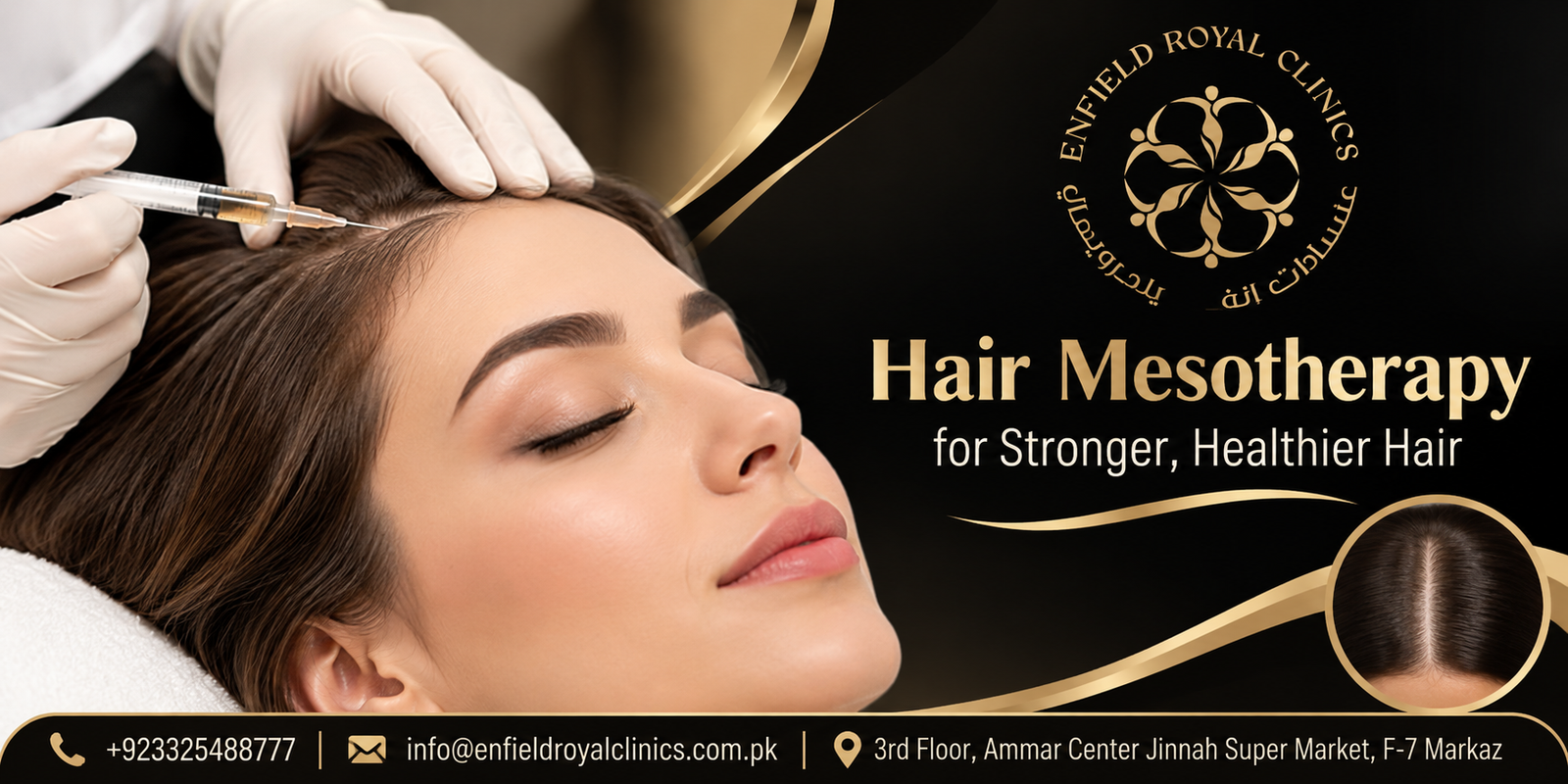
As awareness of hair restoration options grows, many people explore treatments that may support existing hair follicles and improve scalp health. Hair mesotherapy is one procedure that has gained attention for this purpose. However, its effectiveness for restoring a receding hairline depends on several factors, and the available scientific evidence remains limited.
People researching Hair Mesotherapy Treatment in Islamabad should understand what the procedure involves, what it may offer, and when other hair-loss treatments may be more appropriate.
What Causes a Receding Hairline?
A receding hairline usually develops when hair gradually becomes thinner around the forehead and temples. One common cause is androgenetic alopecia, also known as male or female pattern hair loss. This condition is influenced by genetics and sensitivity to hormones called androgens.
In men, the hairline may move backwards from the temples, sometimes creating an M-shaped pattern. In women, hair loss more commonly appears as widening along the central part, although the frontal hairline can also change.
Other possible causes include:
- Stress and illness: Significant physical or emotional stress can trigger temporary hair shedding.
- Nutritional deficiencies: Low iron or inadequate nutrient intake may contribute to hair loss.
- Hormonal conditions: Thyroid disorders and other hormonal changes can affect the hair-growth cycle.
- Scalp conditions: Inflammation, infections, and certain skin disorders may damage hair or interfere with normal growth.
- Traction: Repeated tight hairstyles can place pressure on the hairline and cause traction alopecia.
Identifying the cause is important because different types of hair loss require different treatments.
How Does Hair Mesotherapy Treatment Work?
Hair mesotherapy is a minimally invasive procedure involving small injections into selected areas of the scalp. The injected solution may contain ingredients such as vitamins, minerals, amino acids, peptides, hyaluronic acid, or other substances intended to support scalp health.
The formulation can vary between providers, and there is no universally standardized mesotherapy solution. The procedure is generally promoted as a way to deliver selected ingredients directly into areas affected by thinning.
For a receding hairline, treatment may be directed towards the frontal scalp and temples, depending on the individual’s condition. However, the presence of injections does not mean that the treatment can reactivate every weakened follicle or produce new hair growth.
Research on hair mesotherapy is still limited and inconsistent. Different ingredients, injection methods, and treatment schedules make it difficult to establish how effective the procedure is for pattern hair loss. It should therefore be considered cautiously rather than as a proven method of restoring a receding hairline.
Can Hair Mesotherapy Improve a Receding Hairline?
The potential benefit depends largely on whether the hair follicles in the affected area are still active.
When thinning is relatively early, some follicles may continue producing fine or weakened hairs. People in this situation sometimes explore supportive scalp treatments. However, there is not enough strong evidence to confirm that mesotherapy consistently improves frontal hair density or reverses a receding hairline.
If follicles have been permanently destroyed or an area has been bald for a long time, mesotherapy is unlikely to restore hair there. It cannot reliably create new follicles.
People considering Hair Mesotherapy Treatment in Islamabad should also understand that a receding hairline caused by genetic hair loss may continue to progress without an appropriate long-term management plan. A professional assessment can help determine whether the condition is pattern hair loss, traction-related damage, or another scalp problem.
Who May Be Suitable for Hair Mesotherapy?
Not everyone with a receding hairline is an appropriate candidate for an injectable scalp procedure. Suitability depends on the cause of hair loss, scalp condition, general health, and treatment expectations.
A person with early thinning may want to discuss available options after receiving a diagnosis. Someone experiencing sudden hair loss, patchy bald areas, scalp pain, itching, scaling, or inflammation may need specific investigations before considering mesotherapy.
Medical history also matters. People with active scalp infections, known allergies to treatment ingredients, bleeding disorders, or certain medical conditions should receive careful assessment. Anyone taking blood-thinning medication should disclose this before treatment.
A professional may examine the hairline, review family history, and recommend blood tests if nutritional or hormonal causes are suspected. This helps avoid treating the visible symptom while overlooking the underlying problem.
What Other Treatments Can Help Manage a Receding Hairline?
Hair mesotherapy is not the only option for people experiencing frontal hair loss. Depending on the diagnosis, treatments with stronger evidence may be more suitable.
1. Topical minoxidil: This medication is commonly used for certain forms of pattern hair loss. It may help maintain existing hair and improve density in some individuals. Results require consistent use, and suitability should be discussed with a healthcare professional.
2. Prescription medication: Finasteride may be considered for suitable men with male pattern hair loss. It has potential side effects and is not appropriate for everyone. Medication decisions require individual medical advice.
3. Treatment of underlying conditions: If hair loss is linked to iron deficiency, thyroid problems, scalp inflammation, or another medical issue, treating that condition may be an important part of management.
4. Hair transplantation: For selected people with stable pattern hair loss and adequate donor hair, transplantation may be considered to improve the appearance of a receding hairline. It requires careful assessment and realistic expectations.
5. Hair-care adjustments: Avoiding tight hairstyles, reducing excessive heat and chemical treatments, and maintaining a balanced diet may help protect hair from additional damage. These steps cannot reverse genetic hair loss, but they can support general hair health.
The most appropriate choice depends on the type and stage of hair loss rather than the popularity of a particular procedure.
What Should Patients Expect During and After Hair Mesotherapy?
During the procedure, the scalp is cleaned, and small injections are administered in the selected areas. The experience may involve mild discomfort, stinging, or temporary tenderness. Some individuals experience redness, swelling, bruising, or irritation afterward.
Less common complications include infection, allergic reactions, and prolonged inflammation. Increasing pain, spreading redness, fever, unusual swelling, or discharge should be assessed promptly.
Hair growth is naturally slow, so no immediate improvement should be expected. There is also no universal number of sessions or guaranteed timeline for results. The treatment plan may vary depending on the formulation and individual circumstances, but repeated sessions do not guarantee hairline restoration.
Before proceeding, patients should ask which ingredients will be injected, what evidence supports their use, what risks are involved, and how progress will be evaluated. Clear information helps people make decisions without relying on unrealistic promises.
Frequently Asked Questions
1. Can hair mesotherapy restore a completely receded hairline?
There is no reliable evidence that mesotherapy can restore a completely bald hairline. It cannot reliably bring back follicles that have been permanently destroyed.
2. Is hair mesotherapy useful for early hairline thinning?
Some people explore it when thinning is still developing, but evidence of consistent improvement remains limited. A proper diagnosis and discussion of established treatments are important.
3. How many sessions are needed for a receding hairline?
There is no universally accepted session schedule. The number and frequency of treatments may vary, and repeated sessions do not guarantee visible regrowth.
4. Can genetic hair loss be treated with mesotherapy?
Mesotherapy has not been proven to reliably stop genetic hair loss. Treatments such as minoxidil and suitable prescription medication may have stronger evidence for certain forms of pattern hair loss.
5. Is hair mesotherapy painful?
The procedure involves small scalp injections, so mild discomfort or stinging may occur. Temporary redness, tenderness, and swelling are also possible.
6. When should someone seek help for a receding hairline?
An assessment is useful when the hairline is gradually changing or shedding continues. Sudden, patchy, painful, or inflamed hair loss should be evaluated promptly to identify the underlying cause.