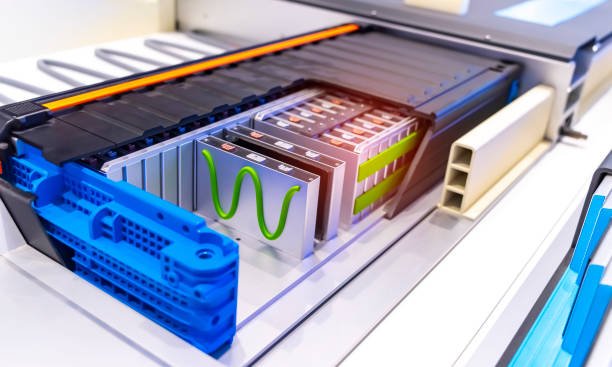
The rapid expansion of electric mobility across Asia Pacific has increased the importance of battery performance, safety, and longevity. As electric vehicle (EV) adoption accelerates throughout the region, battery thermal management systems are emerging as a critical technology that enables efficient battery operation under varying environmental and driving conditions.
According to the study published by Vyansa Intelligence, the Asia Pacific EV battery thermal management industry was valued at USD 2.74 billion in 2025 and is projected to reach USD 6.15 billion by 2032, registering a CAGR of 12.24% during the forecast period from 2026 to 2032. The industry’s growth reflects the rising production of electric vehicles and the growing need for advanced thermal solutions that enhance battery efficiency and reliability.
Why Battery Thermal Management Matters
Battery thermal management systems are designed to regulate the temperature of EV battery packs during charging, discharging, and vehicle operation. Maintaining batteries within their optimal temperature range is essential for ensuring safety, improving energy efficiency, and extending battery life.
Extreme temperatures can significantly affect battery performance. Overheating may lead to accelerated degradation and safety risks, while low temperatures can reduce charging efficiency and vehicle range. Thermal management technologies help address these challenges by providing cooling or heating mechanisms that support consistent battery operation.
As consumers increasingly expect longer driving ranges and faster charging capabilities, thermal management has become a fundamental component of next-generation electric vehicles. Insights into global EV adoption trends and battery innovation are highlighted in the International Energy Agency’s Global EV Outlook 2025.
Asia Pacific Continues to Lead EV Manufacturing
Asia Pacific has established itself as a major hub for electric vehicle manufacturing and battery production. Countries such as China, Japan, South Korea, and India are making substantial investments in electric mobility infrastructure, battery technologies, and sustainable transportation initiatives.
Government policies supporting EV adoption, coupled with expanding manufacturing capabilities, are contributing to increased demand for battery thermal management solutions across the region. The growth of domestic EV industries has also encouraged investments in supporting technologies that improve vehicle safety and performance.
With electric mobility becoming an important pillar of industrial and environmental strategies, thermal management technologies are expected to remain closely aligned with the broader development of the EV ecosystem.
Fast Charging Technologies Are Driving Innovation
The growing availability of fast-charging infrastructure is creating new challenges and opportunities for battery thermal management systems. Rapid charging generates significant heat within battery packs, making efficient thermal control increasingly important.
Advanced cooling systems help prevent excessive temperature buildup during fast charging, enabling manufacturers to improve charging speeds without compromising battery health. As charging technologies continue to evolve, thermal management solutions are becoming more sophisticated to accommodate higher power requirements.
Innovations in thermal design are supporting the development of electric vehicles capable of delivering improved user experiences while maintaining safety and operational efficiency.
Liquid Cooling Systems Gain Industry Attention
Among the various thermal management technologies available, liquid cooling systems are gaining considerable attention across the automotive sector. These systems offer efficient heat transfer capabilities and are particularly suitable for high-performance EV batteries.
Liquid cooling solutions can provide more uniform temperature distribution across battery cells, contributing to enhanced performance and extended battery lifespan. Their ability to manage higher thermal loads has made them increasingly relevant for premium electric vehicles and high-capacity battery packs.
Manufacturers are also exploring hybrid thermal management approaches that combine multiple cooling technologies to optimize battery performance across different operating environments.
Battery Safety Remains a Key Industry Priority
Safety continues to be one of the most important considerations in electric vehicle development. Battery thermal management systems play a significant role in mitigating thermal runaway risks and ensuring batteries operate within safe temperature limits.
As battery energy densities continue to increase, effective thermal management becomes even more critical. Automotive manufacturers are incorporating advanced sensors, control algorithms, and thermal materials to improve temperature monitoring and response capabilities. The U.S. Department of Energy’s Batteries and Electrification program provides valuable information on battery technologies and research initiatives aimed at improving EV performance and safety.
The growing emphasis on battery safety is encouraging research and development efforts focused on creating more reliable and efficient thermal management technologies for both passenger and commercial electric vehicles.
Sustainability Supports Technology Adoption
The expansion of electric mobility across Asia Pacific is closely connected to broader sustainability objectives. Efficient battery thermal management contributes to improved battery longevity, which can reduce material consumption and support sustainable vehicle life cycles.
Longer-lasting batteries may help optimize resource utilization and reduce the environmental impacts associated with battery replacement and disposal. Thermal management systems therefore contribute not only to vehicle performance but also to the overall sustainability of electric mobility initiatives.
Manufacturers are increasingly considering sustainability throughout battery design and production processes, reinforcing the importance of technologies that enhance battery durability.
Challenges Continue to Influence Industry Development
Despite strong growth prospects, several challenges remain for the EV battery thermal management industry. The integration of advanced thermal management systems can increase vehicle complexity and manufacturing costs. Balancing performance improvements with cost considerations remains an important objective for manufacturers.
Additionally, evolving battery chemistries require thermal management technologies to continuously adapt to changing performance characteristics and safety requirements. Research and development efforts are therefore essential to support future innovation within the sector.
Supply chain considerations, component availability, and regional regulatory requirements will also continue to influence technology adoption across Asia Pacific’s diverse automotive markets.
Outlook for the Industry
The Asia Pacific EV battery thermal management industry is positioned for significant growth as electric vehicle adoption continues to accelerate across the region. Rising investments in battery technologies, expanding charging infrastructure, and increasing consumer expectations for vehicle performance are expected to support ongoing technological advancements.
The projected increase from USD 2.74 billion in 2025 to USD 6.15 billion by 2032 reflects the growing importance of thermal management solutions within the electric mobility ecosystem. As battery technologies continue to evolve, thermal management systems are likely to remain a foundational element supporting safer, more efficient, and sustainable electric vehicles