Build Your Future with Project Management Certification
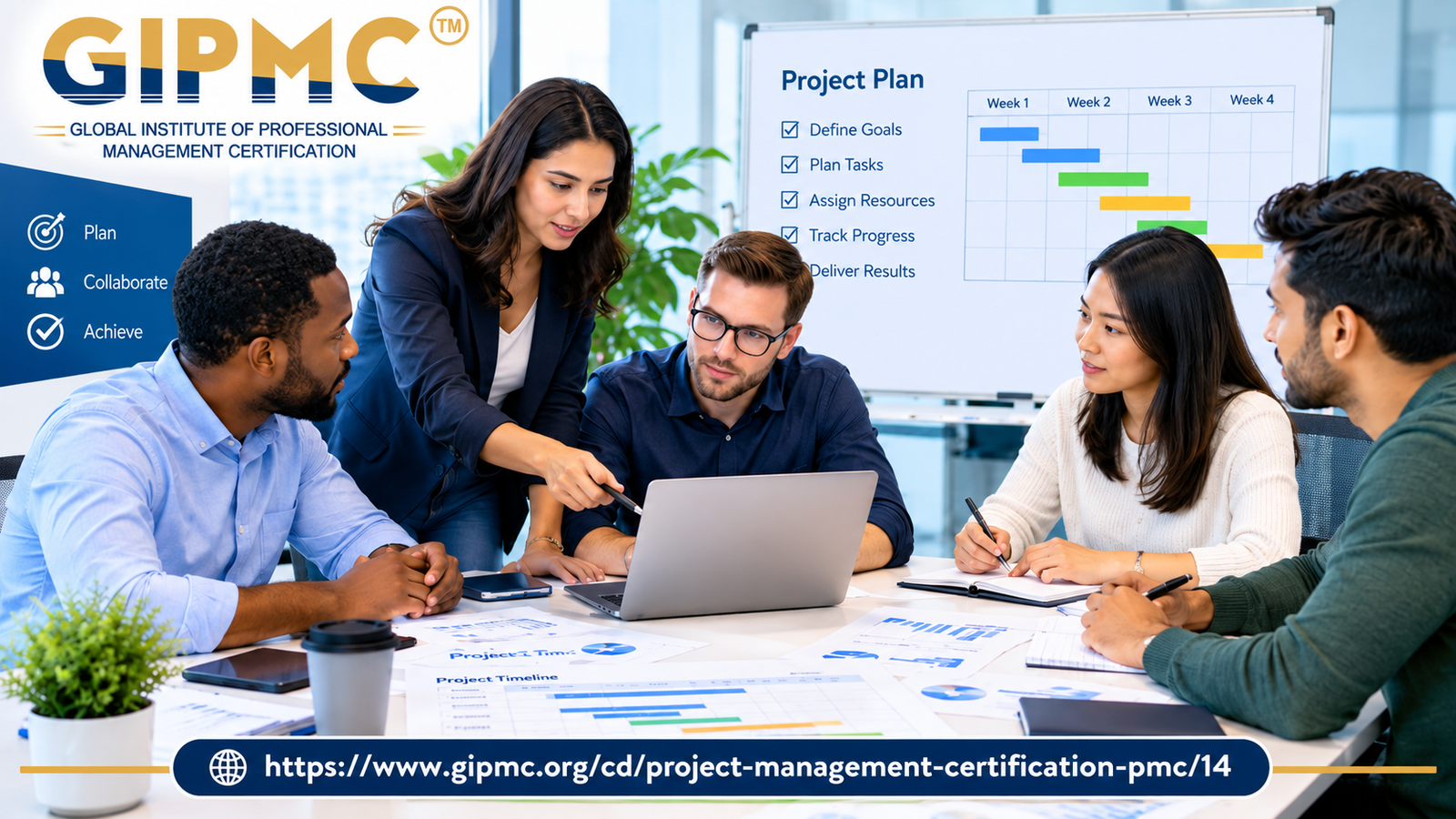
A project can be broken down into three main elements: a goal, a plan, and someone responsible for managing that plan. People with knowledge of project management know how to get a group of people to accomplish a task. Developing project management knowledge and obtaining a certification can benefit beginners and working professionals in learning and understanding different work environments.
What is project management?
The general definition of Project Management Certification is planning, organizing, and controlling the implementation of a project in order to achieve specific goals within specified constraints. It incorporates the application of skills, tools, and techniques to project activities to meet the project’s requirements.
No matter the industry, organizations need project management skills and practices to deliver projects effectively. Project management is essential to almost every area of a business. It incorporates the integration of various aspects of a business, including the different people involved, the available resources, and the activities and risk factors associated with a project.
Within an organization, project management is the structured approach for efficiency and effectiveness in accomplishing project work. Outside of an organization, it helps businesses deliver products and services to meet their customers’ needs. The Project Management Institute (PMI) defines it as using skills and tools to manage project activities to meet project objectives.
Must Know Skills for Project Management
Though many equate project management to time, task, and schedule management, much more is required. It incorporates a variety of interpersonal skills. Organizational and communication skills are essential. Other skills required include planning and organizing. Planning and organizing enable one to set goals and objectives, allocate tasks to people and groups, establish time and schedule constraints, and marshal the required resources. A thorough understanding of such skills is essential for a successful project.
1. Communication and Teamwork
Project managers communicate with many different people, including the members of their own team, clients, and stakeholders. They use their communication skills to help clients and stakeholders understand what is expected of them and to clarify project requirements.
2. Risk Management
Various risks are associated with each project, and some of them may impact the successful implementation of the project. Identifying such risks and creating a plan to respond to those risks prior to implementation can help minimize disruption.
3. Time and Resource Management
Managing time, money, and other resources available to the team helps avoid needless delays.
4. Problem Solving and Decision Making
Professionals should be able to recognize problems and evaluate possible solutions to them before making a choice as to which course of action to take.
This knowledge helps people working in different fields, including IT, construction, marketing, consulting, and more.
How Does Knowledge of Project Management Help Beginners?
It is not necessary to have previous experience in project management in order to gain a basic understanding of what project management involves.
Initially, knowledge of project management gives people the tools to take on more responsible and coordinating roles within an organization.
For instance, within an organization that is developing a new website, there will be designers, developers, and marketing professionals. Someone needs to coordinate their activities and help them manage their deadlines to ensure the overall project progresses.
Through the structure of a learning program, beginners can also learn about assessment and managing risk, project scheduling, and allocation of resources.
Why Should I Get an Online Project Management Certification?
An online project management certification enables people to gain knowledge in project management in a structured way and at a convenient time for them.
When looking at a program, consider the following:
Appropriate learning content: Topics should include aspects of planning, executing, monitoring, and controlling a project and the more general aspects of communicating and dealing with risk.
- Flexible learning: The flexibility of online learning means you can fit learning into your schedule better, and learning can be incorporated around work and study commitments.
- Learning outcomes: What skills and knowledge are the learners developing through the program?
- Assessment: Examine how learning will be evaluated and what type of activities will be included to assess learning.
- Transparency: Ensure you understand the course and the certification process and fees prior to enrollment.
Some beginners’ project management courses provide learners with a basic understanding of project management responsibilities.
Remember, obtaining a certificate does not mean you will be offered a project management position.
Take the Next Step with a PMC Certificate
As your next step, to better understand project management, consider enrolling in a relevant learning program of your choice.
The Project Management Certification (PMC) offered by the Global Institute of Project Management Certifications (GIPMC) is one option available.
Pursuing a PMC certificate may assist you in defining and outlining project management concepts and enhancing your ability to contribute to the workplace in relation to project management.
Learning project management can enhance your current professional skills and help you during your career. It can build your confidence when confronting challenges at work.
Most Common Questions
1. What is the value of project management certification?
Project management certification helps learners structure their knowledge on project management through structured learning or assessment.
2. Is online learning on project management suitable for beginners?
Online learning is suitable for beginners. Before enrolling, consider entry requirements and look into the course content, the type of assessment used, and the level of support provided.
3. What skills are required to be a project management officer?
Skills needed to be a project management officer include planning, communication, organization, and time management with an added risk assessment and problem-solving focus. Familiarity with project management tools and applications is also beneficial.
4. Can a PMC be used to progress my career?
A PMC can assist with career progression by showing that the individual has achieved a level of project management learning.
5. How do I decide on the right online project management certification?
Evaluate the content of each course and compare it to what you already know. What are your learning objectives? The cost and the certification provided by each course provider should also be evaluated. Choose the course most appropriate to your level of expertise and in line with your professional development goals.