Complete Guide to Geomembrane and Its Applications
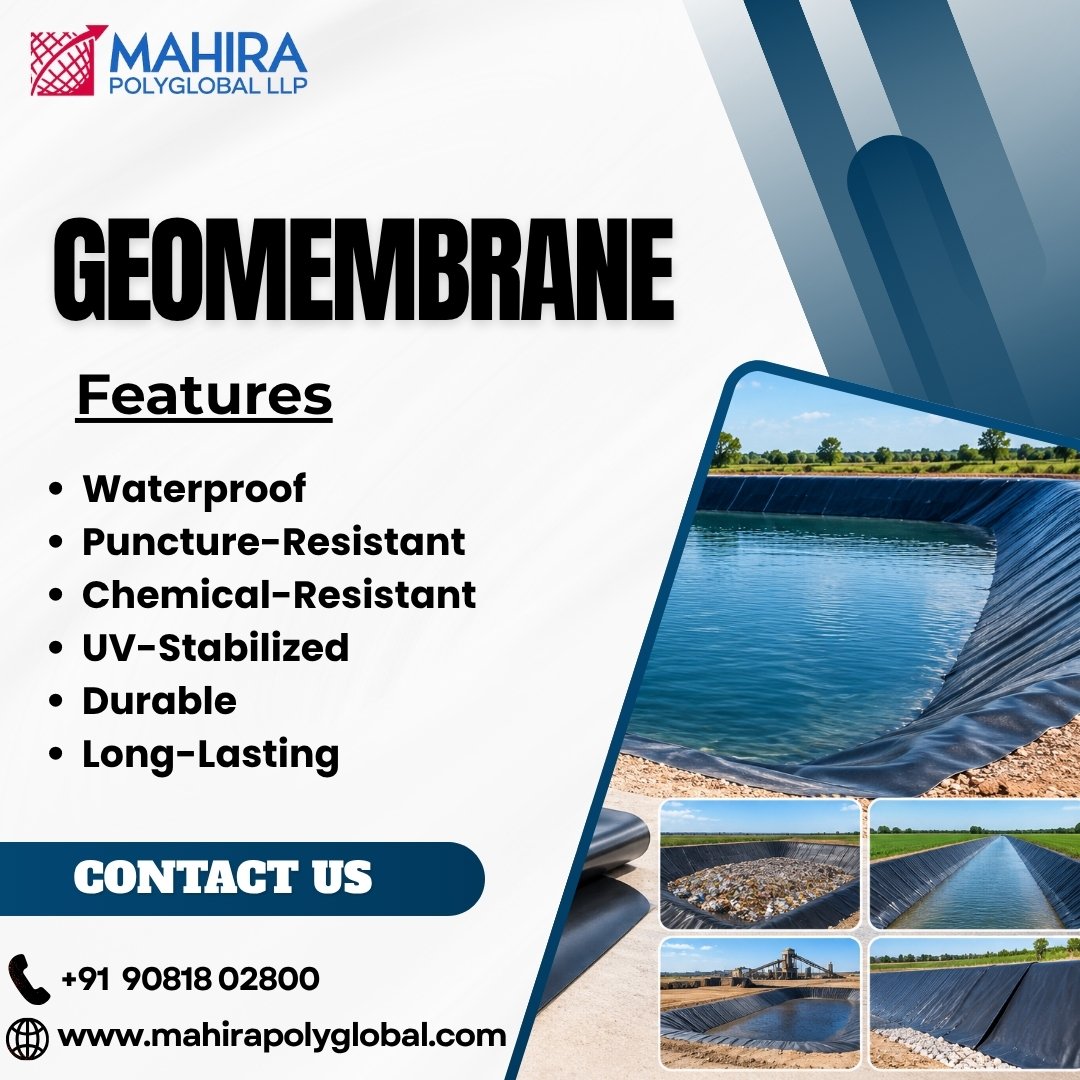
The geomembrane is a special kind of artificial waterproof lining which is widely applied in order to control the liquid movement and prevent the soil as well as underground water from pollution. The geomembrane is generally produced from such materials as High-Density Polyethylene (HDPE), Linear Low-Density Polyethylene (LLDPE), Low-Density Polyethylene (LDPE), and Polyvinyl Chloride (PVC).All these materials differ by their flexibility, strength, chemical resistance, and durability. Geomembranes are often applied in landfills, mining projects, reservoirs, canals, ponds, sewage treatment plants, and various industries. The primary function of geomembranes is the formation of a protective layer that decreases leakage and prevents unwanted liquid flow. When it comes to water storage, geomembranes can be useful for keeping water, while in case of waste management projects, they can keep harmful chemicals away from the surrounding soil. Choosing an appropriate geomembrane depends on many aspects, including project environment, conditions of installation, and duration of use.
Key Attributes That Facilitate Performance and Longevity
There are a number of attributes that contribute to the geomembrane performance. The thickness is the first factor that needs to be taken into account as it affects both puncture strength and mechanical properties. Flexibility will facilitate its installation at areas with an uneven surface and sloped areas. It is critical that the chosen geomembrane maintains its required characteristics under the conditions for which it is chosen. Companies interested in buying Geomembrane Manufacturer Gujarat need to check technical parameters, thickness, materials, and test data. Tensile strength and elongation are used to measure how the material behaves when stretched or pulled. Puncture strength is critical at facilities where the geomembrane may get into contact with stones, uneven surface, and construction machinery.
Types of Geomembrane According to Applications
There are several types of geomembrane that are produced, depending on the type of application of the liner. HDPE geomembrane is popular due to its high tensile strength, low permeability, and great resistance to various chemicals. This type of geomembrane is widely used in landfills, mining sites, industrial ponds, and other water containment constructions. LLDPE geomembrane is more flexible and provides higher elongation that makes it applicable in cases when there is some ground movement in the construction area. LDPE geomembrane is also flexible and may be applied in some water containment and agriculture applications. PVC geomembrane is known for its flexibility and easy handling that might be required in certain cases.
Process of Manufacturing and Quality Control
In most cases, the process of manufacturing geomembranes usually entails preparation of polymer raw material, its melting and processing and formation of the material into sheets through appropriate manufacturing process. Usually, extrusion process is used to manufacture geomembrane sheets with controlled thickness and width. Temperature, material homogeneity, production rate and sheet size have to be monitored appropriately during the manufacturing process. After the sheet is manufactured, it could be tested for qualities such as thickness, tensile strength, elongation and puncture resistance among others depending on the material and its intended use. Surface condition and uniformity also become important since defects may have an impact on installation and performance of the material. Technical data sheets and test reports help customers determine whether the material is capable of meeting their needs.
Key Uses in Construction, Agriculture, and Industries
The applications of geomembranes include numerous industries since they act as barriers to prevent movement of liquids. Landfilling involves use of geomembranes to retain liquids that come as a result of landfills. The mining industry makes use of geomembranes in the form of liners for tailing storage facilities, heap leach pads, and process water ponds. In agriculture, geomembranes are used in farm ponds, irrigation reservoirs and water storages. Industries may incorporate geomembranes in wastewater treatment facilities, chemical storages, and containment systems. Other uses of geomembranes include canals, decorative ponds, aquaculture, and water management systems.
The Selection Process for an Appropriate Geomembrane for Your Construction
Selecting the correct geomembrane is a process that goes beyond comparing the costs of different types. Purchasers should first ascertain the use that will be made of the lining system and the conditions under which it will be installed. Factors such as type of material, thickness, density, tensile strength, elongation, puncture resistance, chemical resistance, and UV resistance have to be considered. Also, the exact measurements for the area that needs to be lined have to be known, such as the slopes, angles, ditches, and locations for sheet overlaps. The installation process, and how the geomembranes are to be put together, need to be specified before purchasing the material. If companies wish to choose a proper Geomembrane Supplier Gujarat, then they can look into certain aspects like technical specifications, testing, quality control, sizes, and supplies.
Installation, Maintenance and Proper Handling
The installation process plays a significant role in the efficiency of the geomembrane. First and foremost, all sharp items such as rocks, tree roots and anything that may puncture the geomembrane should be cleared before the installation process. The soil surface must be leveled and compacted based on the design. It is very important that installation is done properly with the appropriate allowance made for slopes, corners, and overlaps. Welding is usually used in the joining of the material, depending on the specific geomembrane and design of the project. It is important that after welding is done, the seams are checked using appropriate quality control techniques.
Conclusion
The geomembrane is one of the most essential materials in current projects concerning water, environmental protection, construction, agriculture, mining, and industries. The material is non-permeable, flexible, resistant to chemicals and durable and can be used for numerous containment purposes. Nevertheless, the proper material should be chosen considering the peculiarities of the site and other factors. Different types of HDPE, LLDPE, LDPE, PVC, and reinforced geomembranes have different qualities. Therefore, a purchaser should study the material characteristics and quality, thickness, and installation conditions before buying it.
Frequently Asked Questions (FAQs)
1. Where is Geomembrane commonly used?
Common applications are landfills, ponds, reservoirs, mining sites, canals, waste water treatment facilities, and industrial containment facilities.
22. What materials are used to manufacture Geomembrane?
Materials such as HDPE, LLDPE, LDPE, and PVC are commonly used. Also, reinforced geomembrane is available where reinforcement is required by certain applications.
3. What are the parameters used in judging quality of Geomembrane?
Parameters such as thickness, tensile strength, elongation, puncture resistance, chemical resistance, UV stability, and permeability matter in determining the quality of geomembrane. Requirements will depend on the use intended.
4. What is the process for the installation of Geomembrane?
The process includes ground surface preparation, levelling and compaction, sheet laying, sheet joining by welding methods, and checking to establish whether there are any damages or not.
5. Who is the largest manufacturer of Geomembrane?
There is no documented evidence from any source that proves one particular company as the biggest producer of Geomembranes. Mahira Polyglobal LLP is a company based in India and offers Geomembrane products for various purposes like water containment, agriculture, construction, mining, and industries. In selecting the right manufacturing company, one has to take into consideration some factors including quality, thickness, tensile strength, and resistance to chemicals and UV rays.