Custom Butcher Paper and Its Benefits for Food Businesses
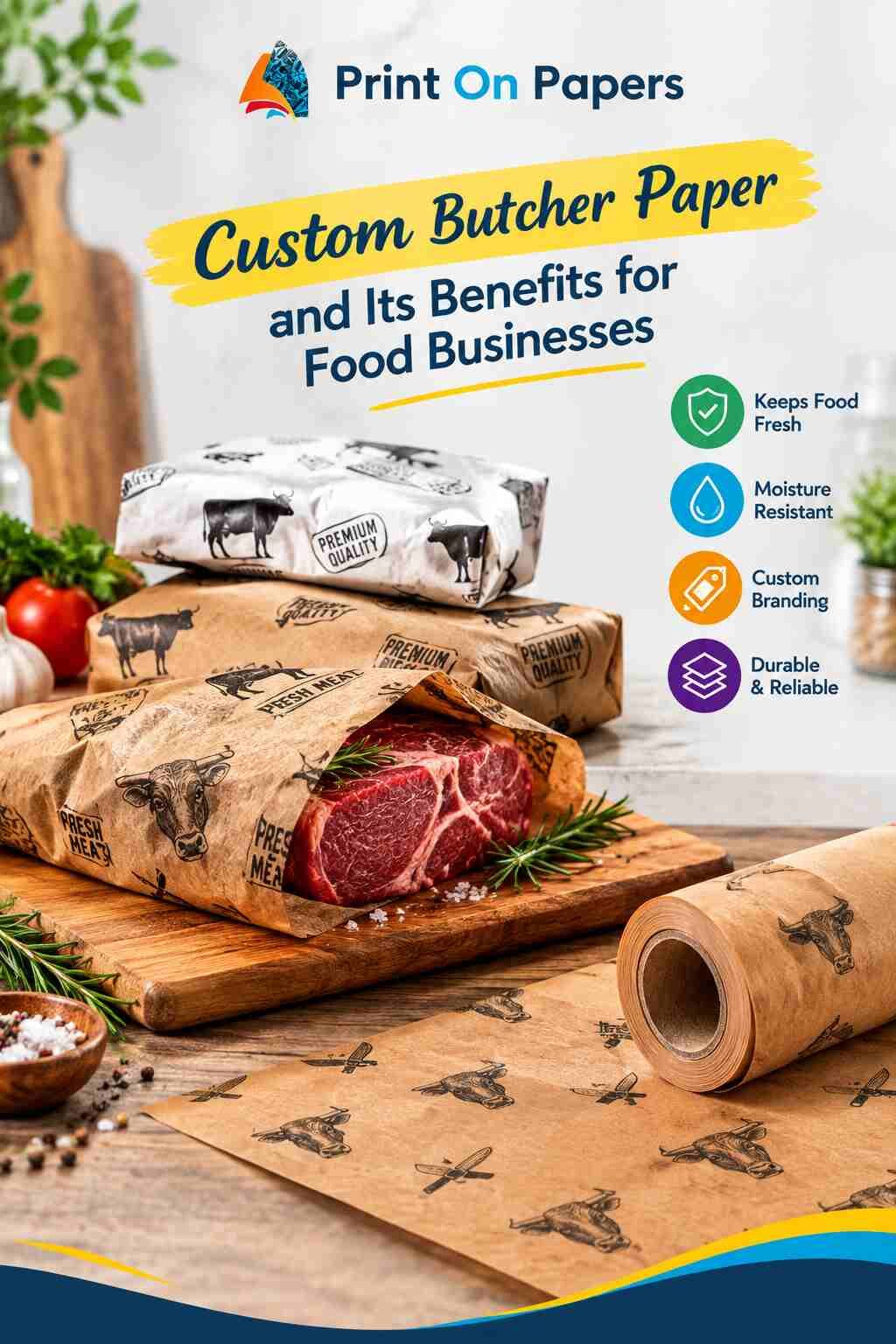
Custom butcher paper wraps and protects meat while giving butcher shops and food businesses a simple way to put their name on every order. It’s sturdy, food-safe, and works for wrapping, freezing, and even serving. Here’s what it does well, where it fits compared to other papers, and what to check before you order.
What Is Custom Butcher Paper?
Butcher paper is a strong, uncoated paper originally made for wrapping fresh meat at the counter. It’s thicker than most food papers, which is why it holds up to sharp cuts, bones, and heavier products without tearing. “Custom” means the paper is sized to your needs and can be printed with your shop’s name or logo.
Custom butcher paper usually comes in a few versions:
- Plain white or kraft-colored rolls
- Printed rolls with a logo or branding
- Peach or pink butcher paper, popular for smoking meat
- Different weights depending on how heavy-duty the job is
Meat markets, butcher shops, barbecue restaurants, and food trucks all rely on this paper in one form or another.
Why Do Food Businesses Use Butcher Paper?
Food businesses use butcher paper because it’s tough enough to wrap meat safely, flexible enough for different uses, and cheap enough to buy in bulk. It’s one of the most practical papers in food service.
Does Butcher Paper Protect Meat Well?
Yes. It’s thicker than deli or wax paper, so it holds up when wrapping heavier cuts, bones, or products with sharp edges. It won’t give you the same moisture barrier as freezer paper, though, so for long-term freezer storage, freezer paper is still the better pick.
Can Butcher Paper Be Used for Smoking and Cooking?
Pink or peach butcher paper is commonly used in barbecue cooking, wrapped around brisket or ribs during smoking to help hold moisture without turning the bark soft the way foil can. This use has become popular enough that many suppliers sell it specifically for that purpose. Always check that the paper you’re buying is food-grade and rated for the heat involved.
How Does Printed Butcher Paper Help Your Business?
A cut of meat wrapped in paper printed with your shop’s logo looks a lot more professional than plain paper straight off a roll. Customers notice it, and for a butcher counter or barbecue spot, that wrap is often the last thing a customer sees before getting home or sitting down to eat.
How Does Butcher Paper Compare to Other Food Papers?
Different papers suit different jobs. Here’s how butcher paper stacks up against the others you’ll come across.
| Paper type | Strength | Best for | Grease/moisture resistance |
|---|---|---|---|
| Butcher paper | High | Meat wrapping, barbecue smoking | Low to moderate |
| Freezer paper | Moderate | Long-term frozen storage | High |
| Deli paper | Low | Sandwiches, cold cuts | Low to moderate |
| Greaseproof paper | Moderate | Fried foods, burgers | High |
Is Butcher Paper the Same as Freezer Paper?
No. Butcher paper is thicker and better for short-term wrapping, cutting, and serving, but it doesn’t have the coating that freezer paper uses to block moisture over long storage. If you’re freezing meat for more than a few weeks, freezer paper is the safer choice.
What Should You Check Before Ordering Custom Butcher Paper?
Before placing an order, confirm the paper’s weight, food-safety rating, and roll size for your setup. A quick check now saves you from reordering later.
Here’s a simple list to go through:
- Paper weight. Heavier paper holds up better for larger cuts and rougher handling.
- Food-contact safety. Paper touching meat directly should meet FDA requirements for food-contact materials, including any inks used in printing.
- Roll width and length. Match this to your counter setup or typical cut sizes to avoid waste.
- Color and type. White, kraft, or pink/peach, depending on whether it’s for counter wrapping or smoking.
- Printing needs. Send a clear logo file and ask for a proof before the full run prints.
- Minimum order quantity. Custom printed rolls often need a larger minimum than plain paper.
- Turnaround time. Custom printing takes longer than plain rolls, so order ahead of busy seasons.
The U.S. Small Business Administration points out that supplier delays are a common issue for growing small businesses, so it’s worth asking about lead times upfront, especially before holidays or big barbecue events.
Where Is Custom Butcher Paper Used?
Butcher paper shows up across a range of food businesses, not just meat counters. Common uses include:
- Wrapping fresh cuts of meat, poultry, and fish at the counter
- Wrapping brisket and ribs during barbecue smoking
- Lining trays for serving barbecue or deli orders
- Wrapping bulk meat orders for customer pickup
- Branding wholesale shipments to restaurants or grocery clients
Butcher shops and barbecue spots in states like Texas, Kansas, and North Carolina, where barbecue culture runs deep, often lean on branded butcher paper as part of how they present their food.
How Much Does Custom Butcher Paper Cost?
Pricing depends on the paper weight, roll size, and whether it’s plain or printed. Plain rolls cost less. Printed rolls add setup costs upfront, but the price per roll usually drops with larger orders.
A few things that can add to the total:
- Setup or plate fees for custom printing
- Rush charges for tight deadlines
- Shipping for heavy rolls of paper
- Reprint costs if your logo file isn’t ready to go
Ask your supplier for a full quote that breaks down each cost, so nothing catches you off guard later.
Where Can You Order Custom Butcher Paper?
If you’re looking for butcher paper sized and printed for your shop, you can check the options at PrintOnPapers. It’s a good place to compare paper types and see what fits your business.
Frequently Asked Questions
How much does custom butcher paper cost?
It depends on the paper weight, roll size, and whether it’s printed. Printed rolls cost more upfront because of setup, but the price per roll drops as your order size grows.
How do I order custom butcher paper?
Decide on your roll size and whether you want printing, then ask a supplier for a quote based on your order volume. Most suppliers will send a proof for you to approve before printing the full run.
What is the minimum order for custom butcher paper?
It varies by supplier. Plain rolls often have a lower minimum, while custom printed rolls usually require a larger order to cover setup costs.
How long does custom printed butcher paper take?
Expect a few weeks for a first order, since it includes design proofing and printing. Reorders of the same design usually move faster.
Can butcher paper be used for smoking meat?
Yes, pink or peach butcher paper is a common choice for wrapping brisket and ribs during smoking. Just make sure the paper is food-grade and suited to the heat of your smoker.
Is butcher paper the same as freezer paper?
No. Butcher paper is thicker and better for short-term wrapping and cutting, while freezer paper has a coating built for long-term frozen storage. For extended freezer time, freezer paper is the better option.
Conclusion
Custom butcher paper earns its place in a butcher shop or barbecue kitchen because it’s tough, versatile, and easy to brand. Whether you’re wrapping fresh cuts at the counter or smoking a brisket low and slow, the right weight and type make a real difference. Check food safety, confirm your roll size, and ask about minimum orders and turnaround time before you commit to a print run.
Ready to order? Look at your typical cut sizes, decide on plain or printed paper, and request a quote so you know exactly what to expect.