Does Tattoo Removal Help Fade Old Tattoos?
For people considering Tattoo Removal in Islamabad, understanding how the procedure works, what results to expect, and which factors influence fading can help them make an informed decision. Although older tattoos can often respond well to laser treatment, complete removal is not guaranteed. The outcome depends on the ink, tattoo depth, skin characteristics, and treatment plan.
How Does Tattoo Removal Help Fade Old Tattoos?
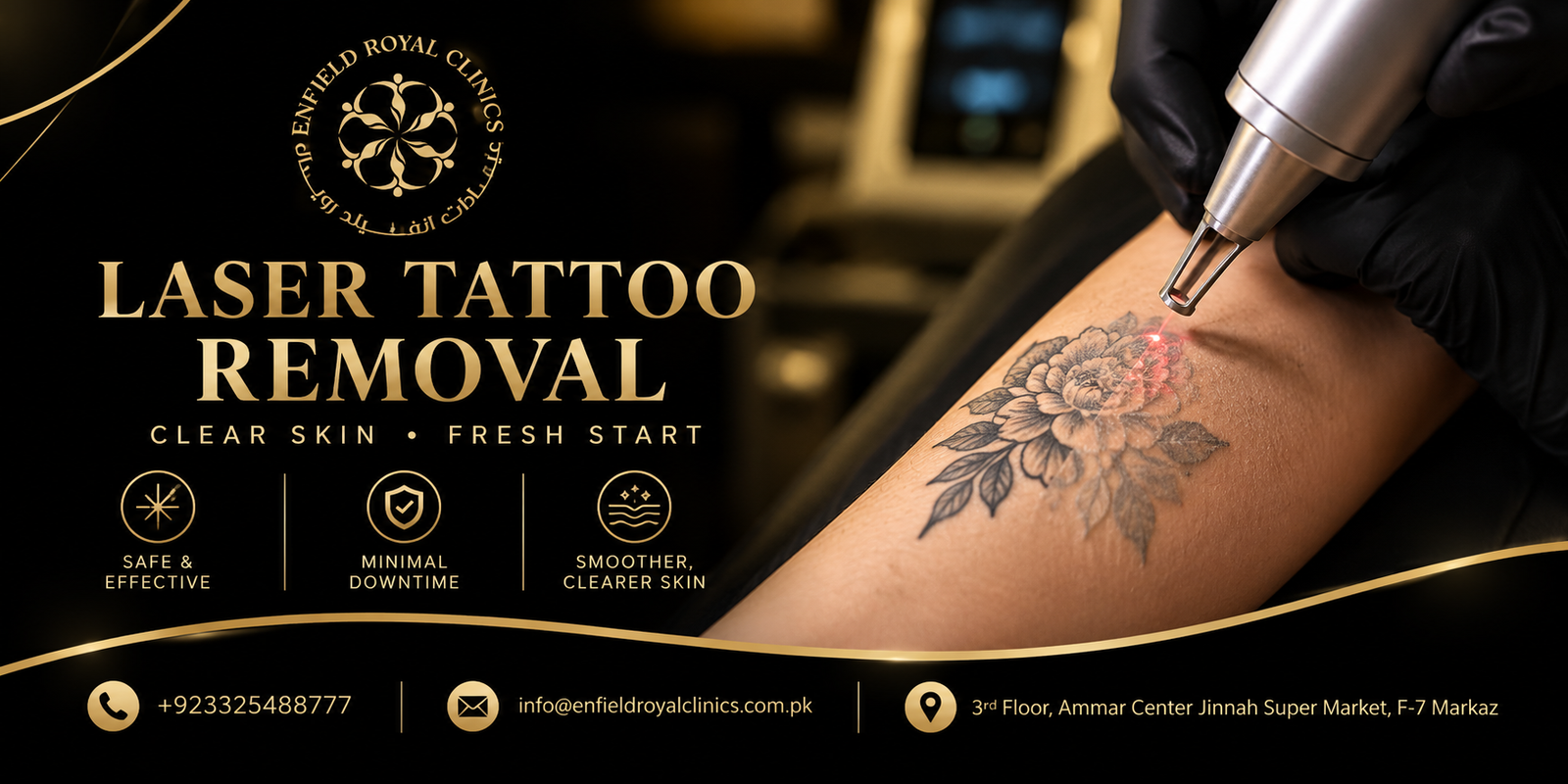
Laser tattoo removal works by delivering focused pulses of light into the skin. These pulses target tattoo ink particles, breaking them into smaller fragments that the body’s natural processes can gradually eliminate. As the ink becomes less concentrated, the tattoo may appear lighter over a series of treatment sessions.
Old tattoos can respond well to laser treatment because their ink may have already faded naturally over time. However, the age of a tattoo does not automatically determine how easily it can be removed. Some older tattoos contain deeply deposited or stubborn pigments that require additional sessions.
During treatment, the laser is selected according to the tattoo’s colors, ink characteristics, and the individual’s skin type. The surrounding skin is protected as much as possible, although temporary redness, swelling, tenderness, or changes in pigmentation can occur.
The main goal is to gradually reduce the visible ink while allowing the skin to heal between sessions. Depending on the tattoo, several treatments may be necessary to achieve noticeable fading.
Why Do Older Tattoos Sometimes Fade More Easily?
Tattoo ink gradually changes after it is placed beneath the skin. Over the years, the body’s immune system can break down and remove some small ink particles, while sunlight and natural skin changes may also affect the tattoo’s appearance.
As a result, an older tattoo may already have lost some of its original brightness. This can make it a suitable candidate for laser removal, particularly if the ink has become less dense.
However, not every old tattoo is easy to remove. Several factors can influence the process:
- Ink density: Tattoos with heavy, concentrated ink may require more sessions than lightly applied designs.
- Ink color: Black and dark blue pigments often respond well to commonly used laser wavelengths. Green, turquoise, yellow, and some other colors may be more difficult to treat.
- Tattoo depth: Ink deposited deeper in the skin can be more challenging to remove.
- Tattoo size: Larger tattoos may require more treatment time and careful session planning.
- Previous treatments: Tattoos that have already undergone laser removal may respond differently during subsequent sessions.
- Skin characteristics: Skin tone and the tendency to develop pigmentation changes or scars influence treatment selection and safety.
An assessment helps determine whether an older tattoo is likely to fade substantially and what limitations may affect the final result.
What Happens During Laser Tattoo Removal?
People considering Tattoo Removal in Islamabad generally begin with a consultation and skin assessment. The practitioner examines the tattoo’s size, location, colors, and depth, as well as the individual’s skin type and medical history.
The treatment process usually involves several steps.
1. Skin and tattoo assessment
The practitioner evaluates the tattoo and discusses the desired outcome. Some individuals want complete removal, while others only need sufficient fading to make a cover-up tattoo possible.
2. Preparation of the treatment area
The skin is cleaned, and appropriate protective eyewear is provided. Depending on the treatment area and the individual’s needs, a cooling method or topical anesthetic may be used to improve comfort.
3. Application of laser pulses
The laser delivers short pulses of energy to the tattooed skin. Many people describe the sensation as similar to a rubber band snapping against the skin. The level of discomfort varies according to tattoo location, size, and personal sensitivity.
4. Aftercare and recovery
The treated area may appear red or swollen immediately after the procedure. Small blisters or temporary crusting can sometimes develop. Following the recommended aftercare instructions helps protect the skin while it heals.
Each session treats the tattoo progressively rather than removing all the ink at once. The skin needs time to recover, and the body needs time to clear the fragmented pigment before another session can be considered.
How Many Sessions Are Needed to Fade an Old Tattoo?
There is no single number of sessions that works for every tattoo. Some tattoos show noticeable fading after a few treatments, while others need many sessions to achieve the desired result. Complete removal may not be possible in every case.
The number of sessions depends on several considerations, including:
- The age, size, and density of the tattoo.
- The number and type of ink colors.
- The depth at which the pigment was deposited.
- The location of the tattoo on the body.
- The type of laser technology used.
- How the individual’s skin responds and heals between treatments.
Tattoos on areas with good circulation, such as parts of the upper body, may sometimes clear more efficiently than tattoos on the hands, feet, or lower legs. However, individual results vary.
Treatments are generally spaced several weeks apart, often around six to eight weeks or longer, depending on the skin’s recovery and the practitioner’s recommendations. Repeating sessions too quickly can increase irritation and the risk of complications without necessarily improving results.
Patience is essential. Tattoo removal is a gradual process, and the final outcome may become clearer over several months of treatment.
Is Tattoo Removal Safe for Different Skin Types?
Laser tattoo removal can be performed on a range of skin tones, but treatment settings and laser selection must be tailored to the individual. Some skin types are more susceptible to temporary or persistent changes in pigmentation, particularly when the laser settings are unsuitable or the skin is exposed to sunlight during recovery.
Potential side effects include redness, swelling, blistering, temporary lightening or darkening of the skin, and, less commonly, scarring or infection. Certain ink pigments may also change color after laser exposure, making assessment especially important before treatment begins.
People with a history of keloid scars, active skin infections, certain skin conditions, or previous reactions to tattoo removal should discuss these concerns before proceeding. A qualified practitioner can assess the risks and recommend suitable treatment options.
To support safe recovery, individuals are generally advised to:
- Keep the treated area clean and follow the recommended wound-care instructions.
- Avoid picking blisters, scabs, or peeling skin.
- Protect the area from direct sunlight and use suitable sun protection once appropriate.
- Avoid irritating products or activities that interfere with healing.
- Seek medical advice if they experience worsening pain, spreading redness, pus, or other signs of infection.
Proper assessment and aftercare are important for reducing complications and helping the skin recover.
What Results Can People Expect From Tattoo Removal in Islamabad?
The results of Tattoo Removal in Islamabad depend on the tattoo and the individual’s response to treatment. Many tattoos become progressively lighter, with black and dark-colored designs often showing particularly good responses. However, some pigment may remain even after multiple sessions.
A tattoo that fades significantly may still leave a faint outline or traces of color. In some cases, changes in the skin’s texture or pigmentation may remain after the ink has been reduced.
People seeking a cover-up tattoo may not need complete removal. Partial fading can sometimes provide a better base for a new design, although the amount of fading needed depends on the size, color, and style of the intended cover-up.
Realistic expectations are important. Before treatment, individuals should discuss their goals, the likely number of sessions, potential side effects, and the possibility of incomplete removal. Reviewing photographs of comparable cases can help, although photographs cannot guarantee a particular result.
For anyone considering removal, a personalized treatment plan offers a clearer understanding of what is achievable. Choosing an appropriately qualified practitioner and following the recommended treatment schedule can help support safer, more predictable progress.
Frequently Asked Questions
1. Can an old tattoo be completely removed?
Some old tattoos can be removed almost completely, but results vary. Tattoo color, ink depth, density, skin characteristics, and the type of laser all influence the outcome. Some tattoos retain faint pigment even after multiple sessions.
2. Is laser tattoo removal more effective on old tattoos?
Older tattoos may be easier to fade because some ink has already broken down naturally. However, age alone does not determine success. A dense, deeply placed old tattoo may be more difficult to remove than a lighter tattoo.
3. Does tattoo removal leave scars?
Scarring is possible but is less likely when suitable laser settings are used and aftercare instructions are followed. Picking scabs, developing an infection, or having a tendency to form raised scars can increase the risk. An assessment can help identify individual concerns.
4. How long does it take to see results from tattoo removal?
Some fading may become visible after the first few sessions, but results develop gradually. The skin needs time to heal, and the body continues clearing fragmented ink between treatments. The full process may take several months or longer, depending on the tattoo and the number of sessions required.
Conclusion
Laser treatment can help fade old tattoos by breaking down ink particles so the body can gradually clear them. Older tattoos may respond well, but the final result depends on their color, density, depth, and the individual’s skin response. Anyone exploring Tattoo Removal in Islamabad should seek a professional assessment, understand the potential risks, and allow sufficient time between sessions. With realistic expectations and appropriate aftercare, tattoo removal can help reduce the appearance of an unwanted design or prepare the skin for a future cover-up.