Dynamic vs Static Wrinkles: Why Do Some Facial Lines Remain Even When Your Face Is Relaxed?
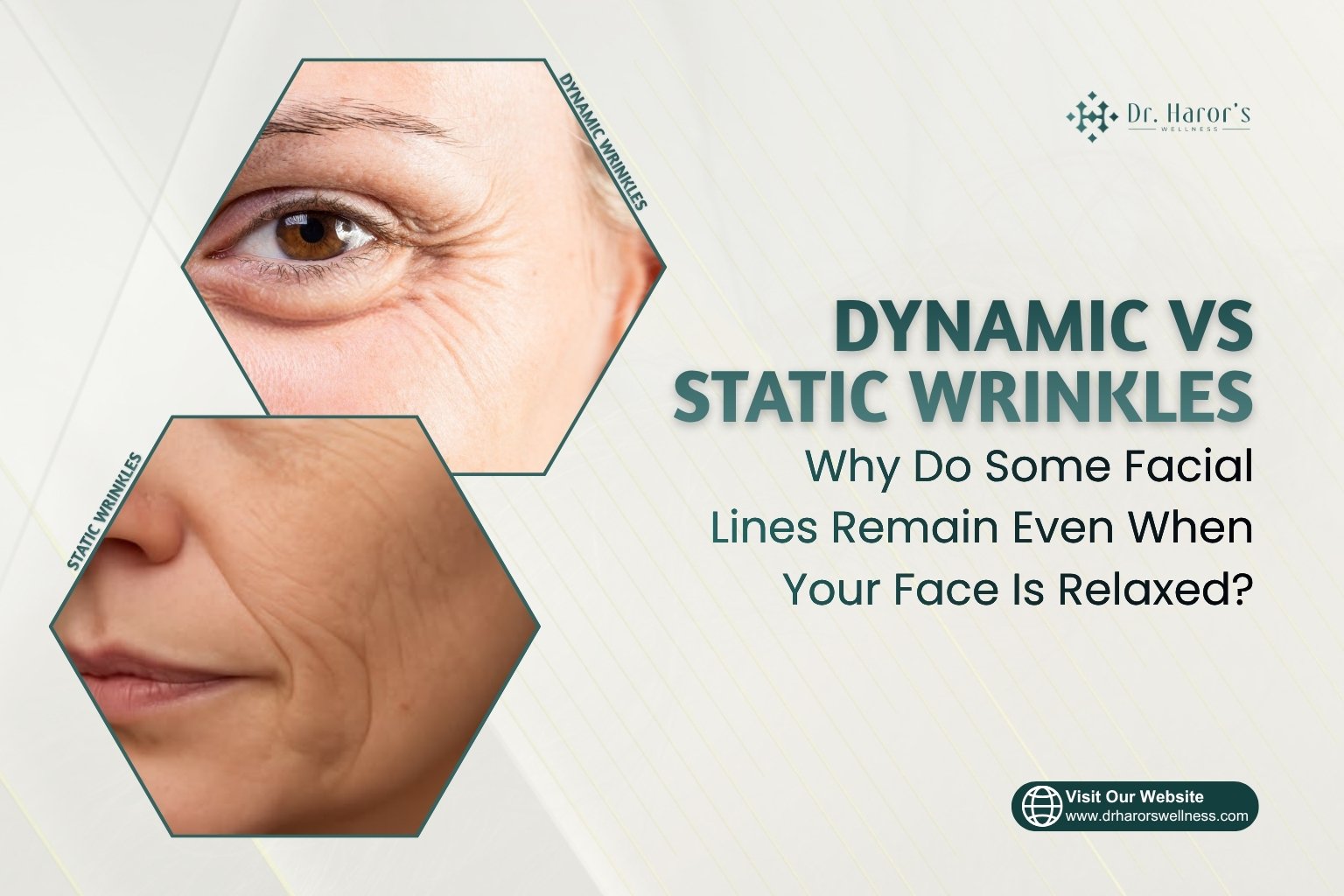
Wrinkles are often seen as a common sign of ageing, but not all wrinkles develop equally. Some result from repetitive facial movements, such as smiling or frowning, while others appear because of loss of skin firmness and external factors. If you’re experiencing it, you’re not alone. These are two common types of wrinkles: dynamic wrinkles and static wrinkles. In today’s blog, we’ll break down dynamic and static wrinkles so you can make informed decisions and get permanent clearance with a consultation with the right anti-aging treatment in Delhi.
What Are Dynamic Wrinkles?
Dynamic wrinkles occur due to repetitive facial movements. When you smile, frown, squint, or raise your eyebrows, your facial muscles contract. Over time, the repeated movement of those muscles can cause creases in your skin. Facial exercises or repeated movements can contribute to the development of these lines over time.
Common examples include:
- Forehead lines caused by raising the eyebrows
- Frown lines between the eyebrows
- Crow’s feet around the outer corners of the eyes
In the early stages, these lines may disappear when the face is relaxed. However, with age and repeated facial movement, they can gradually become more noticeable.
What are Static wrinkles?
In simple terms, Static lines are persistent lines that are visible on your face even when you aren’t making any facial expressions. They occur due to gradual loss of collagen, moisture, and skin elasticity. They can be caused by prolonged sun exposure, smoking, environmental factors, genetics, and repeated facial movements.
Common examples include:
- Deeper lines around the mouth
- Fine lines on the cheeks
- Wrinkles that remain visible on the forehead
- Skin folds that become more prominent with age
What is the difference between Dynamic & Static Wrinkles?
| Feature | Dynamic Wrinkles | Static Wrinkles |
| When they appear | During facial expressions | Visible even at rest |
| Main cause | Repeated muscle movement | Ageing and loss of skin elasticity |
| Common areas | Forehead, between eyebrows, around eyes | Around mouth, cheeks, forehead |
| Treatment approach | Muscle-relaxing treatments such as Botox | Skin-rejuvenation and other aesthetic treatments |
| Can they worsen with age? | Yes | Yes |
How to Treat Dynamic & Static Wrinkles?
The only way out from this problem is to have a suitable anti-ageing treatment that will replenish skin’s firmness and elasticity. If you’re planning an anti-ageing treatment in Delhi, it is important to have a proper consultation with a qualified, experienced aesthetic dermatologist who will tailor the treatment after considering various factors such as: your age, facial structure, skin type and results you’re expecting.
Conclusion
Wrinkles are a normal part of ageing, but knowing if they’re dynamic or static can help you decide what to do about them. Anti-aging treatment in Delhi can help with wrinkles caused by muscle movement, but static wrinkles may require a more proactive skin treatment from the best skin specialist in Delhi NCR. A consultation with a qualified aesthetic professional can help determine what kind of wrinkles you have and the best treatment plan for you.
If you’re seeking reliable skin treatment, consult Dr Haror’s Wellness. The team at Dr Haror’s Wellness are qualified skin specialists in Delhi who will listen to your skin-related concerns and determine the most suitable treatment to improve your skin’s firmness and overall texture.
FAQs
- What are the differences between dynamic and static wrinkles?
Dynamic wrinkles only occur when you make any facial expressions, but static wrinkles are those that are always visible.
- Can Botox be used to treat static wrinkles?
Botox is most effective for both dynamic and static wrinkles. However, it’s best to take a consultation from a skin specialist to determine whether it’s best suited for you or not.