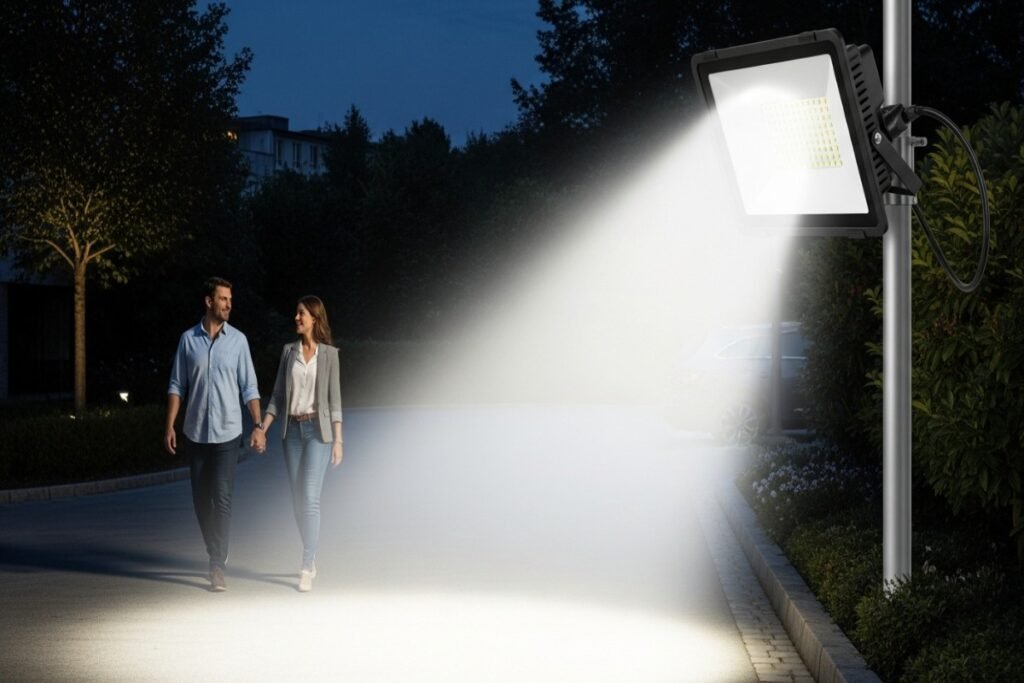
Gas stations operate throughout the day and often remain open during the night, making dependable outdoor lighting an essential part of the property. Gas Station Canopy Lights provide focused illumination over fuel pumps, driveways, payment areas, and customer walkways. A well-designed lighting system can improve visibility, create a more welcoming environment, and help staff and customers move around the forecourt with greater confidence.
Modern LED canopy lighting has become a popular choice for gas stations because it can deliver bright, consistent illumination while using less electricity than many older lighting technologies. With the right fixtures, installation, and layout, gas station owners can create a cleaner and more functional lighting environment while controlling long-term operating costs.
What Are Gas Station Canopy Lights?
Gas station canopy lights are outdoor fixtures installed underneath the canopy covering fuel pumps. They are designed to illuminate large areas from a relatively low mounting height while withstanding outdoor conditions.
Unlike standard indoor lighting, canopy fixtures must be suitable for exposure to temperature changes, moisture, dust, and continuous operation. Their construction and light distribution are therefore important considerations when selecting a lighting system.
LED technology has improved canopy lighting considerably. LED fixtures can provide strong illumination, directional light distribution, and reliable performance without requiring frequent lamp replacements.
Why Lighting Matters at a Gas Station
The area beneath a fuel station canopy is one of the most active parts of the property. Customers need clear visibility when approaching a pump, selecting fuel, handling payment, and entering or leaving the station.
Good lighting can help reduce dark spots and improve visibility across the entire fueling area. It can also make signs, pump displays, vehicle surroundings, and pedestrian paths easier to see.
A properly illuminated forecourt may also contribute to a more organized and professional appearance. Customers often notice the overall condition of a gas station before they decide where to stop, so lighting can become an important part of the property’s visual presentation.
Benefits of LED Gas Station Canopy Lights
1. Bright and Consistent Illumination
LED canopy fixtures can produce strong, uniform light across the fueling area. Proper spacing and beam distribution help minimize areas of excessive brightness and unwanted shadows.
Uniform illumination is particularly useful in busy forecourts because customers and employees need to see clearly around vehicles, pumps, signs, and walkways.
2. Improved Energy Efficiency
Gas stations may operate lighting for many hours each day. As a result, energy consumption can become a significant operating expense.
LED fixtures generally use less electricity than traditional high-intensity lighting technologies while providing substantial light output. Replacing older fixtures with efficient LED canopy lights can therefore help reduce energy usage over time.
The actual savings depend on factors such as fixture wattage, operating hours, existing lighting technology, electricity rates, and the number of fixtures installed.
3. Long Operating Life
Frequent lamp replacement can be inconvenient, especially when fixtures are installed several feet above the ground.
LED lighting is designed for long service life, which can reduce the frequency of maintenance and replacement. This can be especially valuable for gas stations where keeping the forecourt operational and visually presentable is important.
4. Lower Maintenance Requirements
A dependable lighting system can reduce maintenance work. Longer-lasting LED fixtures can mean fewer replacement lamps and fewer service visits compared with older lighting systems.
For large fuel stations with multiple canopy fixtures, reducing maintenance requirements can save both time and labor.
5. Better Visibility
A properly designed LED canopy lighting system can provide clear illumination around pumps, vehicles, and pedestrian areas. Better visibility can make it easier for customers to navigate the forecourt and for staff to monitor activity.
Lighting should be bright enough for practical visibility without creating uncomfortable glare. Fixture optics, mounting height, spacing, and color temperature all influence the final result.
Choosing the Right Gas Station Canopy Light
Not every canopy requires the same lighting solution. Several factors should be evaluated before purchasing fixtures.
Wattage
Wattage indicates how much electrical power a fixture consumes, but it should not be the only factor used to compare lighting products. Lumens, efficiency, optics, and installation height are also important.
A higher-wattage fixture is not automatically better. The goal is to achieve the required illumination level efficiently and evenly.
Lumens
Lumens indicate the amount of visible light produced by a fixture. Gas station owners should consider the total lumen output required for the canopy size and layout.
Using too few fixtures can create dark areas, while using excessive fixtures may increase energy consumption and create unnecessary glare.
Color Temperature
LED canopy lights are available in different color temperatures. Neutral or cool white light is commonly considered suitable for commercial outdoor environments because it can provide a crisp and clear appearance.
The best choice depends on the station’s branding, surrounding environment, visibility requirements, and design preferences.
Beam Distribution
Light distribution is one of the most important aspects of canopy design. Fixtures should spread light across the intended area rather than concentrating excessive brightness in one location.
Wide distributions can be useful for covering large canopy sections, while different optical designs may be appropriate for specific mounting arrangements.
Weather Resistance
Gas station canopy fixtures are installed outdoors and should be designed for demanding environmental conditions. Look for suitable ingress protection and durable housing materials when comparing products.
Weather-resistant construction can help protect the fixture against moisture, dust, and other environmental factors.
Housing and Build Quality
A strong housing can improve durability in commercial outdoor applications. Aluminum housings, quality finishes, sealed components, and effective thermal management are common features to consider.
Heat management is particularly important for LED fixtures because excessive heat can negatively affect performance and service life.
Proper Placement and Installation
Even the best LED canopy fixture may perform poorly if it is installed incorrectly. Lighting design should consider canopy dimensions, mounting height, fixture spacing, pump locations, and areas where customers and employees walk.
Fixtures should be positioned to provide balanced coverage throughout the fueling area. Designers should also consider glare and light spill outside the property.
Professional installation can help ensure that fixtures are securely mounted, correctly wired, and positioned according to the lighting plan. Electrical work should always follow applicable local codes and safety requirements.
LED Canopy Lights and Customer Experience
Lighting is more than a functional feature. It can influence how customers perceive a gas station.
A bright and well-maintained canopy can create a cleaner and more organized appearance. Clear visibility around pumps and entrances can also make the property easier to navigate.
Consistent lighting across the entire canopy can help maintain a professional look, particularly for stations that operate late at night or around the clock.
Replacing Older Canopy Fixtures
Many older gas stations still use traditional lighting systems that require more frequent maintenance or consume significant amounts of electricity.
When replacing these fixtures, it is important to evaluate the existing installation rather than simply selecting a new fixture with similar wattage. LED technology provides different lumen outputs, beam patterns, and mounting options.
A lighting assessment can help determine whether the existing number and placement of fixtures are appropriate. In some cases, fewer modern LED fixtures may provide better illumination than a larger number of older fixtures.
Smart Lighting Options
Modern commercial lighting can also incorporate controls and automation. Depending on the project, gas station owners may consider photocells, timers, dimming systems, or other control technologies.
Photocells can automatically respond to outdoor light conditions, while scheduling systems can adjust lighting operation based on business requirements.
Smart controls may provide additional opportunities to manage energy use while maintaining suitable illumination throughout operating hours.
Maintenance Tips for Gas Station Canopy Lights
Although LED fixtures generally require less maintenance, regular inspection is still important.
Check fixtures periodically for:
- Dirt or debris covering the lens
- Physical damage to the housing
- Loose mounting hardware
- Flickering or inconsistent illumination
- Water intrusion
- Damaged wiring or connections
- Dark areas caused by failed fixtures
Keeping canopy surfaces and fixture lenses clean can help maintain light output. Any electrical problems should be handled by qualified professionals.
Why Professional Lighting Design Matters
Gas station canopy lighting should be approached as a complete system rather than a collection of individual fixtures.
A professional lighting assessment can consider the size and height of the canopy, existing electrical infrastructure, required illumination, fixture spacing, light distribution, operating schedule, and local requirements.
This approach can help prevent common problems such as excessive glare, uneven illumination, unnecessary energy consumption, and insufficient coverage.
Conclusion
Gas station canopy lights play an important role in creating bright, practical, and visually appealing fueling areas. LED technology offers an efficient option for stations that want reliable illumination, long service life, and reduced maintenance requirements.
When selecting LED canopy fixtures, consider lumen output, wattage, color temperature, beam distribution, weather resistance, housing quality, and installation requirements. Proper fixture placement is equally important because even high-quality lights cannot deliver consistent results without an appropriate lighting design.
For gas station owners planning a new installation or upgrading an existing system, investing in well-designed LED canopy lighting can provide long-term benefits while creating a brighter and more comfortable forecourt for customers and employees.