How Generative AI Is Changing Expectations for Custom Art Commissions
Generative artificial intelligence (AI) is changing how people discover, create, and purchase artwork. With a few written instructions, anyone can generate digital images in seconds. This technology has introduced new possibilities for creativity, but it has also changed what customers expect when ordering custom art commissions.
Today, buyers often expect faster delivery, greater customization, and affordable artwork. However, traditional artists continue to offer something that AI cannot fully reproduce: personal interpretation, physical craftsmanship, and a meaningful connection between the artist and the subject.
For artists and customers alike, understanding these changing expectations is important. The growing influence of AI is reshaping the art commissioning process without eliminating the value of original, handmade artwork.
Why Generative AI Is Influencing Art Buyers
Generative AI tools allow users to create images by entering descriptions, selecting styles, and making adjustments. Someone can request a watercolor-style portrait, a landscape, or an imaginative scene without hiring an artist.
This convenience has changed how customers approach art commissions. Buyers may arrive with AI-generated references and expect artists to produce something similar.
However, an AI-generated image and an original painting involve different creative processes. AI produces images using learned patterns, while traditional artists make individual decisions about composition, color, texture, and emotional expression.
Understanding this difference helps customers develop realistic expectations when commissioning handmade artwork.
Faster Delivery Has Become a Common Expectation
One of the biggest changes introduced by generative AI is the expectation of speed.
AI tools can produce multiple images almost instantly. As a result, some customers may expect commissioned artwork to be completed within similarly short periods.
Traditional artwork requires considerably more time. An artist may need to review photographs, prepare sketches, discuss adjustments, select materials, and complete the final painting.
For example, creating detailed family portraits involves carefully studying facial expressions, positioning subjects, and developing a balanced composition.
At Brown Chameleon, the focus on original watercolor artwork and personalized portraits reflects the importance of individual artistic attention. The artist’s approach emphasizes the personality and expressions of each subject.
Customers who appreciate this process often understand that meaningful artwork requires patience.
Customers Want More Personalization
Generative AI has made visual experimentation accessible to almost everyone. Customers can test different backgrounds, colors, and artistic approaches before deciding what they want.
This has increased expectations for personalization in commissioned artwork.
For example, someone ordering a family portrait might request a specific background, meaningful objects, or clothing that represents an important memory.
Others may want artwork inspired by a favorite location, childhood experience, or special occasion.
Artists can respond by discussing these preferences during the planning stage and explaining which adjustments are possible.
Unlike automatically generated images, handmade commissions allow artists to interpret personal details through their own creative judgment.
AI Is Changing the Concept Painting Process
A concept painting helps communicate the visual direction of an artwork before the final piece is created. It may explore composition, colors, subject placement, and overall atmosphere.
Generative AI makes it easier for customers to develop preliminary visual ideas.
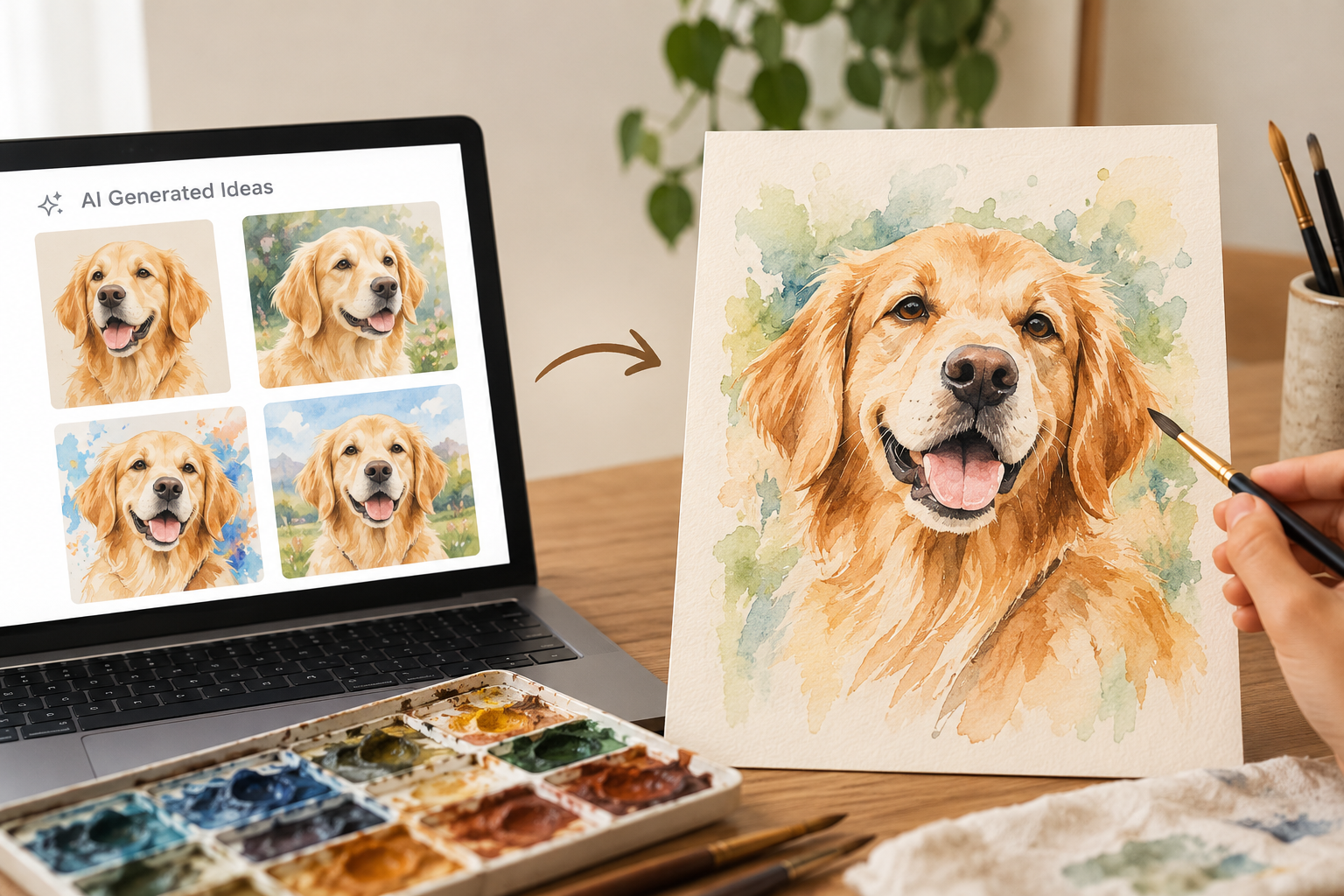
For example, a buyer might generate several images to explore whether a portrait should feature a garden, a simple background, or an indoor setting.
These references can support communication between the customer and artist.
However, AI-generated examples should not automatically become exact production requirements. Some images contain unrealistic lighting, inconsistent details, or compositions that are difficult to recreate in traditional media.
Artists can use reference images as inspiration while developing original compositions suitable for their chosen techniques.
Original Handmade Artwork Offers a Different Value
As AI-generated artwork becomes more common, the physical qualities of handmade paintings may become even more meaningful to certain buyers.
An original watercolor painting contains individual brushstrokes, pigment variations, and subtle textures that reflect the artist’s process.
These characteristics give each artwork a distinct appearance.
Handmade paintings also carry personal significance. A portrait created to celebrate a wedding, remember a loved one, or capture a family milestone can become a lasting keepsake.
Brown Chameleon’s emphasis on watercolor portraits and artistic expression highlights this personal connection.
While AI provides convenience, traditional commissioned artwork offers a tangible result shaped by human experience.
Limited Edition Prints Remain an Important Option
Not every customer wants to purchase an original painting. Some prefer artwork that provides visual appeal at a more accessible price.
This is where limited edition prints can offer an alternative.
These prints reproduce original artwork in a restricted quantity, allowing customers to enjoy an artist’s work without purchasing the original piece.
Depending on the artist’s practices, editions may also be numbered or signed.
Brown Chameleon includes limited edition prints among its offerings, giving visitors another way to explore original artistic designs.
As digital images become easier to generate, clearly explaining the origin, materials, and edition details of physical prints can help customers understand their value.
Clear Communication Matters More Than Ever
Generative AI has expanded creative possibilities, but it has also created confusion about pricing, revisions, ownership, and delivery timelines.
Customers commissioning artwork should discuss these details before the project begins.
Important questions include whether the artwork is handmade or digital, how many revisions are included, what reference materials are needed, and whether the final product is an original or a print.
Artists should also clarify copyright arrangements and any restrictions on commercial usage.
Transparent communication helps prevent misunderstandings and supports a more satisfying commissioning experience.
The Future of Custom Art Commissions
Generative AI will likely continue influencing how customers research artists and communicate their ideas.
Some buyers will prioritize speed and affordability, while others will seek original artwork created through traditional methods.
Rather than viewing every AI-generated image as a replacement for handmade art, customers can recognize that different creative formats serve different purposes.
For artists, the opportunity lies in explaining their creative process, demonstrating craftsmanship, and helping buyers understand what makes commissioned artwork unique.
Conclusion
Generative AI is changing expectations for custom art commissions by making image creation faster and visual experimentation easier. Customers now approach artists with more references, personalization requests, and questions about pricing and delivery.
However, original handmade artwork continues to offer qualities that automated image generation cannot fully replace.
Through thoughtful craftsmanship, personal interpretation, and meaningful communication, artists can create artwork that reflects individual stories.
For anyone interested in personalized watercolor artwork, Brown Chameleon Art & Design offers an opportunity to explore original artistic expression and custom portrait options.
FAQs
1. How is generative AI affecting custom art commissions?
Generative AI is increasing customer expectations for faster delivery, affordable artwork, and greater personalization. It also helps customers explore visual ideas before contacting an artist.
2. Can AI replace traditional commissioned artwork?
AI can generate digital images, but it does not reproduce the physical painting process, personal craftsmanship, or individual artistic decisions involved in handmade artwork.
3. Are handmade family portraits still valuable?
Yes. Handmade family portraits can preserve meaningful memories through original artistic interpretation, making them appealing as personal keepsakes and gifts.
4. Can customers use AI images as references for artists?
Yes. AI-generated images can help explain composition, colors, and background preferences. However, artists should create original work rather than simply reproduce existing images.
5. What is the difference between original paintings and limited edition prints?
An original painting is the artwork created directly by the artist. Limited edition prints are reproductions produced in a specified quantity, often making an artist’s work available at a different price point.