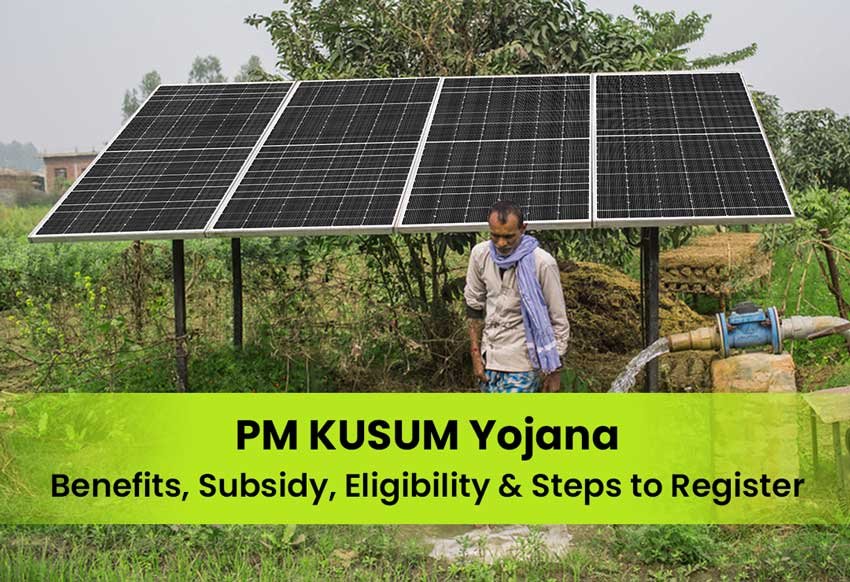
The rising cost of irrigation power has been a major challenge for farmers across India. Diesel pumps and unreliable electricity supply increase operational expenses and reduce farm profitability. The PM Kusum Solar Yojana offers a sustainable solution by promoting solar-powered irrigation systems. This government initiative helps farmers shift from conventional energy sources to clean solar power, significantly lowering irrigation costs and ensuring long-term savings.
What Is PM Kusum Solar Yojana
PM Kusum Solar Yojana is a government scheme designed to support farmers in installing solar pumps and grid-connected solar power plants. The scheme focuses on reducing dependence on diesel and grid electricity by encouraging the use of renewable energy in agriculture. It provides financial assistance and subsidies to farmers, making solar technology affordable and accessible.
Key Components of the Scheme
The scheme is divided into three main components that directly impact irrigation power costs
Component A supports the installation of small solar power plants on barren or unused land, allowing farmers to generate electricity and earn additional income
Component B promotes standalone solar-powered agricultural pumps that replace diesel pumps
Component C enables the solarization of existing grid-connected pumps, reducing electricity bills and dependence on the grid
How PM Kusum Solar Yojana Reduces Irrigation Power Costs
1. Elimination of Diesel Expenses
Diesel pumps are widely used for irrigation but involve high fuel costs. PM Kusum Solar Yojana replaces these pumps with solar-powered systems that operate using sunlight. Once installed, solar pumps require no fuel, leading to immediate and long-term cost savings for farmers.
2. Reduced Electricity Bills
Farmers using electric pumps often face high electricity bills or unreliable supply. Under the scheme, solarized pumps generate electricity independently. This reduces or eliminates monthly electricity expenses, making irrigation more cost-efficient.
3. Government Subsidies Lower Initial Investment
One of the biggest barriers to adopting solar technology is the upfront cost. PM Kusum Solar Yojana addresses this by offering substantial subsidies from central and state governments. Farmers typically pay only a small portion of the total cost, making solar pumps financially viable.
4. Low Maintenance Costs
Solar pumps have fewer moving parts compared to diesel engines, which reduces maintenance requirements. There is no need for frequent servicing, oil changes, or fuel management. This further decreases the overall cost of irrigation operations.
5. Income Generation Through Surplus Power
Under Component C, farmers can sell excess electricity generated by solar panels back to the grid. This not only offsets irrigation costs but also creates an additional income stream. Over time, farmers can recover their initial investment and even earn profits.
6. Reliable Power Supply for Irrigation
Unpredictable electricity supply often disrupts irrigation schedules. Solar pumps provide a consistent power source during daylight hours, ensuring timely irrigation. This improves crop productivity and reduces losses caused by delayed watering.
Economic Benefits for Farmers
The PM Kusum Solar Yojana improves the financial stability of farmers by lowering recurring irrigation expenses. Savings on fuel and electricity directly increase net income. Additionally, the opportunity to sell surplus energy creates a dual-income model, combining agriculture and energy production.
Environmental Impact
Apart from reducing costs, the scheme promotes environmentally friendly farming practices. Solar energy is clean and renewable, helping reduce carbon emissions and dependence on fossil fuels. This contributes to sustainable agriculture and supports India’s renewable energy goals.
Challenges and Considerations
While the benefits are significant, there are some challenges farmers may face
Initial awareness about the scheme is still limited in rural areas
Installation requires proper space and sunlight exposure
Maintenance, though minimal, still requires basic technical knowledge
Timely approval and subsidy disbursement can sometimes be delayed
Despite these challenges, the long-term advantages of PM Kusum Solar Yojana outweigh the initial hurdles.
Future of Solar Irrigation in India
With increasing government support and rising awareness, solar irrigation is expected to grow rapidly. PM Kusum Solar Yojana plays a crucial role in transforming the agricultural energy landscape. As more farmers adopt solar pumps, irrigation costs will continue to decrease, improving overall agricultural productivity and sustainability.
Conclusion
PM Kusum Solar Yojana is a game-changer for farmers struggling with high irrigation power costs. By promoting solar energy, the scheme eliminates fuel expenses, reduces electricity bills, and provides additional income opportunities. Its long-term benefits not only enhance farmer income but also support sustainable agriculture and environmental conservation.
FAQs
1. What is the main objective of PM Kusum Solar Yojana
The main objective is to provide affordable solar energy solutions to farmers for irrigation and reduce dependence on diesel and grid electricity.
2. How much subsidy is provided under PM Kusum Solar Yojana
Farmers can receive up to 60 percent subsidy, depending on the state and component, making solar pumps more affordable.
3. Can farmers earn income through this scheme
Yes, farmers can sell surplus electricity generated by solar panels to the grid and earn additional income.
4. Is PM Kusum Solar Yojana suitable for small farmers
Yes, the scheme is designed to benefit small and marginal farmers by reducing irrigation costs and increasing income.
5. Does solar irrigation work in all weather conditions
Solar pumps work best in sunlight but can still operate efficiently with proper system design and storage solutions.