
How Positive Displacement Pumps Are Supporting Critical Industries Across North America
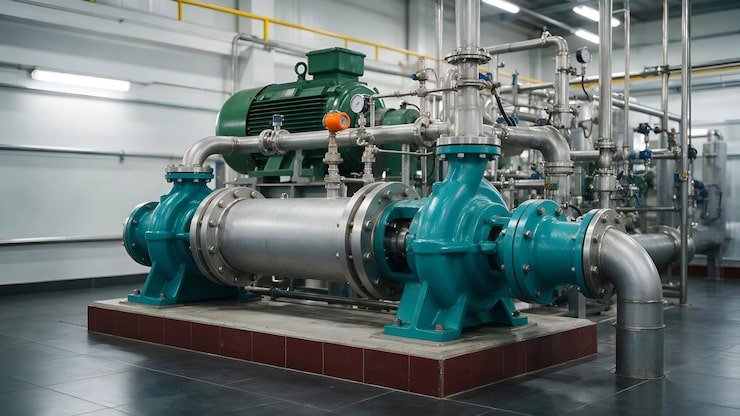
Positive displacement pumps have become indispensable across North America’s industrial landscape, supporting precise fluid handling in sectors such as oil and gas, chemicals, pharmaceuticals, food and beverage, mining, and water treatment. Their ability to deliver a constant flow regardless of pressure fluctuations makes them ideal for handling viscous, abrasive, and sensitive fluids. As industries continue investing in automation, energy efficiency, and process optimization, demand for advanced positive displacement pump technologies remains steady across the region.
According to a Vyansa Intelligence report, the North America Positive Displacement Pump Market was valued at USD 3.57 Billion in 2025 and is projected to reach USD 4.24 Billion by 2032, registering a CAGR of 2.49% during the 2026–2032 forecast period. Increasing investments in industrial modernization, water infrastructure, and process automation continue to support long-term market development.
Process Industries Continue to Drive Equipment Demand
North America’s extensive industrial base relies on positive displacement pumps for applications requiring precise flow control and reliable performance. Industries handling high-viscosity liquids, corrosive chemicals, and sensitive materials increasingly depend on these pumps to maintain operational efficiency.
According to this positive displacement pump industry report, rotary lobe pumps, diaphragm pumps, gear pumps, piston pumps, screw pumps, and progressive cavity pumps are widely used because they provide accurate fluid transfer while minimizing product degradation. Their versatility makes them suitable for diverse manufacturing and processing environments.
Growing industrial production continues to strengthen demand for advanced pumping solutions.
Oil and Gas Sector Remains a Key Growth Driver
North America continues to be a major hub for oil and gas production, refining, and petrochemical processing. Positive displacement pumps are essential for crude oil transportation, chemical injection, lubrication systems, fuel transfer, and high-pressure processing operations.
Industry analysis indicates that these pumps perform exceptionally well under demanding operating conditions involving high pressures and viscous fluids. Their reliability helps improve production efficiency while reducing maintenance requirements across upstream, midstream, and downstream operations.
Continued investment in energy infrastructure is expected to sustain long-term equipment demand.
Water and Wastewater Treatment Is Expanding Applications
Municipal utilities and industrial facilities across North America continue upgrading water and wastewater treatment systems to improve environmental performance and regulatory compliance. Positive displacement pumps play a vital role in sludge transfer, chemical dosing, polymer injection, and wastewater processing.
Detailed market insights suggest that diaphragm and progressive cavity pumps are increasingly preferred because they provide precise dosing while handling abrasive and high-solid-content fluids efficiently. These systems improve treatment accuracy while supporting reliable plant operation.
Growing emphasis on sustainable water management continues creating opportunities for pump manufacturers. The U.S. Environmental Protection Agency (EPA) water resources highlight the importance of efficient water management, wastewater treatment, and infrastructure improvements across communities and industries.
Food and Pharmaceutical Industries Require Precision
The food, beverage, and pharmaceutical industries require hygienic pumping systems capable of preserving product integrity while complying with strict quality regulations. Positive displacement pumps provide gentle product handling, making them ideal for processing dairy products, syrups, beverages, cosmetics, and pharmaceutical ingredients.
The latest market analysis highlights that sanitary rotary lobe and peristaltic pumps support clean-in-place (CIP) and sterilize-in-place (SIP) operations while minimizing contamination risks. Their precision and reliability help manufacturers maintain product quality and operational efficiency.
The expansion of hygienic manufacturing continues supporting equipment adoption across these industries.
Automation and Smart Monitoring Are Improving Efficiency
Industrial automation is reshaping fluid handling operations through the integration of digital technologies. Modern positive displacement pumps increasingly incorporate smart sensors, Industrial Internet of Things (IIoT) connectivity, and predictive maintenance capabilities that enable real-time performance monitoring.
Research findings indicate that digital monitoring systems improve equipment reliability by identifying vibration, pressure changes, and wear before failures occur. Predictive maintenance reduces unplanned downtime while helping facilities optimize maintenance schedules and lower operating costs.
The adoption of intelligent pumping technologies continues improving industrial productivity.
Energy Efficiency Is Encouraging Equipment Upgrades
Industrial operators are prioritizing energy-efficient pumping solutions to reduce electricity consumption and improve sustainability. Manufacturers continue introducing advanced pump designs featuring variable frequency drives, efficient motors, and optimized hydraulic performance.
The comprehensive report suggests that energy-efficient positive displacement pumps lower operating expenses while improving fluid handling performance across industrial applications. Enhanced materials and corrosion-resistant components also extend equipment lifespan, reducing long-term maintenance costs.
These innovations continue strengthening the competitiveness of modern pumping systems.
Future Perspective
North America’s positive displacement pump industry is expected to maintain steady growth as industrial automation, infrastructure modernization, and environmental sustainability continue shaping investment priorities. Expanding applications across oil and gas, chemicals, pharmaceuticals, food processing, and water treatment will further support demand for high-performance fluid handling equipment.
The industry outlook indicates that positive displacement pumps will remain essential for improving operational reliability, enhancing process efficiency, and supporting advanced industrial manufacturing across North America. Continued innovation in smart monitoring, energy-efficient technologies, and durable pump materials is expected to create long-term opportunities for equipment manufacturers and industrial operators.
The Hydraulic Institute resources provide technical guidance and industry knowledge supporting improvements in pumping system efficiency, reliability, and performance.

