Parental Remote Control Ride-On Cars: How They Work and Why They Help Keep Young Children Safe
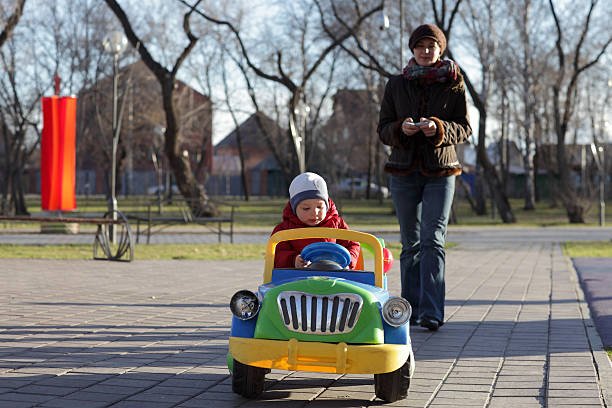
Parental remote control ride-on cars give parents and carers an additional way to supervise young children while they enjoy a battery-powered toy vehicle. These cars usually include a handheld remote that allows an adult to control the vehicle’s movement, steering and sometimes speed, depending on the model. Some also let children operate the car themselves using a pedal and steering wheel.
This combination can make ride-on cars more manageable for families, particularly when a child is still learning how to steer, stop and navigate around obstacles. However, remote control does not make a vehicle completely risk-free. Parents still need to choose an age-appropriate model, understand its controls and supervise every ride.
In this guide, we explain how parental remote control ride-on cars work, which features to check before buying and how to use them responsibly.
What Is a Parental Remote Control Ride-On Car?
A parental remote control ride-on car is a battery-powered toy vehicle that can be operated by a child, an adult using a remote control, or both. Depending on the design, the vehicle may resemble a small sports car, SUV, Jeep, tractor or other familiar vehicle.
Most models have a rechargeable battery, electric motor, wheels, a seat and basic driving controls. The remote control provides an additional way for an adult to manage the vehicle when the child is too young to operate it confidently.
Common features include:
- Forward and reverse movement.
- Left and right steering.
- An adult-operated remote control.
- A child-operated pedal and steering wheel.
- One or more speed settings.
- A rechargeable battery.
- A seat belt or restraint system on some models.
- Lights, sounds or other decorative features.
Not every ride-on car includes the same controls. Some remotes offer steering and speed selection, while others provide more limited functions. Always check the manufacturer’s description and instructions for the specific model.
How Does Parental Remote Control Work?
The remote control communicates with the ride-on car’s electronic control system. When an adult presses a button or moves a control, the system receives the command and operates the relevant motor or steering mechanism.
The exact process varies between models, but the main functions are usually straightforward.
1. Connecting the Remote
Many models require the remote to be paired with the vehicle before use. The instructions explain how to establish the connection and how to check that the controls are responding correctly.
Before allowing a child to ride, test the remote in a clear area with the vehicle moving slowly. Confirm that the controls work as described by the manufacturer.
2. Controlling Direction
Depending on the model, the remote may allow an adult to steer left or right and command forward or reverse movement.
This can help when a child is still learning how to coordinate the steering wheel and pedal. The adult can guide the vehicle away from obstacles rather than relying entirely on the child’s developing driving skills.
3. Managing Speed
Some parental remotes provide more than one speed setting. This can help an adult choose a suitable setting for the child’s experience and the conditions.
However, the number of speed settings and the available speed range vary. Do not assume that every remote includes a separate speed limiter or that selecting a lower setting removes the need for supervision.
4. Stopping the Vehicle
The remote may include a stop function or another way to interrupt movement. Some models also respond to releasing the accelerator or pressing the child’s brake pedal.
Learn exactly how your model stops before use. Test the stopping function in a clear area and do not rely on a feature unless the manufacturer confirms how it works.
Why Do Parents Choose Remote Control Ride-On Cars?
More Control During Early Driving Practice
Young children are still developing coordination, balance, awareness and the ability to judge distances. A remote-controlled ride-on car gives an adult another way to manage movement while the child becomes familiar with the vehicle.
For example, a parent may steer the car away from a garden wall or stop it when the child approaches an unsuitable area. This can be helpful during supervised practice, although it does not replace close attention.
Support for Children Who Are Still Learning
A child may understand how to press the accelerator before learning how to steer accurately or stop at the right time. Remote operation can let the child enjoy the ride while an adult manages the movement.
As the child’s skills improve, parents can gradually introduce independent controls where the manufacturer permits this and the child is ready.
Easier Management in Suitable Outdoor Spaces
Some families use ride-on cars in private gardens, driveways or other controlled areas. Remote steering can help adults guide the vehicle around suitable open spaces.
The surface should be level enough for the model, free from hazards and appropriate for the vehicle’s wheels and motor. A remote does not make roads, steep slopes, crowded areas or uneven terrain suitable for a children’s toy vehicle.
Shared Parent-and-Child Play
Remote control can also make the experience more interactive. A parent can guide the car while a child learns the basic relationship between direction and movement.
This can be an enjoyable shared activity when the adult remains attentive and keeps the vehicle within a safe area.
Important Safety Features to Check
The remote control is only one part of the vehicle’s safety design. Before buying a ride-on car, review the complete product specification.
Parental Remote Functions
Check which controls the remote actually provides. Look for clear instructions on steering, speed selection, stopping and pairing.
If an emergency stop is advertised, confirm how it operates and test it before the first ride. Do not assume that every remote has an emergency-stop function.
Seat Belt or Restraint
Some ride-on cars include a lap belt or another restraint. Check the manufacturer’s instructions to determine how it should be fitted and used.
A restraint can help keep a child positioned in the seat, but it does not prevent every type of injury. Never use a belt as a reason to allow unsupervised riding.
Suitable Speed and Controls
Choose a vehicle with controls that match the child’s age, ability and experience. A model with manageable movement and straightforward controls may be easier for a beginner to use under adult supervision.
Review the manufacturer’s stated maximum speed, age range and weight limit rather than relying on appearance or marketing claims.
Stable Construction
Check the vehicle’s base, wheels, seat, steering mechanism and moving parts. It should be suitable for the intended surface and the child’s size.
Inspect the car for loose components, sharp edges, damaged wiring or other defects before each use.
Battery and Charger Safety
Use only the charger specified or approved by the manufacturer. Follow the charging instructions and inspect the charging cable and battery compartment for damage.
Do not charge a damaged battery or continue using a vehicle that shows signs of overheating, unusual smells or electrical problems. Follow the manufacturer’s instructions for charging, storage and battery disposal.
How to Choose the Right Parental Remote Control Ride-On
Choosing the right vehicle means balancing the child’s needs with the space available and the features that matter to the family.
Consider the Child’s Age and Ability
Start with the age range and weight limit stated by the manufacturer. Also consider whether the child can sit comfortably, understand simple instructions and remain seated during use.
Age recommendations are important, but children develop at different rates. The adult should assess the child’s ability and provide suitable supervision.
Choose a Suitable Vehicle Style
Ride-on cars come in different shapes and sizes. Smaller cars may suit compact play areas, while larger SUV-style models may require more storage space and room to manoeuvre.
A vehicle’s appearance does not necessarily indicate its power, stability or suitability. Compare the technical specifications rather than choosing by design alone.
Check the Available Space
Measure the intended riding area and compare it with the vehicle’s dimensions and turning requirements. Allow additional room for stopping and avoiding obstacles.
A small garden may not provide enough space for a larger model. If the area includes steps, a steep driveway, a pond or vehicle access, choose a safer location instead.
Review Battery Life and Charging Time
Manufacturers may provide an estimated runtime and charging period. Actual performance can vary according to the child’s weight, surface, temperature, battery condition and driving style.
Consider whether the expected runtime suits your family’s routine. Recharge the vehicle according to the instructions rather than leaving it connected for longer than recommended.
Compare Build Quality and Support
Check the quality of the wheels, seat, steering, remote, battery and charger. It is also useful to find out whether replacement parts, batteries and technical support are available.
A toy vehicle with clear instructions and accessible replacement parts may be easier to maintain over time.
How to Use a Remote Control Ride-On Car Safely
Good supervision and sensible riding habits matter just as much as the vehicle’s features.
- Read the manual first. Learn the remote functions, maximum weight, speed settings, battery instructions and surface restrictions.
- Inspect the car. Check the wheels, steering, seat, restraint, battery and remote before each ride.
- Choose a suitable location. Use a clear, controlled area away from roads, swimming pools, stairs, steep slopes and other hazards.
- Keep the child supervised. Stay close enough to respond promptly and maintain a clear view of the vehicle.
- Test the controls. Check steering, forward and reverse movement, and stopping before the child starts riding.
- Use suitable protective equipment. Follow the manufacturer’s recommendations and consider appropriate head protection where advised.
- Stop if anything seems wrong. Discontinue use if the remote loses connection, the steering behaves unexpectedly or the vehicle develops a fault.
- Store and charge the vehicle safely. Keep the car and charger away from unsuitable environments and follow the manufacturer’s battery-care instructions.
Children should not operate ride-on cars on public roads. A remote-controlled toy is not designed to replace a properly supervised play area or to protect a child from traffic.
Common Mistakes to Avoid
Assuming the remote makes the car completely safe: The remote is an additional control, not a substitute for adult supervision.
Ignoring the age and weight limits: A vehicle that is too powerful, too small or unsuitable for the child’s ability may be difficult to control safely.
Using the car near traffic: Keep riding to a suitable private or designated play area away from moving vehicles.
Failing to test the controls: Check the remote and stopping function before every session, particularly after pairing the remote or changing the battery.
Charging with an unsuitable charger: The wrong charger can create electrical and battery risks. Use only the specified equipment.
Allowing riding on unsuitable slopes: The car may roll, slide or become difficult to stop on steep or slippery ground. Follow the manufacturer’s surface restrictions.
Leaving the child unattended: Remote control does not remove the need for a responsible adult to supervise the ride.
Frequently Asked Questions
What is a parental remote control ride-on car?
It is a battery-powered toy vehicle that an adult can control using a handheld remote. Depending on the model, the child may also be able to operate the car using a pedal and steering wheel.
At what age can a child use a remote control ride-on car?
The suitable age depends on the individual model and the child’s development. Always follow the manufacturer’s age and weight recommendations, and supervise the child throughout use.
Can parents control the car while the child is driving?
Some models allow an adult to steer or stop the car while the child uses the pedal. The exact functions vary, so check the product manual to understand how adult and child controls interact.
Are parental remote control ride-on cars safer than ordinary ride-on cars?
A remote may give an adult additional control over the vehicle’s movement. However, safety also depends on the design, speed, location, condition of the vehicle and quality of supervision. Remote control alone does not guarantee safety.
How long does the battery last?
Runtime varies by model, battery condition, surface, load and driving style. Check the manufacturer’s estimate and charging instructions for the specific vehicle.
Can a remote control ride-on car be used on the road?
No. Children’s ride-on toy cars should be used in suitable play areas away from public roads and traffic. Follow the manufacturer’s restrictions and local safety requirements.
What should I check before buying one?
Review the age and weight limits, remote functions, speed, restraint system, battery specifications, charger, build quality and availability of replacement parts. Make sure the vehicle suits the intended riding space.
Final Thoughts
Parental remote control ride-on cars can provide an enjoyable way for young children to experience driving-style play while an adult manages some of the vehicle’s movement. Features such as remote steering and speed selection may be useful when a child is learning to use the controls.
The right choice depends on the child’s age and ability, the vehicle’s design, the available play area and the quality of its safety features. Read the instructions, test the remote, follow battery-care guidance and supervise every ride. These steps help families make more informed decisions and use ride-on cars responsibly.