Reading the Research on BPC-157 and Thymosin Beta-4 Fragments
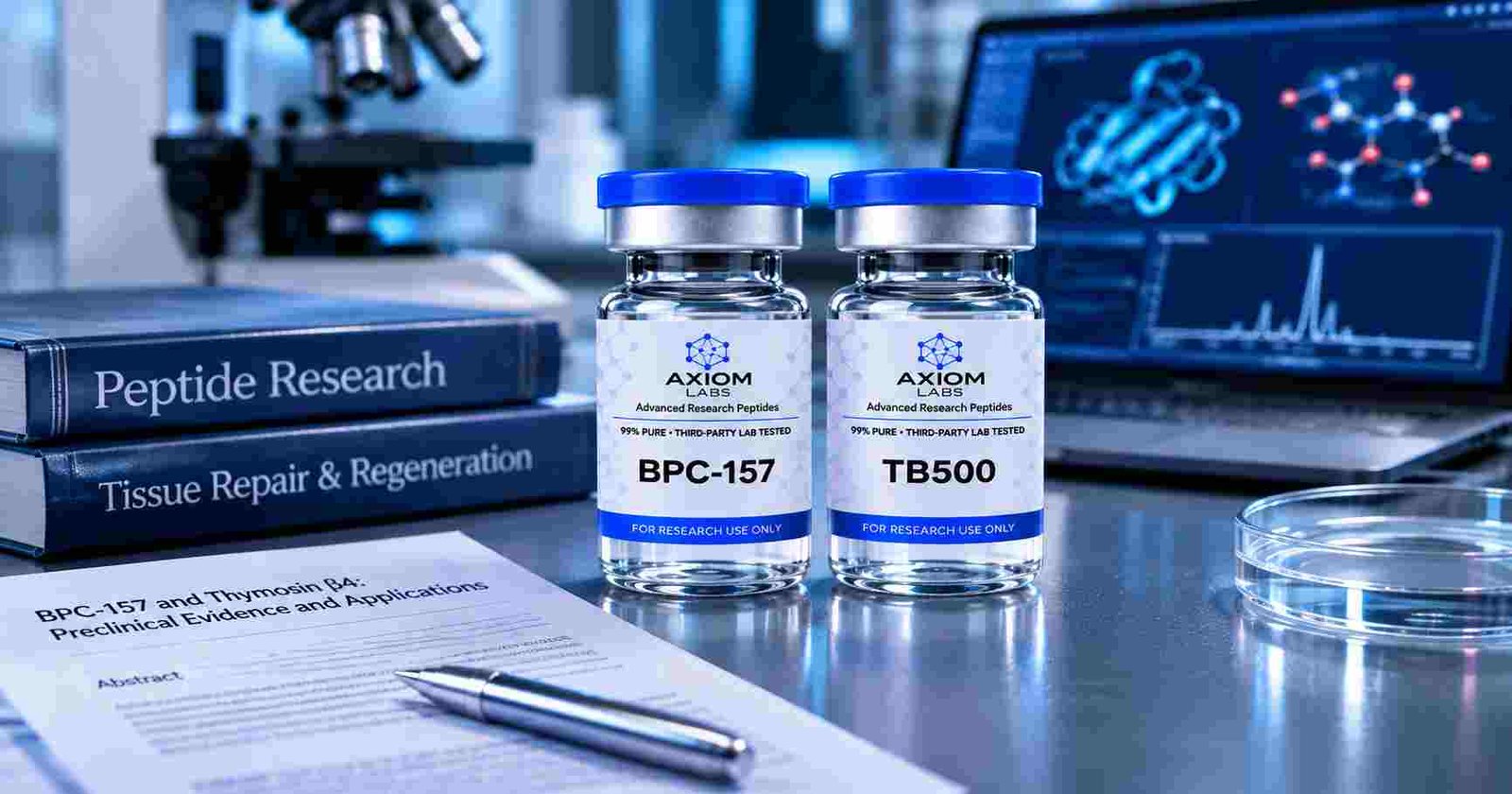
BPC-157 and TB-500 are two of the most talked-about research peptides, but the conversation around them often moves faster than the science. If you want to read the literature yourself, it helps to know what each compound is, what kind of studies exist, and where the gaps are. This guide offers a simple framework, strictly from a laboratory research point of view.
Two different molecules
BPC-157 is a synthetic peptide of 15 amino acids, based on a sequence found in human gastric juice. TB-500 is commonly described as a synthetic fragment related to thymosin beta-4, a natural 43-amino-acid protein that binds actin, which helps cells keep their shape and move.
They are often grouped together because their research areas overlap, but they have different origins and different bodies of evidence. For a side-by-side overview of bpc 157 and tb 500, start with the comparison guide, then return to the original papers.
What kind of studies exist?
Most published work on both compounds is preclinical. That means cell cultures and animal models, not controlled human trials. Topics include tissue repair models, cell migration and blood vessel formation (angiogenesis). Thymosin beta-4 itself has been studied more widely than its short fragments, so results for the full protein should not be assumed to apply to a fragment.
Three questions to ask of any paper
- What was tested? Check whether the study used BPC-157, full-length thymosin beta-4 or a fragment. The names are easy to mix up.
- What was the model? A cell culture, a rodent injury model and a human study answer very different questions.
- Has it been replicated? A large share of BPC-157 papers come from a small number of research groups. Independent replication is what turns an interesting result into reliable knowledge.
Common reading mistakes
- Treating animal results as proof of human outcomes
- Mixing up thymosin beta-4 and TB-500 findings
- Relying on summaries instead of the methods section
- Ignoring sample size, dose and study duration
Quality of materials matters too
Even good research design fails if the peptide is not what the label says. Labs should ask for a batch-specific certificate of analysis showing HPLC purity and mass spectrometry identity, and should confirm that products are labelled for research use only.
Final thoughts
The honest summary is that interest in these peptides is high and the evidence is still developing. Careful reading, healthy scepticism and well-documented materials are the best foundation for any laboratory study.
BPC-157 and TB-500 are discussed for laboratory research purposes only. They are not for human or veterinary use, and this article is not medical advice.