Signs of an Enlarged Prostate (BPH)
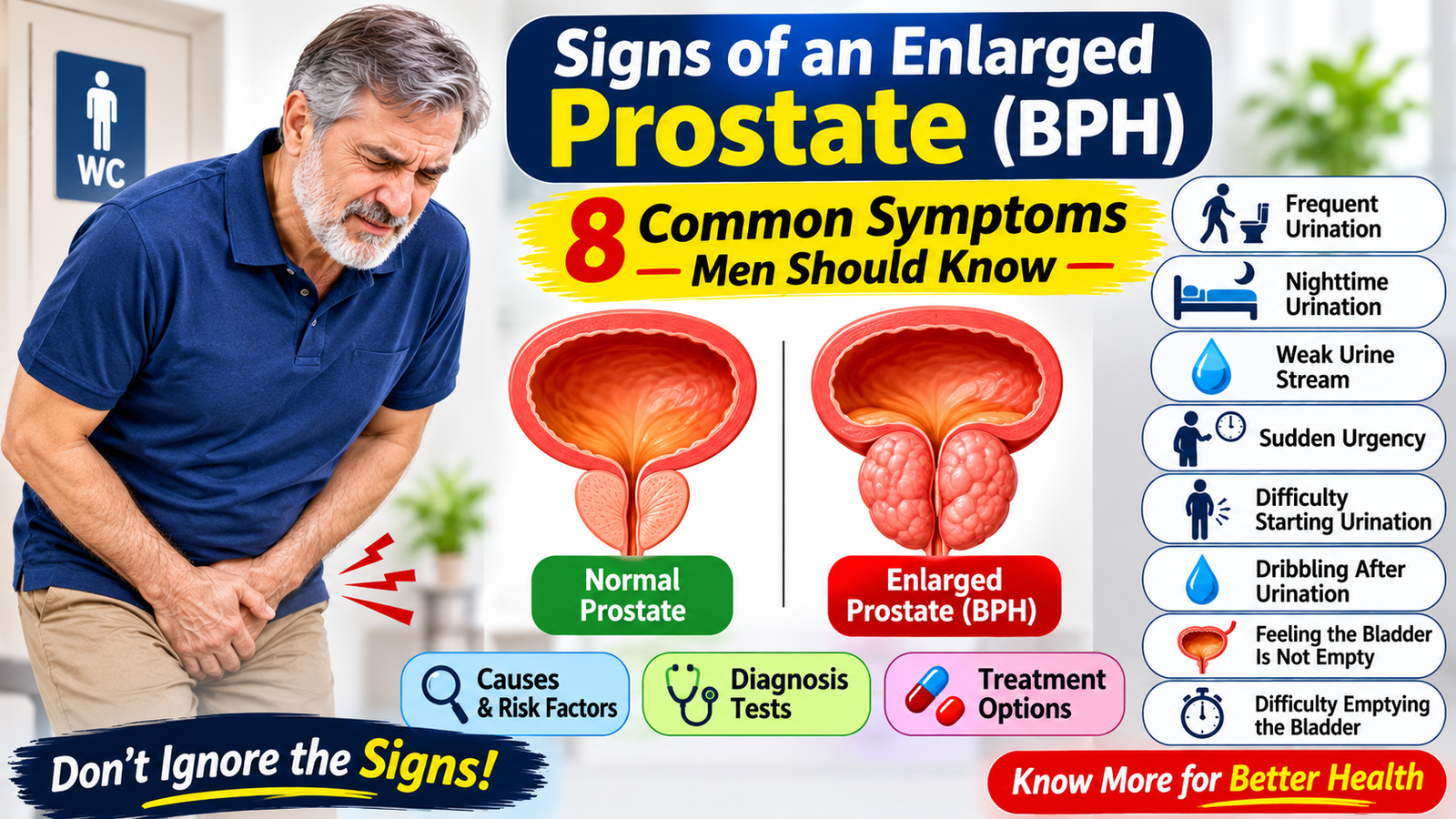
Signs of an Enlarged Prostate (BPH): 8 Common Symptoms Men Should Know
An enlarged prostate is a common health condition that affects many men as they grow older. Medically known as benign prostatic hyperplasia (BPH), this condition occurs when the prostate gland increases in size and begins pressing against the urethra, the tube that carries urine out of the body.
As the prostate grows, it can make urination more difficult and affect everyday comfort. Some men experience mild urinary changes, while others develop symptoms that interfere with sleep and daily activities.
Recognizing the signs of an enlarged prostate (BPH) can help men seek medical advice early and understand the available treatment options.
What Is Benign Prostatic Hyperplasia (BPH)?
Benign prostatic hyperplasia is a noncancerous enlargement of the prostate gland. The prostate is a small gland located below the bladder and surrounding the upper part of the urethra. It produces fluid that forms part of semen.
As men age, hormonal changes can contribute to prostate growth. When the gland becomes larger, it may narrow the urethra and interfere with normal urine flow.
BPH is not prostate cancer, and having BPH does not mean that a man has cancer. However, some symptoms can overlap, so medical evaluation is important.
8 Common Signs of an Enlarged Prostate (BPH)
BPH mainly affects the urinary system. The symptoms can develop gradually and may become more noticeable over time.
1. Frequent Urination
One of the most common signs of an enlarged prostate is needing to urinate more frequently than usual.
An enlarged prostate can affect how the bladder empties and may increase the feeling of needing to pass urine. Men may find themselves visiting the bathroom repeatedly during the day, even when they have not consumed much fluid.
Frequent urination can also have other causes, including diabetes, urinary infections, and certain medications.
2. Frequent Urination at Night (Nocturia)
Waking up multiple times during the night to urinate is another common BPH symptom.
This condition is called nocturia. It can interrupt sleep, cause daytime tiredness, and affect concentration and productivity.
Although BPH may contribute to nighttime urination, drinking fluids late in the evening, sleep disorders, and other medical conditions can also cause it.
3. Weak Urine Stream
A weak or slow urine stream may indicate that an enlarged prostate is narrowing the urethra.
Men may notice that urine comes out with less force than before. The stream may also stop and start unexpectedly.
This symptom can make bathroom visits longer and more uncomfortable.
4. Difficulty Starting Urination
Some men with BPH experience difficulty beginning urination, even when they feel a strong need to empty their bladder.
They may have to wait, relax, or strain before urine begins to flow. This is known as urinary hesitancy.
Repeated difficulty starting urination should be discussed with a healthcare professional, particularly if it becomes more noticeable over time.
5. Feeling That the Bladder Is Not Completely Empty
After urinating, men with an enlarged prostate may still feel that some urine remains in the bladder.
This sensation occurs because the bladder may not empty completely when urine flow is restricted. It can also lead to repeated bathroom visits shortly after urination.
Persistent incomplete emptying may increase the risk of urinary complications and requires medical assessment.
6. Dribbling After Urination
Post-urination dribbling is another possible symptom of BPH.
A small amount of urine may leak from the penis after a man believes he has finished urinating. This can happen when urine remains in the urethra.
Although occasional dribbling can occur for different reasons, frequent or worsening symptoms should be evaluated.
7. Sudden Urgency to Urinate
An enlarged prostate can affect bladder function and cause a sudden, strong urge to urinate.
Men may feel that they need to reach a bathroom immediately, even if their bladder is not completely full.
In some cases, urinary urgency may be accompanied by leakage before reaching the bathroom. Other conditions, such as urinary tract infections and overactive bladder, can cause similar symptoms.
8. Difficulty Emptying the Bladder
As BPH progresses, some men may find it increasingly difficult to empty their bladder.
Urination may take longer, the stream may become weaker, and the bladder may retain more urine than usual.
In severe cases, the prostate can obstruct urine flow almost completely, causing acute urinary retention. This is a medical emergency that requires immediate treatment.
What Causes an Enlarged Prostate?
The exact cause of BPH is not fully understood, but aging and hormonal changes are considered important factors.
Common risk factors include:
- Age: The likelihood of developing BPH increases as men grow older.
- Hormonal changes: Changes in testosterone and other hormones may contribute to prostate growth.
- Family history: Having close relatives with BPH may increase the likelihood of developing the condition.
- Obesity: Excess body weight is associated with a higher risk of urinary problems and BPH.
- Diabetes and heart disease: These conditions may be associated with an increased risk of BPH.
- Lifestyle factors: Physical inactivity and certain dietary patterns may influence overall prostate and urinary health.
Not every man with these risk factors develops an enlarged prostate.
How Is an Enlarged Prostate Diagnosed?
If you experience urinary symptoms, a healthcare professional may recommend several tests to determine whether BPH is responsible.
Common diagnostic methods include:
Medical history and symptom assessment: Your doctor may ask about urinary habits, medications, medical conditions, and how symptoms affect daily life.
Digital rectal examination (DRE): A doctor gently examines the prostate through the rectum to assess its size and shape.
Urine test: A urine sample may help identify infections, blood, or other problems that could cause similar symptoms.
Prostate-specific antigen (PSA) test: This blood test measures PSA levels. It may help assess prostate-related conditions, but an elevated result does not automatically mean cancer.
Ultrasound and bladder assessment: Imaging may help evaluate prostate size and determine whether urine remains in the bladder after urination.
Your doctor will decide which tests are appropriate based on your symptoms and medical history.
Treatment Options for an Enlarged Prostate
Treatment depends on symptom severity, prostate size, overall health, and personal preferences.
1. Watchful Waiting
Men with mild symptoms that do not significantly affect daily life may not need immediate treatment.
A doctor may recommend monitoring symptoms, making lifestyle changes, and attending regular follow-up appointments.
2. Medications
Several medicines can help manage BPH symptoms.
- Alpha blockers: These medicines relax muscles around the prostate and bladder neck, making urination easier.
- 5-alpha reductase inhibitors: These medicines can gradually reduce prostate size in some men.
- Combination therapy: Some patients may benefit from using more than one type of medication.
A healthcare professional should determine which treatment is suitable.
3. Minimally Invasive Procedures
Certain procedures use specialized techniques to improve urine flow by reducing pressure on the urethra or treating enlarged prostate tissue.
The most suitable procedure depends on prostate size, symptoms, medical history, and treatment goals.
4. Surgery
Surgery may be recommended when symptoms are severe, medications are ineffective, or complications develop.
One common procedure is transurethral resection of the prostate (TURP), which removes part of the prostate tissue blocking urine flow.
When Should You See a Doctor?
Consult a healthcare professional if you notice frequent urination, a weak urine stream, difficulty starting urination, nighttime bathroom visits, or a persistent feeling that your bladder is not empty.
Seek emergency medical attention if:
- You suddenly cannot urinate.
- You experience severe lower abdominal pain with difficulty urinating.
- You notice blood in your urine, especially with pain or difficulty passing urine.
- You develop fever and chills with painful or difficult urination.
Early medical assessment can help identify the cause of urinary symptoms and prevent complications.
Conclusion
Recognizing the signs of an enlarged prostate (BPH) can help men understand changes in their urinary health. Frequent urination, nighttime bathroom visits, weak urine flow, difficulty starting urination, and incomplete bladder emptying are common symptoms.
Although BPH is noncancerous, its symptoms should not be ignored. Medical evaluation can help distinguish BPH from other conditions and identify the most appropriate treatment.
If urinary problems persist or worsen, speak with a healthcare professional. Early attention can help protect bladder health and improve quality of life.
Frequently Asked Questions
1. What is the first sign of an enlarged prostate?
Frequent urination, particularly at night, and changes in urine flow are among the common early symptoms of BPH.
2. At what age does an enlarged prostate usually develop?
BPH becomes more common after age 40, and its likelihood increases as men grow older.
3. Is an enlarged prostate cancerous?
No. BPH is a noncancerous enlargement of the prostate. However, similar urinary symptoms can occur with other conditions, including prostate cancer.
4. Can an enlarged prostate affect sleep?
Yes. Frequent nighttime urination can interrupt sleep and contribute to daytime tiredness.
5. Can an enlarged prostate be treated without surgery?
Yes. Many men manage BPH through lifestyle changes, prescription medications, or minimally invasive procedures. Surgery is generally considered when other treatments are unsuitable or complications develop.