Toy-Grade vs Hobby RC Cars: What Parents Should Know
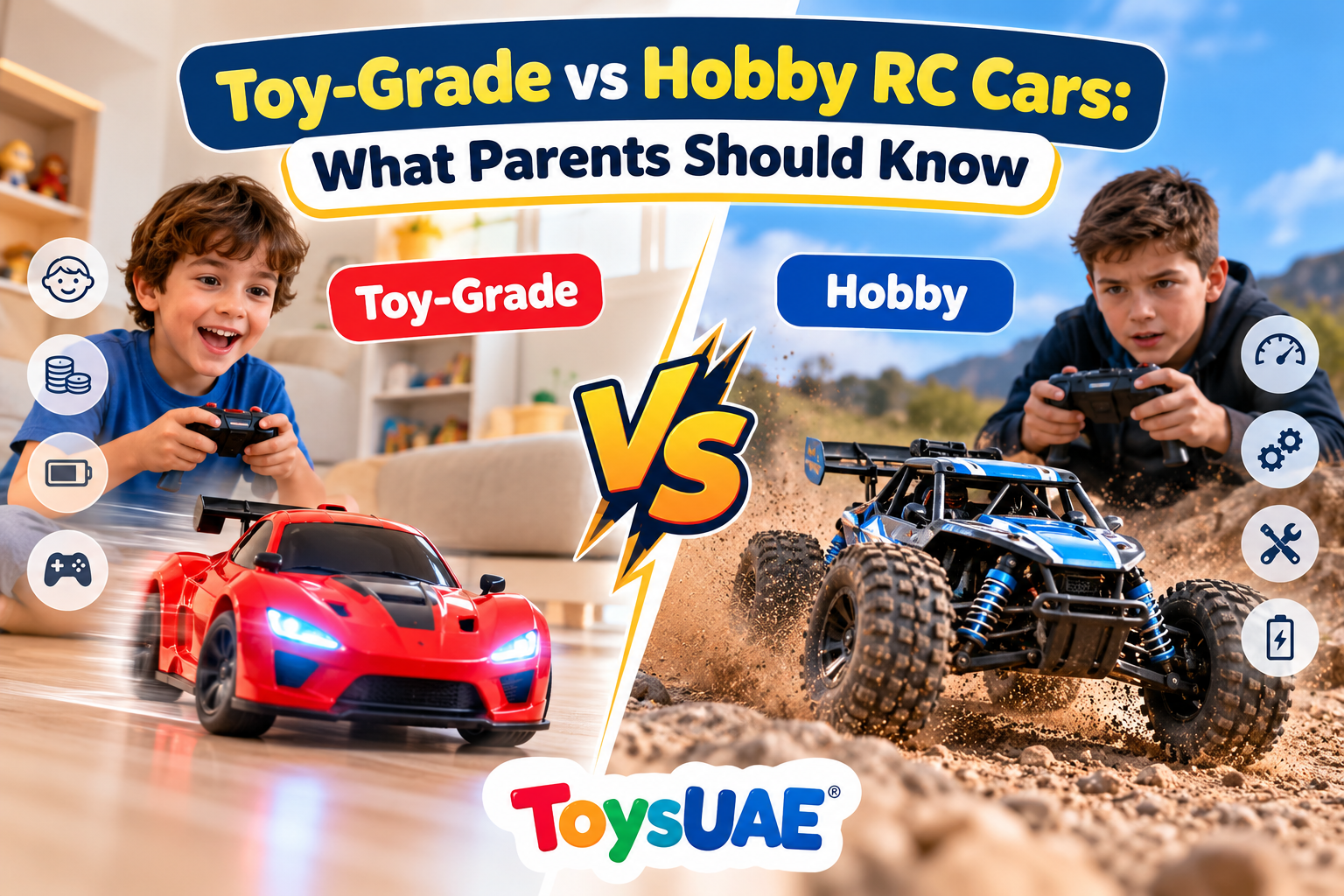
Remote-control cars can look similar from the outside, but they are not all built the same way. Some are designed mainly as simple toys for casual play, while others are made for people who want better speed, stronger parts, and more control.
For parents, understanding the difference between toy-grade and hobby models can make it easier to choose the right option for a child.
The best choice depends on age, experience, budget, and how seriously the child wants to use the vehicle.
What Is a Toy-Grade RC Car?
A toy-grade model is usually made for simple, everyday play.
These rc car are often easier to use and are designed for children who want something fun without needing technical knowledge.
They usually come ready to use with a basic controller.
Common features include:
- Simple steering
- Moderate speed
- Lightweight body
- Easy setup
- Lower price
- Limited replacement parts
These models are often a good starting point for younger children or beginners.
What Is a Hobby RC Car?
A hobby model is more advanced.
It is usually built with stronger components and may offer better speed, steering, suspension, and overall performance.
Hobby vehicles can also be easier to repair because many parts are replaceable.
Some models allow owners to change:
- Tires
- Motors
- Batteries
- Suspension parts
- Gears
- Body shells
This makes them more suitable for older children, teenagers, or anyone who wants to spend more time learning about the vehicle.
The Biggest Difference Is Build Quality
Toy-grade models are usually made for casual use.
Their bodies and internal parts are often simpler.
Hobby models are generally built to handle more demanding driving.
They may have stronger suspension, better electronics, and more durable components.
This does not mean every hobby vehicle is unbreakable, but it is usually designed with repair and long-term use in mind.
Hobby Models Are Usually Faster
Speed is another major difference.
Simple children’s models often run at a moderate pace.
This makes them easier to control indoors or in smaller outdoor spaces.
Hobby vehicles can be much faster.
That extra speed can be exciting, but it also requires more space and better driving skills.
For beginners, very high speed is not always a good thing.
Steering Is More Precise
Toy-grade steering is usually basic.
Some models have simple left and right controls rather than smooth proportional steering.
Hobby-grade vehicles often give the driver more control over how sharply the car turns.
This makes driving feel more realistic and can be useful for racing or obstacle courses.
For young children, simple steering may still be easier to learn.
Battery Systems Can Be Different
Basic models may use standard disposable batteries or simple rechargeable packs.
Hobby vehicles often use more powerful rechargeable battery systems.
These can provide better performance, but they may also need more careful charging and maintenance.
Parents should always follow the battery instructions that come with the product.
For younger children, adults should usually handle charging.
Repairability Is a Major Difference
One of the biggest advantages of a hobby model is that many individual parts can be replaced.
If a wheel, suspension arm, or gear becomes damaged, the owner may be able to replace only that part.
Toy-grade vehicles are often less repairable.
If an important internal component fails, replacing the whole toy may sometimes be easier than repairing it.
This is one reason hobby models can cost more at the beginning.
Toy-Grade Models Are Easier for Beginners
For a child’s first remote-control vehicle, simple can be better.
A beginner may not need advanced steering, high speed, or adjustable suspension.
A basic model gives children time to learn:
- Forward and reverse
- Turning
- Speed control
- Avoiding obstacles
- Simple driving skills
Once they become more confident, they may want something more advanced.
Hobby Models Need More Care
Advanced vehicles often require more maintenance.
Owners may need to clean moving parts, check screws, inspect tires, or replace worn components.
Some children enjoy this part of the hobby.
Others may simply want a toy they can switch on and drive.
Parents should think about whether the child is interested only in driving or also in learning how the vehicle works.
Price Can Be Very Different
Toy-grade models are usually more affordable.
This makes them practical for birthdays, casual play, or first-time users.
Hobby models can cost much more because of the components, performance, and repairable design.
There may also be extra costs for batteries, chargers, spare parts, or upgrades.
The higher price can make sense for someone who will use the vehicle regularly, but it may not be necessary for a beginner.
Which Is Better for Indoor Use?
Toy-grade models are often more convenient indoors.
They are usually smaller and slower, making them easier to control around furniture.
Large hobby vehicles may need much more space.
Some hobby models are designed specifically for indoor use, but parents should check size and speed before buying.
Which Is Better Outdoors?
Both can work outdoors, depending on the model.
Simple vehicles can be fine on pavement and flat surfaces.
For rougher ground, grass, dirt, or uneven paths, hobby-style off-road models usually perform better.
They often have:
- Larger tires
- Better suspension
- More ground clearance
- Stronger motors
Still, parents should choose a surface that matches the product’s design.
Are Hobby RC Cars Better?
Not automatically.
A hobby model may be better in terms of performance and repairability, but that does not mean it is the right choice for every child.
A young beginner may have more fun with a simple, slower vehicle.
An older child who enjoys racing, outdoor driving, or learning about mechanics may prefer a hobby model.
The best option depends on the user.
Which One Is Easier to Maintain?
Toy-grade vehicles usually need less attention during normal use.
However, if something breaks, repair options may be limited.
Hobby models need more care but are often easier to repair.
This makes the choice a trade-off between simplicity and long-term flexibility.
Think About the Child’s Interest Level
Before buying, parents can ask:
Does the child just want to drive for fun?
Do they enjoy taking things apart and learning how they work?
Will they use the toy often?
Do they want to race or drive on rough surfaces?
For casual play, a basic model may be enough.
For deeper interest, a hobby vehicle may offer more room to grow.
Choosing From ToysUAE
Parents browsing ToysUAE can compare different remote-control models based on age, size, speed, battery type, and intended surface.
For younger users, easy controls and manageable speed are often more important than advanced features.
Older children who already have experience may be ready for a stronger and more capable model.
Final Thoughts
Toy-grade and hobby RC cars serve different purposes.
Toy-grade vehicles are usually simpler, more affordable, and easier for beginners.
Hobby models offer better performance, more precise control, stronger components, and more repair options.
Neither type is always better.
The right choice depends on the child’s age, experience, budget, and how much interest they have in the hobby.
For a first vehicle, simple is often enough. For an older or more experienced user, a hobby model can offer a more detailed and long-term experience.
Frequently Asked Questions
Are toy-grade RC cars good for beginners?
Yes. They are usually easier to control and more affordable, making them suitable for first-time users.
Why are hobby RC cars more expensive?
They often use stronger parts, better electronics, more precise steering, and components that can be repaired or replaced.
Can hobby RC cars be used by kids?
Yes, but age, speed, and experience should be considered. Faster models are generally better for older or more experienced users.
Are toy-grade models repairable?
Some are, but repair options are often more limited than with hobby vehicles.
Which type is better for outdoor use?
Hobby off-road models usually handle rougher surfaces better, but some toy-grade vehicles are suitable for pavement and light outdoor play.
Do hobby models need more maintenance?
Usually yes. They may need cleaning, part checks, and occasional repairs.
Which type is better for a first RC car?
A simple toy-grade model is often a good first choice because it is easier to use and less expensive.
Can children upgrade from toy-grade to hobby models later?
Yes. Many children start with a basic vehicle and move to more advanced models as their interest and driving skills grow.