What Companies Should Know About Compliance in Cross Border Payments
Introduction
International payments allow businesses to work with customers, suppliers, and partners across the world. However, sending or receiving money across borders involves more than simply transferring funds from one country to another.
Businesses must operate within regulatory frameworks designed to protect financial systems, prevent illegal activity, safeguard customer information, and improve transaction transparency.
Compliance therefore plays an important role in cross-border payments.
Companies need to understand how payment regulations may affect transaction processing, customer verification, reporting, data handling, and payment monitoring.
A reliable business payment solution should support a company’s compliance processes while helping finance teams manage international transactions more efficiently.
Why Compliance Matters in Cross Border Payments
International payments can involve multiple financial institutions, jurisdictions, currencies, and regulatory authorities.
Each participant may have specific obligations.
Businesses that ignore payment compliance requirements can face:
- Delayed transactions
- Payment restrictions
- Account reviews
- Additional administrative work
- Reputational damage
- Regulatory consequences
Compliance also helps businesses build trust with customers, suppliers, and financial partners.
A structured compliance approach makes payment operations more predictable and easier to manage.
Understanding KYC Requirements
Know Your Customer, commonly known as KYC, is an important part of financial compliance.
KYC processes help organizations verify the identity of customers or businesses before providing certain financial services.
Depending on the transaction model and regulatory environment, verification may involve information such as:
- Individual identity details
- Business registration information
- Ownership information
- Address verification
- Authorized representatives
Businesses involved in international transactions should understand what information their payment providers may require.
Incomplete verification can lead to transaction delays or limitations.
KYB for Business Transactions
While KYC commonly focuses on individuals, Know Your Business or KYB processes help verify companies.
This becomes particularly relevant for b2b cross border payments.
Payment providers may need information about:
- Company registration
- Business ownership
- Directors
- Operational activities
- Transaction purpose
- Source of funds
These checks help payment providers understand the businesses using their platforms.
Companies can reduce onboarding delays by maintaining accurate corporate documentation.
Anti-Money Laundering Requirements
Anti-Money Laundering, or AML, controls are designed to help detect and prevent suspicious financial activity.
Payment providers may monitor transactions for unusual patterns.
For example, unexpected transaction volumes, unusual destinations, or activity inconsistent with a customer’s profile may require additional review.
Businesses should understand that compliance checks can sometimes affect payment processing times.
Providing accurate transaction information can help reduce unnecessary delays.
Sanctions Screening
International businesses may also need to consider sanctions.
Governments and regulatory authorities can restrict financial dealings with certain individuals, entities, regions, or organizations.
Payment providers may screen transactions against applicable sanctions lists.
As a result, some cross border payments may require additional checks before processing.
Businesses should maintain accurate information about customers, suppliers, and transaction beneficiaries.
This can help compliance systems evaluate transactions correctly.
Transaction Monitoring
Compliance does not end after customer onboarding.
Payment activity may require continuous monitoring.
Transaction monitoring systems help identify activity that may require additional review.
These systems may consider factors such as:
- Transaction amount
- Frequency
- Destination
- Customer profile
- Payment pattern
Modern payment solutions may use automated systems to support transaction monitoring.
Businesses should recognize that monitoring plays an important role in maintaining secure financial environments.
Data Protection and Payment Compliance
Payment transactions involve sensitive financial and personal information.
Businesses should therefore consider data protection requirements alongside financial regulations.
Companies need appropriate controls for:
- Storing payment information
- Managing access
- Protecting customer data
- Sharing financial information
- Maintaining secure systems
The specific requirements depend on the markets in which a business operates.
Companies should assess applicable data protection obligations whenever they expand into a new region.
Compliance in Online Payment Solutions
Digital businesses often process large numbers of transactions automatically.
This makes compliance particularly important for online payment solutions.
Businesses should choose payment infrastructure that supports secure transaction processing while allowing appropriate verification and monitoring.
An effective digital payment system should balance customer convenience with regulatory responsibilities.
Making verification too difficult can create unnecessary friction, but insufficient controls can increase risk.
The objective is to create a payment experience that remains both efficient and compliant.
Compliance and Pay-in Services
Companies using Pay-in services to collect customer payments should understand how incoming transactions are monitored and recorded.
Accurate payment records can help support:
- Reconciliation
- Audit processes
- Financial reporting
- Customer verification
- Transaction investigation
Businesses should maintain clear documentation of payment sources and transaction purposes where required.
Good recordkeeping can simplify future compliance reviews.
B2B Cross Border Payments and Documentation
International B2B payments often require more documentation than everyday consumer transactions.
Businesses may need records such as:
- Commercial invoices
- Contracts
- Purchase orders
- Supplier information
- Transaction descriptions
Reliable b2b cross border payments processes should make it easier to connect financial transactions with relevant business documentation.
This improves transparency and can simplify internal audits.
The Role of Payment Providers
Payment providers can play an important role in supporting compliant transactions.
However, companies should not assume that using a payment platform removes all of their own responsibilities.
Businesses should understand:
- Which compliance activities the provider performs
- Which information the company must provide
- Which markets are supported
- How transactions are reviewed
- What documentation may be required
A strong business payment solution should provide clear processes and appropriate controls.
Compliance and Business Payments
Effective compliance can actually improve business payments rather than simply adding administrative work.
Standardized processes help companies maintain accurate records and reduce uncertainty.
When businesses establish clear payment procedures, employees know what information is required before initiating transactions.
This can reduce last-minute payment delays.
Evaluating Providers Such as Uniteller
Businesses assessing providers such as Uniteller should review the compliance requirements relevant to their markets and transaction types.
Questions may include:
- Which countries and currencies are supported?
- What onboarding documents are required?
- How are business customers verified?
- How are international transactions screened?
- What information is required for payments?
- How are transaction records provided?
Companies should verify these details directly with the provider before implementation.
Building an Internal Compliance Process
Businesses can improve international payment operations by establishing internal procedures.
A practical process may include:
- Maintaining updated customer and vendor information.
- Collecting appropriate transaction documentation.
- Reviewing payment beneficiaries.
- Monitoring unusual payment activity.
- Maintaining accurate financial records.
- Training relevant finance employees.
- Reviewing regulatory changes periodically.
Companies operating in multiple markets may also need professional legal or compliance advice for jurisdiction-specific obligations.
Compliance Should Support Growth
Compliance is sometimes viewed only as a restriction.
In reality, strong compliance processes can support international growth.
Businesses with organized payment procedures can enter new markets with greater confidence.
They can also build stronger relationships with financial partners because their transactions are easier to understand and verify.
Efficient compliance therefore supports both risk management and business expansion.
Conclusion
Compliance is a fundamental part of international payment management.
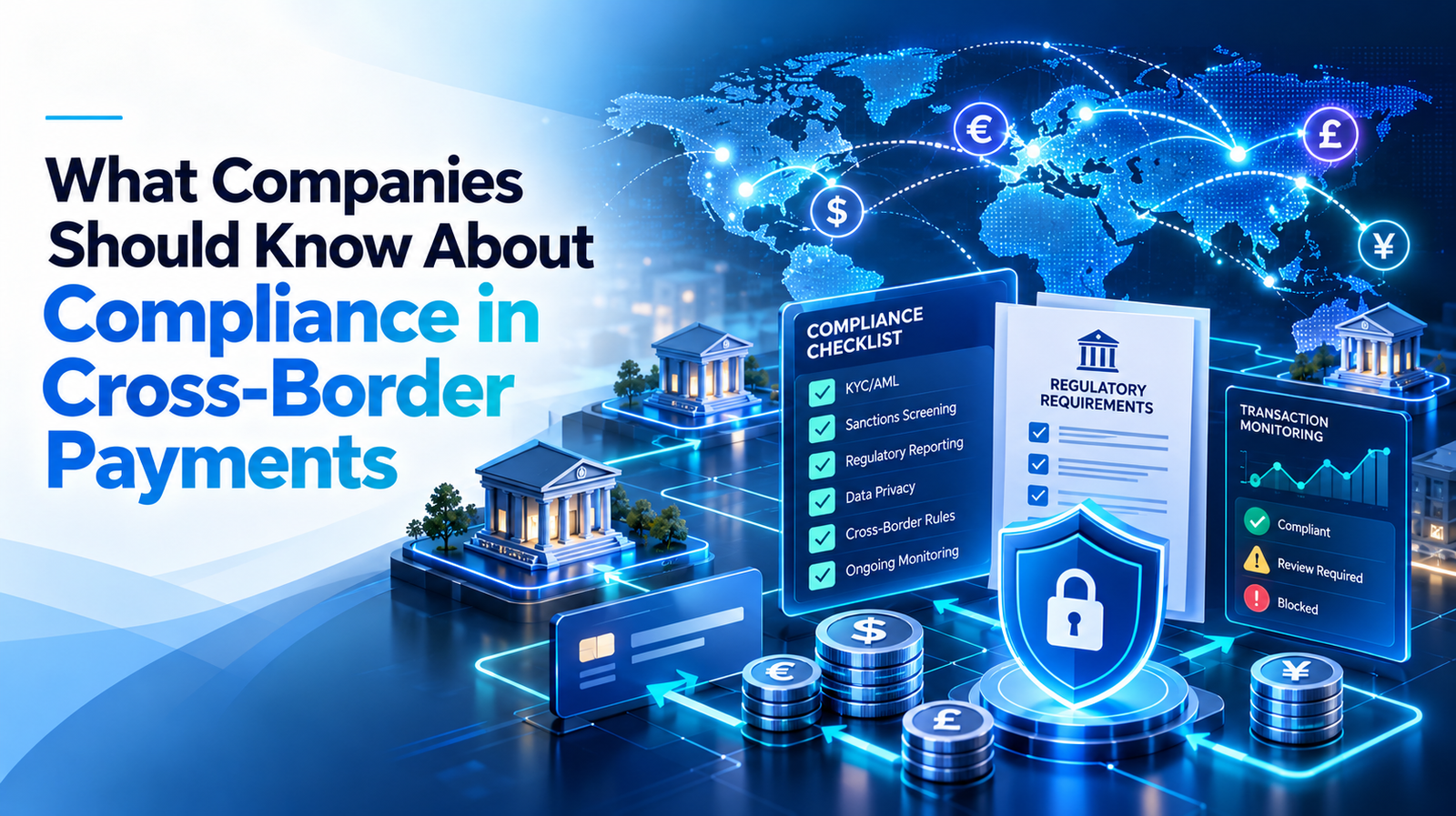
Companies handling cross border payments need to consider customer verification, business verification, transaction monitoring, sanctions screening, data protection, and financial recordkeeping.
Modern payment solutions and reliable online payment solutions can help companies structure these processes more effectively.
Businesses using Pay-in services, handling business payments, or processing b2b cross border payments should select a business payment solution that aligns with their markets and regulatory obligations.
When evaluating providers such as Uniteller, companies should review compliance capabilities carefully and confirm that their payment infrastructure supports both operational efficiency and responsible international growth.