What Features Matter Most in a Modern Hookah System?
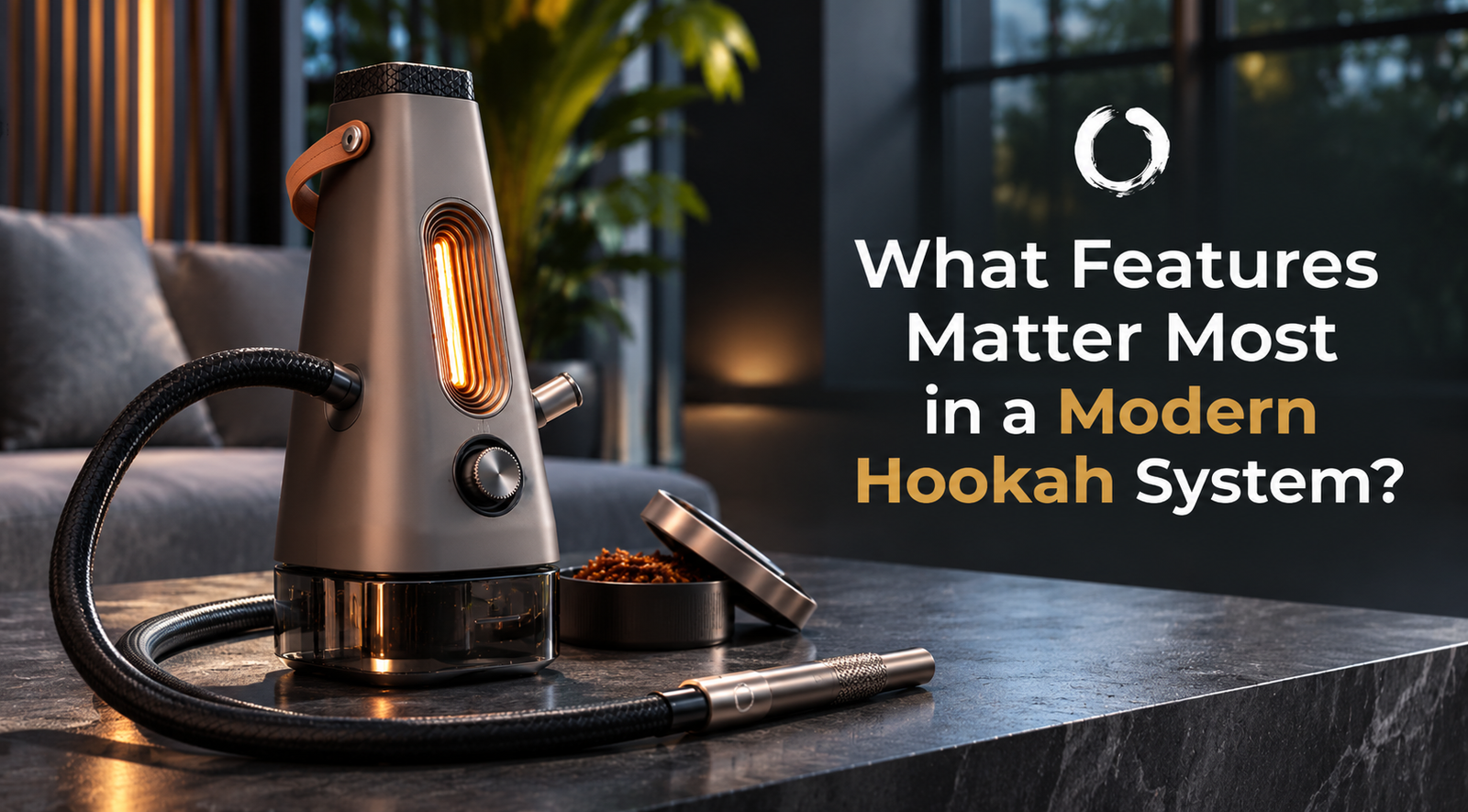
Hookah has long been associated with social gatherings, shared experiences, and a distinctive ritual. From preparing the bowl to arranging the hose and managing the heat, traditional hookah involves several steps that contribute to the overall experience. However, as technology continues to influence everyday products, modern hookah systems are evolving to offer greater convenience, improved control, and more flexible designs.
Today’s hookah enthusiasts are increasingly interested in systems that combine traditional shisha culture with modern engineering. Features such as electronic heating, temperature management, rechargeable batteries, portability, and minimalist construction are changing how people evaluate hookah equipment.
Understanding these features can help buyers identify a system that matches their preferences, whether they value precise control, straightforward maintenance, or a premium design.
In this guide, we explore the most important features of a modern hookah system and explain how each contributes to its functionality and overall user experience.
1. Electronic Heating Technology
One of the most significant developments in modern hookah design is the introduction of electronic heating technology.
Traditional hookah systems typically rely on charcoal to heat the shisha material. This requires preparation, ignition, and ongoing heat management throughout a session.
Modern electronic hookah systems take a different approach by using electrically powered heating components.
Why electronic heating matters
Electronic heating can offer several practical advantages:
- Simplified preparation: Eliminates the need to ignite and arrange charcoal when using a fully electronic heating system.
- Greater control: Allows heating performance to be managed through electronic controls.
- Consistent operation: Helps reduce some of the temperature fluctuations associated with manually adjusting charcoal.
- Convenient operation: Reduces the number of preparation steps before a session.
Electronic heating does not automatically guarantee identical performance across every device. Heating efficiency depends on the design of the heating element, temperature sensors, control software, and the material being heated.
Premium systems focus on integrating these components to provide predictable and responsive operation.
2. Precise Temperature Control
Temperature management is another essential feature that distinguishes advanced hookah systems from simpler designs.
In traditional setups, users often regulate heat by moving charcoal, changing airflow, or adjusting the heat management device. This process requires attention and experience.
Modern electronic systems can provide a more direct approach through adjustable temperature settings.
Benefits of temperature control
Greater personalisation
Different users may prefer different heating intensities. Adjustable controls allow them to select settings based on their preferences and the materials compatible with the device.
More predictable performance
A well-designed temperature regulation system can maintain heating conditions within a controlled operating range.
Reduced manual adjustments
Instead of repeatedly repositioning charcoal, users can manage heat through the device’s interface.
Improved usability
Clear temperature controls can make the system easier to understand, particularly for users who are less familiar with traditional heat management.
It is important to distinguish between a device’s selected temperature and the actual temperature of the shisha material. These values may differ depending on sensor placement, airflow, and heating chamber design.
For this reason, temperature control should be evaluated alongside the overall quality of the heating system.
3. Rechargeable Battery Performance
Battery technology has become an important consideration in portable electronic hookah systems.
A rechargeable battery allows compatible devices to operate without remaining connected to an external power source throughout use.
However, battery performance involves more than simply having a large capacity.
What should buyers consider?
Several factors influence the practicality of a rechargeable hookah system:
- Battery capacity: Determines how much electrical energy the battery can store.
- Heating efficiency: Influences how quickly the device consumes power.
- Charging method: Affects the convenience of recharging.
- Power management: Helps regulate electrical delivery to the heating components.
- Battery protection: Supports controlled charging, discharging, and temperature management.
Heating elements can require substantial electrical power. Consequently, actual operating time depends on the selected heat level, battery condition, ambient conditions, and device efficiency.
When comparing modern hookah systems, buyers should look for clearly documented battery specifications and realistic operating guidance rather than relying on capacity figures alone.
4. Portability and Cordless Design
Portability is becoming increasingly relevant as hookah equipment moves beyond traditional fixed setups.
A modern hookah system may be designed for use in different permitted environments, including private homes and suitable outdoor social settings.
Portable designs aim to reduce the complexity associated with transporting and assembling larger hookah equipment.
Features that support portability
Compact construction
A thoughtfully engineered body can reduce the amount of space required for storage and transportation.
Cordless operation
Rechargeable power systems can reduce dependence on nearby electrical outlets during operation.
Secure component connections
Well-fitted parts help keep the system stable during handling and assembly.
Practical weight distribution
Balanced construction can make a device easier to carry and position.
Protective storage
Compatible carrying solutions can help protect delicate components during transportation.
Portability should never come at the expense of stability or appropriate operating precautions. Users should place their hookah on a secure surface and follow the manufacturer’s guidance for transportation, charging, and storage.
5. Airflow Engineering and Draw Resistance
Airflow is a fundamental part of any hookah system, yet it is often overlooked when comparing products.
The way air moves through a device affects draw resistance, responsiveness, and the overall feel of the session.
Modern hookah engineering considers several factors, including the internal airpath, hose connections, chamber geometry, and component alignment.
Why airflow design is important
A properly engineered airflow system aims to provide a predictable draw without unnecessary restrictions.
Key considerations include:
- Airpath dimensions: The diameter and length of internal passages influence airflow resistance.
- Connection quality: Secure connections help reduce unwanted air leakage.
- Hose compatibility: The hose and connector design can influence the drawing experience.
- Component alignment: Well-positioned internal parts help maintain the intended airflow path.
- Cleaning accessibility: Accessible passages make routine maintenance more manageable.
A more open airflow system is not automatically better for every user. Some people prefer a tighter draw, while others favour lower resistance.
The ideal design balances the intended draw characteristics with the heating system and overall device construction.
6. Heating Chamber Materials and Construction
The heating chamber is another important part of a modern hookah system.
Its purpose is to hold the shisha material while allowing heat to be transferred according to the device’s design.
Different manufacturers use materials such as ceramic, porcelain, and metal in their heating assemblies.
Why chamber materials matter
Heat distribution
The chamber’s material, thickness, and geometry influence how heat moves through the shisha material.
Temperature stability
Materials with suitable thermal properties can help reduce sudden changes in heating conditions.
Durability
Components designed for repeated heating and cooling cycles should withstand normal operating stresses when used correctly.
Maintenance
Accessible chambers and removable inserts can make cleaning and replacement more convenient.
For example, the ENSŌ Shisha 2026 Edition uses a ceramic-based heating arrangement with adjustable electronic temperature control. Its integrated construction combines several traditional hookah components within one modern system.
When evaluating chamber quality, buyers should consider the manufacturer’s recommended materials, cleaning procedures, and replacement options.
7. Easy Cleaning and Maintenance
Maintenance is an unavoidable part of hookah ownership.
Even with electronic heating, residue can accumulate in the chamber, airflow pathways, hose connections, and water container.
A modern system should therefore be designed with routine cleaning in mind.
Features that simplify maintenance
- Removable water chambers for emptying and rinsing.
- Accessible heating cups or inserts.
- Detachable mouthpieces and hose connections.
- Cleaning tools designed for specific components.
- Replaceable parts that experience regular wear.
The ENSŌ 2026 Edition includes a removable glass water chamber, magnetic mouthpiece connections, and a dedicated cleaning multi-tool. These features reflect an approach in which maintenance is considered part of the product’s overall design.
Users should always allow heated components to cool before cleaning and avoid exposing electronic parts to water unless the manufacturer explicitly permits it.
8. Premium Materials and Minimalist Design
Modern hookah systems are not evaluated solely by their technical capabilities. Appearance, construction quality, and material selection also influence purchasing decisions.
Traditional hookahs often feature elaborate metalwork and decorative glass bases. Contemporary designs may instead favour simplified shapes, refined finishes, and integrated components.
What defines thoughtful modern design?
Material quality
Metal alloys, stainless steel, heat-resistant glass, and ceramics can serve different structural and functional purposes.
Visual simplicity
A streamlined exterior can complement contemporary interiors without sacrificing the familiar elements of the hookah ritual.
Integrated components
Combining heating, power, and airflow systems into a unified structure can reduce visual complexity.
Ergonomic details
Comfortable mouthpieces, accessible controls, and practical handling points contribute to usability.
ENSŌ’s design philosophy reflects this combination of technology and tradition. The brand’s 2026 Edition received a Red Dot Design Award in Product Design, highlighting the attention given to its industrial design.
However, appearance should always be considered alongside functionality. A visually impressive device still needs reliable heating, accessible maintenance, and suitable component construction.
9. Compatibility and Customisation
Compatibility is especially important for enthusiasts who already own traditional hookah equipment.
Some modern electronic hookahs operate as complete standalone systems, while others are designed to upgrade an existing setup.
These approaches serve different needs.
Complete electronic hookah systems
An integrated device includes the main components required for operation, such as the heating system, water chamber, airflow pathway, and power source.
This approach can appeal to users who prefer a unified design with fewer separate components.
Electronic heating upgrades
Other products focus specifically on replacing traditional charcoal heating.
For example, ENSŌ Diamond is designed to work with compatible traditional hookah setups.
It introduces electronic heating and adjustable control while allowing users to retain much of their existing equipment.
Compatibility should always be verified before purchasing. Connection dimensions, chamber requirements, power specifications, and supported accessories can vary between products.
10. Safety Features and Reliable Operation
Electronic heating introduces electrical components that require appropriate protection and responsible operation.
A modern hookah system should include safety-related engineering suited to its battery, heating assembly, and charging configuration.
Important considerations include battery overcharge protection, temperature monitoring, electrical insulation, compatible charging equipment, and clear operating instructions.
ENSŌ describes battery protections against overcharging, over-discharging, and excessive temperature, alongside relevant electrical and transport compliance documentation.
These protections do not eliminate all risks. Users should avoid damaged batteries, unsuitable chargers, and operating conditions outside the manufacturer’s recommendations.
It is also important to understand that charcoal-free does not mean risk-free. Although electric heating eliminates charcoal combustion within a fully electronic system, inhaling hookah aerosol can still expose users to nicotine and other potentially harmful substances, depending on the material used. Water filtration does not make hookah use harmless.
Comparing the Most Important Modern Hookah Features
The following table summarises the main features buyers should evaluate.
| Feature | Why it matters |
| Electronic heating | Reduces reliance on charcoal preparation |
| Temperature control | Supports adjustable heating preferences |
| Rechargeable battery | Enables cordless operation |
| Airflow design | Influences draw resistance |
| Heating chamber | Affects heat transfer and maintenance |
| Portability | Supports easier transportation |
| Removable components | Simplifies routine cleaning |
| Material quality | Supports durability and usability |
| Compatibility | Determines available accessories and upgrades |
| Safety engineering | Supports appropriate electrical operation |
Rather than choosing a system based on one specification, buyers should consider how these features work together.
How ENSŌ Shisha Approaches Modern Hookah Design
ENSŌ Shisha develops electronic hookah products around the idea of preserving the familiar shisha ritual while introducing modern heating technology.
Its product range illustrates two different approaches.
ENSŌ 2026 Edition
An integrated electronic hookah featuring a removable 5,000 mAh battery, adjustable 180–330°C heating, magnetic mouthpiece connections, and a water chamber.
Designed for users who prefer a complete electronic setup.
ENSŌ Diamond
An electronic heating management device designed for compatible traditional hookahs, with adjustable heat settings and different control profiles.
Designed for users who want to modernise an existing setup.
Both approaches demonstrate that innovation in hookah design does not necessarily require abandoning traditional elements. Instead, modern engineering can change how heat is generated and controlled while retaining the familiar water chamber, hose, and shisha preparation process.
Frequently Asked Questions
What is the most important feature in a modern hookah system?
Reliable heating and effective temperature management are among the most important features. However, airflow, chamber construction, battery performance, and maintenance also influence overall usability.
Are electronic hookahs better than traditional hookahs?
Electronic hookahs offer different advantages, including adjustable heating and reduced reliance on charcoal preparation. Traditional systems may appeal to users who prefer manual heat management. Neither approach is inherently safer for inhalation.
How long does a rechargeable electronic hookah last?
Runtime varies according to battery capacity, heating power, temperature settings, and usage conditions. ENSŌ lists approximately 90–120 minutes per charge for its 2026 Edition, depending on operating conditions.
Can a modern electronic hookah use traditional shisha blends?
Some electronic hookah systems support conventional shisha blends. ENSŌ’s 2026 Edition uses an open chamber system intended for compatible loose shisha material rather than requiring proprietary prefilled pods. Users should follow the device’s preparation instructions.
Is an electronic hookah difficult to clean?
Cleaning requirements depend on the product’s construction. Systems with removable chambers, accessible heating cups, and detachable mouthpieces can simplify routine maintenance.
Conclusion: Choosing Features That Improve the Overall Experience
Modern hookah technology is changing how enthusiasts approach a traditional ritual.
Electronic heating, precise temperature adjustment, rechargeable power systems, refined airflow, and accessible maintenance all contribute to the evolution of contemporary hookah equipment.
However, the best modern hookah system is not necessarily the one with the most advanced specifications. It is the system that combines practical features, thoughtful construction, and straightforward operation in a way that suits the user’s preferences.
ENSŌ Shisha reflects this approach through electronic heating technology and contemporary industrial design, offering both complete hookah systems and heating solutions for compatible traditional equipment.
Ultimately, understanding how these features work together allows buyers to make more informed decisions and choose equipment that aligns with their preferred shisha ritual.
Explore the modern hookah systems available at ENSŌ Shisha.