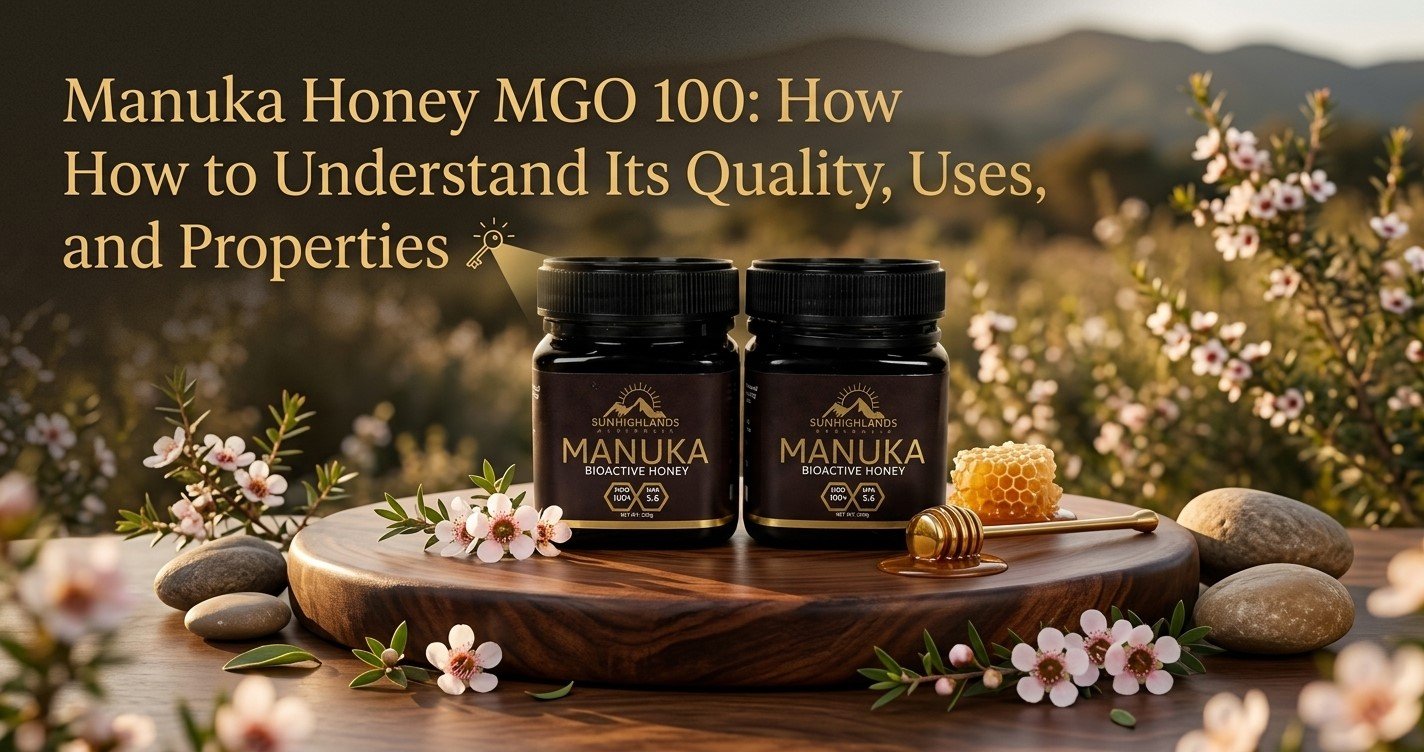
Manuka Honey MGO 100: How to Understand Its Quality, Uses, and Properties
Manuka honey is valued for its distinctive flavour, natural origin, and unique chemical properties. When comparing different varieties, you may notice labels displaying MGO ratings such as 100, 250, 400, or higher. These numbers help explain the concentration of a naturally occurring compound called methylglyoxal.
Understanding manuka honey mgo 100 can help consumers make informed decisions when choosing honey for everyday use. By learning about its quality indicators, common uses, and natural properties, you can better understand what this rating means and how it compares with other varieties.
What Is Manuka Honey MGO 100?
MGO stands for methylglyoxal, a naturally occurring compound found in manuka honey. It develops from dihydroxyacetone, which is present in the nectar of the manuka plant.
A rating of MGO 100 generally indicates that the honey contains approximately 100 milligrams of methylglyoxal per kilogram. This measurement helps consumers compare the concentration of MGO in different products.
Unlike a general quality score, the MGO number refers to one specific compound. It does not measure every nutritional property, determine the overall taste, or guarantee a particular health outcome.
A 100 MGO rating is lower than ratings such as 400, 850, or 1200 MGO. However, choosing a suitable variety depends on personal preferences, intended use, and the product’s overall quality.
How to Assess the Quality of Manuka Honey
The MGO rating is useful, but it should not be the only factor considered when selecting a honey product.
Check the MGO Information
Look for clear labelling that identifies the methylglyoxal concentration. Transparent product information helps you compare different options and understand what you are purchasing.
Consider Origin and Authenticity
Australian Manuka honey is associated with the manuka plant, which grows in New Zealand and parts of Australia. Check the product label for its stated country of origin and sourcing details.
Independent testing, traceability information, and recognised certification can provide additional confidence in a product’s identity and quality. Australian and New Zealand manuka honey may be subject to different standards, so the specific product’s labelling matters.
Review Ingredients and Packaging
A clear ingredient list helps you understand what the product contains. Check the packaging for storage instructions, net weight, and any information about testing or quality assurance.
Proper storage is also important. Follow the manufacturer’s guidance and keep the container tightly closed to help maintain the honey’s quality.
What Are the Natural Properties of MGO 100 Honey?
Manuka honey contains naturally occurring sugars, small amounts of other nutrients, and compounds that have attracted scientific interest.
Methylglyoxal is particularly notable because it contributes to manuka honey’s antibacterial activity. Researchers have investigated these properties in laboratory settings, although results from laboratory studies do not automatically establish benefits from eating honey.
A lower MGO rating indicates a lower measured concentration of methylglyoxal than a higher rating. It does not mean that the product has no distinctive properties, nor does it establish that the honey will prevent or treat a medical condition.
Like other honey varieties, manuka honey is primarily a source of carbohydrates and natural sugars. It can be enjoyed as part of a balanced diet, but moderation remains important.
Common Uses of Manuka Honey MGO 100
A lower-MGO variety can be incorporated into everyday meals in several simple ways.
As a Breakfast Ingredient
Add a small amount to porridge, yoghurt, or wholegrain toast for natural sweetness. Its distinctive flavour can complement fruit, nuts, and other breakfast ingredients.
In Homemade Recipes
Manuka honey can be used in salad dressings, marinades, baking, and homemade sauces. When heating honey, remember that high temperatures can change its flavour and some of its natural characteristics.
As an Alternative Sweetener
Some people use honey instead of refined sugar in selected recipes and drinks. However, honey still contributes sugars and calories, so it should not be considered a sugar-free alternative.
For General Culinary Enjoyment
People interested in different honey varieties may appreciate manuka honey for its flavour, origin, and MGO rating. A lower rating can be an accessible way to explore this variety without automatically choosing a product with a much higher concentration.
Food-grade honey should not be used as a replacement for medical treatment. Products intended for wound care have different requirements, and wounds requiring treatment should be assessed by an appropriate healthcare professional.
How Does MGO 100 Compare With Higher Ratings?
Different MGO ratings indicate different concentrations of methylglyoxal.
| MGO Rating | Relative MGO Concentration |
|---|---|
| 100 MGO | Lower concentration |
| 250 MGO | Higher than 100 MGO |
| 400 MGO | Higher than 250 MGO |
| 850 MGO | Higher than 400 MGO |
| 1200 MGO | Higher than 850 MGO |
These comparisons describe MGO concentration, not overall nutritional value or suitability for every person. A higher rating may be relevant to consumers seeking a greater concentration of this compound, while those mainly interested in culinary uses may prioritise taste, origin, and budget.
Before purchasing, compare the stated MGO level with the product’s authenticity information, ingredients, and intended use rather than relying on the number alone.
Important Considerations Before Consuming Manuka Honey
Although manuka honey is a natural food, it is not suitable for everyone in every situation.
Children under 12 months must not consume honey because of the risk of infant botulism. People managing diabetes should consider its carbohydrate and sugar content and follow their healthcare professional’s dietary advice.
Anyone with a known honey or bee-product allergy should exercise caution. Manuka honey should also not replace prescribed medicines or professional medical advice.
Conclusion
Manuka honey MGO 100 is identified by its approximate methylglyoxal concentration of 100 milligrams per kilogram. This rating offers a practical way to compare products, but it is only one part of assessing quality.
By checking authenticity information, origin, ingredients, and storage guidance, consumers can make better-informed choices. Whether used in breakfast foods, homemade recipes, or as an occasional sweetener, manuka honey can be enjoyed for its distinctive flavour as part of a balanced diet.