Pool Water Balancing in Abu Dhabi: A Simple Guide for Clear Water
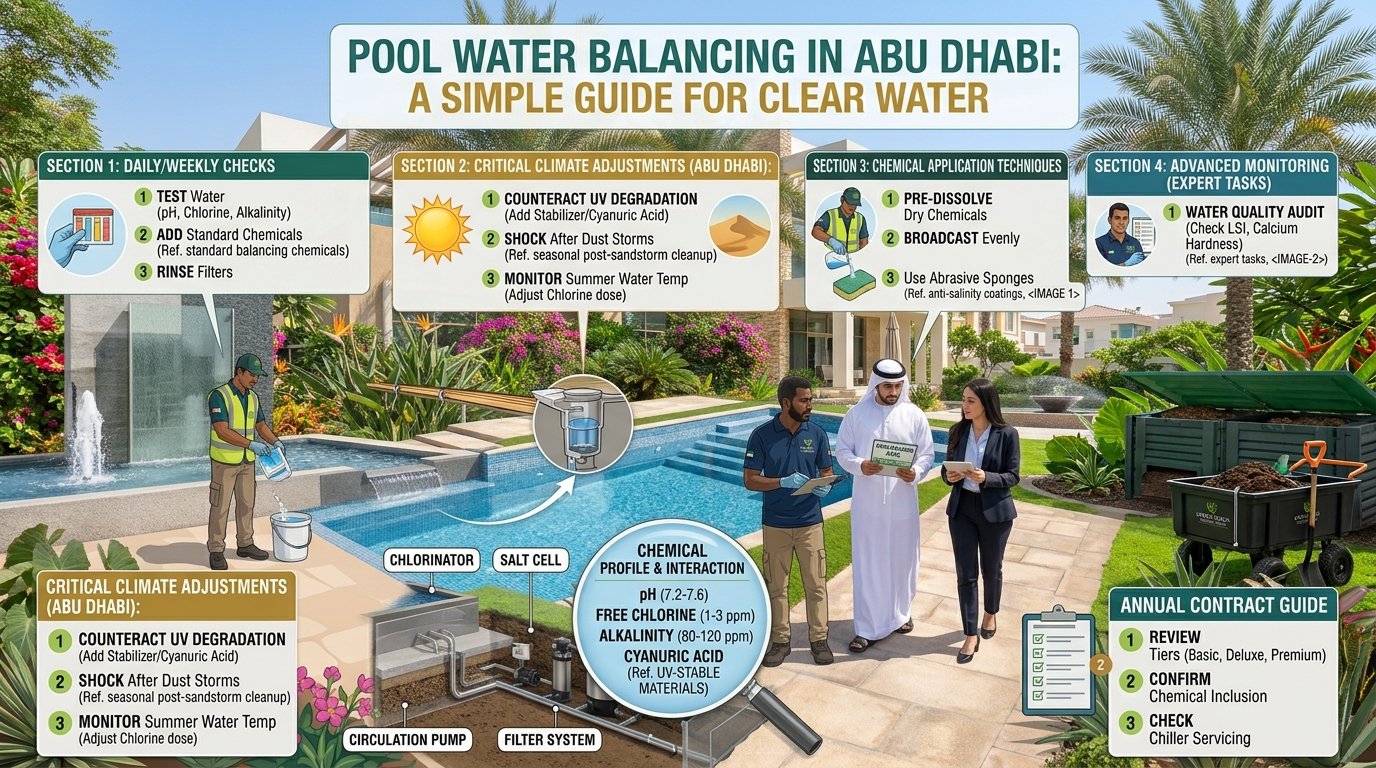
A pool should look like an invitation: clear, bright and comfortable on the skin. Yet many owners in the capital fight the same battle. The water turns cloudy after a hot weekend, eyes sting after a swim, green patches appear on the walls, and the chlorine bill keeps climbing. In most cases the problem is not the amount of chlorine at all. It is the balance of the water around it.
Abu Dhabi is a demanding place to own a pool. Water temperatures can pass 32°C, the sun is intense for most of the year, dust and sand blow in constantly, and evaporation concentrates minerals in the water. Under these conditions, proper pool water balancing in Abu Dhabi is the single most important habit for keeping the water safe, protecting equipment and saving money. This guide explains what balanced water means, the types of parameters and systems involved, the benefits you will see, the factors to monitor, and a practical process you can follow. It is written by the specialists at Atlanta Pools experts, who look after residential pools throughout the emirate, and it works best when paired with dependable pool maintenance support that keeps testing consistent.
Not sure what your water is telling you? Book a Water Test and let our technicians read the numbers for you.
What Is Pool Water Balancing?
Pool water balancing is the process of testing and adjusting the chemical properties of your pool water so they sit within a healthy, stable range. Think of it as keeping the water in harmony. When the main measurements work together, sanitiser does its job efficiently, surfaces stay smooth, equipment lasts longer and swimmers feel comfortable.
The key word is together. A pool can contain plenty of chlorine and still grow algae if the pH is too high, because chlorine loses much of its strength at higher pH. Likewise, water with very low alkalinity can swing wildly in pH from day to day, while water with too much calcium can leave scale on tiles and inside pipes. Balancing is the skill of understanding these relationships and correcting them in the right order.
The water is also never static. Rain (rare but possible), refilling, bathers, sunscreen, windblown dust, fertiliser from nearby gardens and high evaporation all push the chemistry off course. That is why balancing is an ongoing routine rather than a once-a-season fix. If you are curious about how outdoor design affects your pool, the guide to a villa with private pool in Abu Dhabi explains how shade, landscaping and layout influence everyday pool care.
Types of Pool Water Balance: The Parameters and Systems Involved
Balancing is not one measurement. It is a group of related values, and the sanitising system you use changes how you manage them.
The Core Chemical Parameters
pH shows how acidic or basic the water is. A healthy range for most pools is roughly 7.2 to 7.6. Too low and the water can irritate eyes and corrode metal; too high and chlorine becomes sluggish while scale forms.
Total alkalinity acts as a buffer that keeps pH from jumping. It is usually kept around 80 to 120 ppm, though the ideal figure depends on the sanitiser and pool surface.
Calcium hardness measures dissolved calcium. Too little can make water aggressive toward plaster and grout, while too much causes cloudiness and scale. Many plaster pools aim for approximately 200 to 400 ppm.
Sanitiser level is the amount of free chlorine (or other sanitiser) available to kill bacteria and algae. A common residential target is about 1 to 3 ppm of free chlorine, adjusted to conditions.
Cyanuric acid (stabiliser) shields chlorine from sunlight. In bright climates it is valuable, but too much weakens chlorine’s effectiveness, so it is usually kept in a moderate range such as 30 to 50 ppm.
Total dissolved solids (TDS) rise over time as minerals build up. When TDS becomes very high, water can feel dull and difficult to balance, and partial draining may be necessary.
Balance by Sanitiser System
Different systems need slightly different attention:
- Traditional chlorine pools rely on tablets, granules or liquid chlorine. They are simple, but stabiliser can accumulate if stabilised tablets are used constantly.
- Salt chlorine pools generate chlorine from dissolved salt. The water feels softer, though pH tends to rise and salt cells need cleaning and correct salinity levels.
- Mineral or hybrid systems use additional minerals to support sanitiser. They still need regular testing, since they do not eliminate the need for balance.
Balance Index Thinking
Professionals often combine the readings into a single index, such as the Langelier Saturation Index. The idea is simple: water that is too aggressive eats surfaces, and water that is too scaling leaves deposits. A value close to neutral is ideal, and it helps technicians decide which parameter to adjust first.
Benefits of Proper Pool Water Balancing
The rewards of well-balanced water show up in appearance, comfort, safety and cost.
Crystal-clear water. Balanced chemistry lets filters and sanitiser work together, so particles are trapped and organic matter is oxidised. The result is the sparkling blue most owners want.
More comfortable swimming. Stinging eyes and itchy skin are often caused by pH or combined chlorine issues, not too much chlorine. Balanced water feels gentle, even after a long family swim.
Stronger protection from algae and bacteria. When pH and stabiliser are in range, chlorine remains active and consistently protects the pool. This lowers the risk of green water, slimy walls and unpleasant odours.
Longer equipment and surface life. Corrosive water attacks heaters, ladders, pumps and fittings, while scaling water clogs pipes and coats heat exchangers. Maintaining balance prevents costly damage and extends the life of plaster, tile and liners.
Lower chemical costs. It is surprising how much money is wasted adding chemicals to unbalanced water. Once the base chemistry is stable, you need smaller doses and fewer emergency treatments.
Better energy and filtration performance. Clean pipes, free-flowing filters and unclogged heat exchangers work more efficiently, so pumps run with less strain.
Higher property appeal. A pool that is clear and well kept supports the overall impression of a villa. If your property is still in the planning stage, specialists in swimming pool installation experts can design the system with filtration, circulation and dosing that make balancing easier from day one.
Key Factors and Features That Affect Water Balance in Abu Dhabi
The following factors explain why pools here behave differently from pools in cooler places.
Heat and Evaporation
High temperatures speed up chemical reactions and evaporation. As water evaporates, minerals stay behind and become more concentrated, which pushes calcium, TDS and stabiliser upward over time. Frequent topping up with fresh water helps, but it also changes the chemistry.
Strong Sunlight
UV radiation breaks down free chlorine rapidly. Stabiliser slows this effect, but a balance is needed: too little leaves the pool unprotected, too much locks chlorine up.
Dust, Sand and Organic Load
Wind carries sand, pollen, leaves and dust into the water. These add organic material that consumes chlorine and clouds the water. Good skimming, brushing and filtration are essential partners of chemical balance.
Bather Load
Entertaining guests, family gatherings and children’s swim sessions introduce sweat, sunscreen and oils. After a busy weekend, testing the water is wise, since sanitiser demand can spike.
Source Water Quality
Top-up water in the UAE can contain high mineral levels, which affects hardness, alkalinity and TDS from the start. Knowing your source water helps technicians predict how the pool will behave.
Pool Surface and Equipment
Plaster, tile, pebble and fibreglass surfaces respond differently to aggressive or scaling water. Heaters, chillers and salt cells have their own tolerance limits. Matching your balance targets to your equipment protects your investment.
Testing Quality
Accuracy depends on fresh reagents and correct technique. Inexpensive strips give a quick snapshot, while drop-based kits and digital meters provide finer detail. Professionals also use laboratory-style checks when a stubborn problem persists. Regular visits within annual pool service agreements make sure that readings are taken on schedule and recorded, so trends are easier to spot.
How Does Pool Water Balancing Work? A Step-by-Step Process
A clear sequence prevents mistakes, because adjusting one parameter often affects another.
- Clean first. Skim the surface, empty baskets, brush walls and vacuum debris. Testing dirty water can give misleading results, and organic waste uses up chemicals.
- Take a representative sample. Collect water from about elbow depth, away from skimmers and return jets, and test promptly.
- Test all key values. Measure pH, total alkalinity, free and total chlorine, calcium hardness and stabiliser. Add salinity and TDS checks for salt or older pools.
- Adjust total alkalinity first. Because alkalinity buffers pH, correcting it gives you a stable base. Raise or lower it gradually, then allow the pump to circulate.
- Correct pH next. Once alkalinity is steady, bring pH into the target zone. Make small changes and retest after circulation.
- Set sanitiser and stabiliser. Adjust free chlorine to the right level for your pool and conditions, and keep stabiliser within a safe window.
- Handle hardness and TDS. Raise calcium if the water is aggressive, or partially replace water if hardness or TDS is excessive.
- Circulate and retest. Run the filtration for several hours, then test again. Record the results to see patterns over time.
Safety Basics Everyone Should Follow
Always follow label instructions. Wear gloves and eye protection, add chemicals to water rather than the reverse, never mix different products together, store them in a cool, shaded, ventilated place and keep them away from children. If you are unsure about dosing, ask a technician instead of guessing.
How Often Should You Test?
In hot weather, test chlorine and pH at least a few times a week, and check alkalinity, hardness and stabiliser every couple of weeks or monthly. Test more often after parties, sandstorms, heavy use or any visible change in water clarity.
Common Water Balance Problems and Their Usual Causes
Matching a symptom to a cause saves time and chemicals.
- Cloudy water: often linked to high pH, poor filtration, low sanitiser or high calcium. Check circulation and test before adding anything.
- Green water: usually algae growth caused by low free chlorine, high pH or high stabiliser. It requires shocking and correct balance, followed by thorough filtration.
- Scale on tiles or waterline: points to high pH, hardness or alkalinity, especially in warm water.
- Eye and skin irritation: commonly caused by pH outside range or combined chlorine, not by an excess of free chlorine.
- Foamy water: can result from oils, cosmetics or algaecide overuse.
- Chlorine smell: indicates chloramines, which means the pool needs oxidising treatment, not simply more chlorine.
- Stained plaster or metal marks: may be due to low pH, metals in the source water or aggressive conditions.
When the same issue keeps returning, a professional diagnosis is more economical than repeated trial and error. Technicians offering deep pool cleaning service can also remove built-up debris and biofilm that interferes with chemical stability.
Applications and Uses: Who Benefits Most From Water Balancing?
Balanced water matters in almost every kind of pool, though some situations make it especially valuable.
Private villa pools. Families use their pools daily, so safe and comfortable water matters. Balancing protects children, who are more sensitive to irritation.
Holiday homes and absentee owners. If a property is empty for weeks, water can deteriorate quickly in the heat. Scheduled testing and dosing keep it ready for your return.
Rental properties. Landlords benefit from consistent water quality that keeps tenants satisfied and protects surfaces between stays.
New pools. The first weeks after construction or refinishing are critical. Careful balancing allows plaster to cure properly and prevents early staining or roughness. Companies that provide luxury pool construction company services understand this startup phase and can guide new owners.
Pools with heaters, chillers or salt systems. Equipment is more expensive than chemicals, and balanced water prevents corrosion and scaling that could shorten its life.
Community and compound pools. High usage requires disciplined testing and records to maintain safety standards and avoid complaints.
Pools after storms or heavy events. Sand, rain and debris can disrupt chemistry rapidly, so water balancing is part of any recovery plan.
Smart Habits That Make Balancing Easier
Some simple routines reduce the effort needed every week. Keep the water level correct so skimmers work efficiently. Run the pump long enough for full circulation, often longer during hot months. Use a pool cover or shade structure if possible to reduce evaporation and UV loss. Brush walls and steps regularly to break up algae before it takes hold. Rinse swimmers before they enter the water, since sunscreen and body oils add to the load. Keep a log of readings and treatments, which makes patterns obvious and helps technicians advise you.
Why Choose Atlanta Pools for Pool Water Balancing?
Atlanta Pools is trusted by villa owners across the UAE because we treat water care as science and service together. Our technicians understand the pressures of the Gulf climate, and we adapt every plan to your pool’s size, surface, equipment and usage.
Here is what you can expect:
- Accurate testing. We use reliable test methods and record results so changes can be tracked over time.
- Root-cause solutions. Instead of masking symptoms, we find out why water is drifting and correct the underlying issue.
- Safe handling. Our staff are trained to handle chemicals properly, protecting your family, pets and property.
- Tailored schedules. Weekly, fortnightly or occasional visits can be arranged depending on your needs and season.
- Complete pool expertise. From installation and construction to cleaning and long-term maintenance, one team understands the entire life of your pool.
- Clear communication. We explain what we found, what we changed and what you should do next, in plain language.
- Responsive support. If your water suddenly turns cloudy before a family event, we act quickly.
With Atlanta Pools, you receive both the chemistry knowledge and the practical care that keep a pool beautiful all year.
Conclusion
Balanced water is the foundation of every healthy pool. By understanding pH, alkalinity, hardness, sanitiser, stabiliser and the effects of Abu Dhabi’s heat, sun and dust, you can prevent most problems long before they appear. Testing regularly, adjusting in the right order and keeping the pool clean will protect swimmers, equipment and your budget. When the process feels complicated, a professional partner can take the guesswork away and keep your pool inviting season after season.
Ready for water that always looks its best? Get Expert Pool Advice and our team will help you build the right balancing routine.
Frequently Asked Questions (FAQs)
What is the ideal pH for a swimming pool?
Most pools perform best with pH between about 7.2 and 7.6. This range keeps chlorine effective and makes the water comfortable for swimmers. Outside it, algae, irritation, scaling or corrosion become more likely.
How often should I test my pool water in Abu Dhabi?
During hot months, test pH and chlorine several times per week and other parameters every couple of weeks to monthly. Test again after parties, dust storms or heavy use. Frequent testing catches problems while they are still easy to fix.
Why is my pool cloudy even though I added chlorine?
Cloudiness can come from high pH, high calcium, poor filtration, excess stabiliser or organic buildup. Adding more chlorine without checking the balance may not help. Testing all parameters and cleaning the filter is the best starting point.
Can I balance my pool water myself?
Many owners handle routine testing and small adjustments at home with a quality kit and careful reading of product labels. For persistent algae, scaling, staining or unusual readings, a professional assessment is safer and often cheaper in the long run.
Does a salt pool still need water balancing?
Yes. Salt systems generate chlorine, but pH, alkalinity, hardness, stabiliser and salinity still need regular monitoring. Salt pools often see rising pH, so checking it frequently is especially important.