Solar System Engineering Approval: What Every Installer Must Know
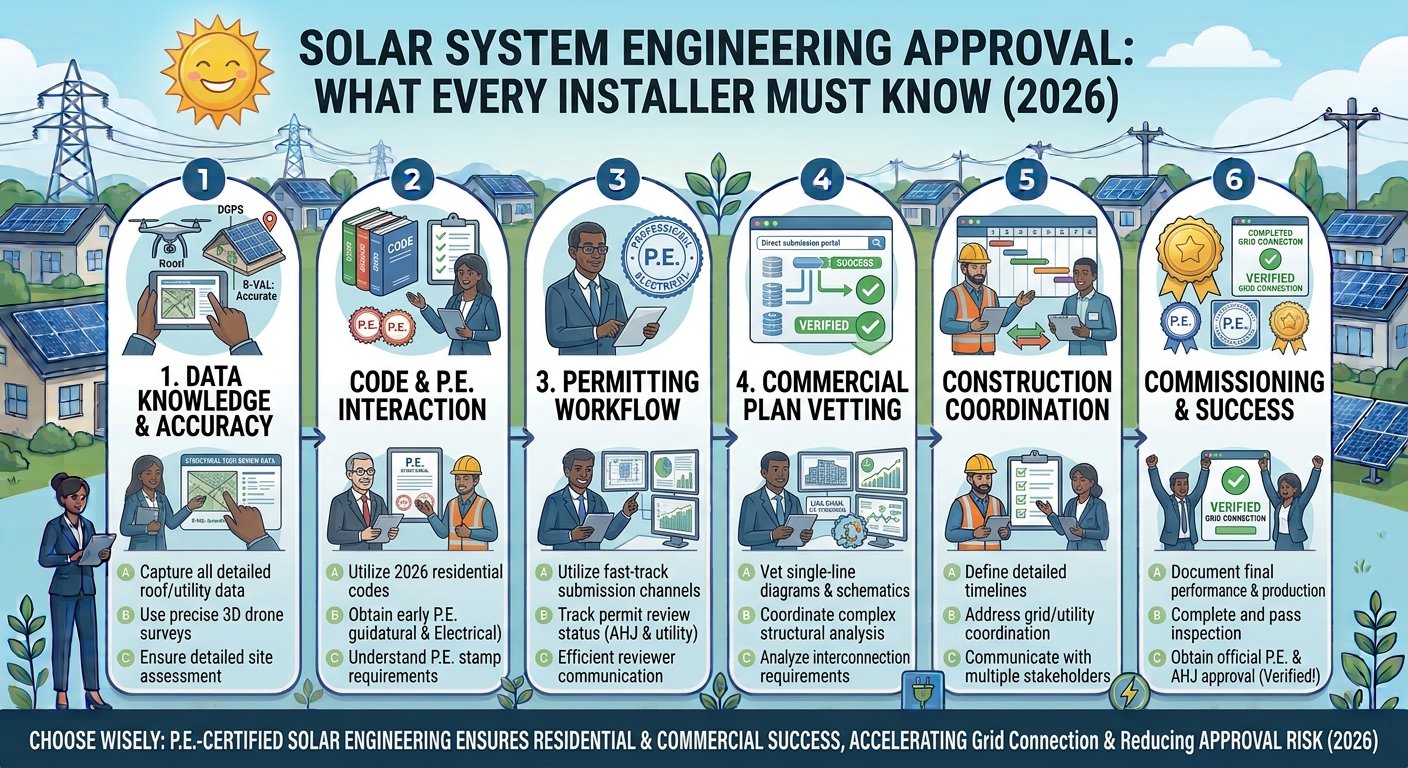
You have signed the customer, finalized the layout, and ordered the equipment. Then the permit office sends a notice: structural verification required. Suddenly the schedule slips, the crew is idle, and the customer starts asking questions. For many installers, this is the moment they discover how much a project can depend on engineering sign-off.
Solar system engineering approval is the formal review and certification that confirms a photovoltaic design is structurally sound and electrically safe. In many jurisdictions it is not optional. Building departments, utilities, and sometimes insurers expect proof that a qualified professional has evaluated the project. Companies that plan for this step early move faster. Those that ignore it end up in correction loops.
This article explains what engineering approval involves, the different forms it takes, why it matters, what reviewers look for, and how to prepare. If you are building a reliable workflow, the team at PTOEdge works with installers on exactly these challenges, including certified solar engineering letters that many authorities require. Have a project waiting on sign-off? Request engineering help and keep your schedule moving.
What Is Solar System Engineering Approval?
Solar system engineering approval is a professional review of a proposed solar installation, performed by a qualified engineer, that verifies the design meets applicable codes and sound engineering practice. The result is usually a signed and sealed letter, a stamped set of drawings, or both. Requirements differ by location, so installers should always confirm what the local authority accepts.
The review typically examines two broad areas.
Structural Evaluation
Panels, racking, and attachments add weight and create wind and snow loading effects on a roof or support structure. An engineer checks whether the existing framing can safely handle those loads. The evaluation considers rafter size and spacing, span lengths, attachment spacing, roof pitch, material condition, and local design loads for wind and snow.
Electrical Evaluation
The electrical review confirms that conductors, protective devices, grounding, and the interconnection are sized and arranged correctly. It looks at inverter compatibility, string configuration, busbar limits, and the relationship between the solar source and the building’s existing service equipment.
It helps to separate engineering approval from other approvals in the project chain. A building permit is issued by the local authority. Utility interconnection approval comes from the power company. Engineering approval is the professional verification that supports both. It does not replace them, but it often unlocks them.
Many installers assume engineering review is only for large commercial jobs. In practice, residential projects on older homes, unusual roofs, or ground mounts frequently need it too. Treating it as a standard planning item instead of an emergency measure saves time and stress.
Types of Solar System Engineering Approval
Not every project requires the same kind of review. The right type depends on the property, the equipment, and the jurisdiction.
Structural Certification Letters
This is a signed letter stating that the roof or supporting structure can safely carry the proposed system. It is common for residential rooftop projects where the authority wants confirmation but does not need a full custom design.
Electrical Engineering Review
Some jurisdictions or utilities request an engineer’s review of the electrical design, particularly for larger systems, supply-side connections, or complex interconnections. The review confirms that calculations and equipment ratings align with code.
Stamped Drawing Sets
In some areas, the complete plan set must carry an engineer’s seal. This means the engineer has reviewed or prepared the drawings and takes professional responsibility for them. These packages are common on commercial and utility-related projects.
Ground-Mount Foundation Design
Ground-mounted arrays need foundation analysis that accounts for soil conditions, frost depth, wind exposure, and the chosen foundation type. Engineers may specify driven piles, helical piers, or concrete footings depending on site conditions.
Carport and Canopy Engineering
Solar canopies are essentially small structures. They require detailed structural design for columns, beams, footings, and connections, along with wind and snow load calculations specific to the structure.
Battery and Storage Review
Energy storage adds considerations such as equipment location, clearances, ventilation, and fire protection. Some authorities request engineering documentation to confirm the installation meets safety rules.
Custom or Special-Condition Review
Unusual cases, such as older buildings, modified rafters, tile roofs, or damaged framing, often call for a tailored assessment. Engineers may recommend reinforcement or alternative attachment strategies.
Benefits of Solar System Engineering Approval
Some installers view engineering review as an extra cost. In reality, it protects the project, the customer, and the company in several ways.
Improved Safety
A failed roof attachment or an undersized conductor can cause serious damage or injury. Independent professional review reduces the chance of overlooked hazards, which protects occupants and installation crews.
Smoother Permit Reviews
Plan reviewers are more comfortable approving projects when a qualified professional has already verified the design. Complete documentation reduces requests for corrections and speeds up the approval path.
Reduced Liability
An engineer’s analysis provides documented evidence that the design was evaluated with care. This can be valuable if questions arise later about performance, safety, or roof condition.
Better Equipment and Material Decisions
Engineers can identify when a roof needs reinforcement, when attachment spacing should be reduced, or when a different racking approach is better. These insights help avoid costly failures.
Stronger Customer Trust
Homeowners and business owners want reassurance that their system is safe. Explaining that a licensed professional reviewed the structural and electrical aspects gives customers confidence in your work.
Easier Insurance and Financing Conversations
Insurers and lenders sometimes ask for proof of professional review. Having documentation ready helps close deals and answer questions without delay.
Fewer Surprises During Construction
When structural issues are identified before installation begins, crews avoid discovering problems after panels are partly installed. Early detection is far cheaper than mid-project fixes.
Key Requirements and Factors Reviewers Consider
Engineers and plan reviewers evaluate many details. Understanding them helps you prepare stronger submissions.
Roof Framing and Condition
Rafter dimensions, spacing, species, and condition are central to structural review. Photos of the attic, framing measurements, and roof age help the engineer assess capacity. Water damage, sagging, or previous modifications raise concerns.
Design Loads
Local wind speed, exposure category, snow load, and seismic factors determine the forces the system must resist. Different regions have very different requirements, so a design that works in one area may fail in another.
Attachment and Racking Details
The type of attachment, fastener size, embedment depth, and spacing must match the loads and roof material. Manufacturer data and installation instructions should be consistent with the drawings.
Electrical Calculations
Conductor ampacity, voltage drop, overcurrent protection, and busbar limits all need to be calculated and documented. The interconnection method affects how much solar the existing panel can accommodate.
Drawing Quality
Even a sound design can be delayed by sloppy documents. Using detailed solar drawing packages with consistent labeling, clear diagrams, and matching equipment data helps both engineers and reviewers move quickly.
Code Compliance
Projects must follow adopted codes and local amendments. Rapid shutdown, labeling, grounding, and fire access rules appear in nearly every review. Missing these items is a common reason for rejection.
Site-Specific Hazards
High winds, heavy snow, coastal corrosion, wildfire zones, and seismic activity may add requirements. Engineers consider these factors when selecting equipment and attachment methods.
How to Get Solar System Engineering Approval Step by Step
A predictable process reduces delays and surprises. Here is a practical path many installers follow.
Step 1: Confirm Local Requirements
Before designing, check what the building department and utility require. Some accept simple letters, while others demand stamped drawings. Asking early prevents rework.
Step 2: Collect Site Information
Gather roof photos, measurements, attic images, panel board details, and equipment specifications. Accurate site data allows the engineer to work efficiently and reduces back-and-forth questions.
Step 3: Prepare the Preliminary Design
Create the layout and electrical design with attention to setbacks, spacing, and equipment ratings. Tools such as solar design automation software can speed up this stage and keep specifications consistent.
Step 4: Submit for Engineering Review
Send the design, site data, and equipment documents to the engineer. Provide clear notes about any unusual conditions so they can be evaluated properly.
Step 5: Address Engineer Comments
Engineers may recommend changes, such as adjusting attachment spacing or modifying string layouts. Respond quickly and update the drawings so all documents remain consistent.
Step 6: Receive Sealed Documentation
Once the review is complete, you receive the signed letter, stamped drawings, or both. Verify that project names, addresses, and equipment match your final design.
Step 7: Submit for Permit Review
Include the engineering documentation with the permit application. Support from building department permit assistance can help you respond to reviewer comments and keep the process moving.
Step 8: Prepare for Utility Activation
After installation and inspection, the final step is utility approval. Reliable records make utility interconnection activation support easier, because the information provided to the utility matches the approved design.
Applications and Real-Life Scenarios
Engineering approval shows up in many situations. Here are some examples that illustrate its value.
Older Homes with Unknown Framing
A home built decades ago may have smaller or irregular rafters. An engineer can evaluate whether the roof can support the system as designed or whether reinforcement is needed.
Tile and Specialty Roofs
Tile, slate, and metal roofs involve unique attachment methods. Engineering review ensures the chosen hardware is appropriate and that loads transfer safely to the structure.
High-Wind and Heavy-Snow Regions
Projects in coastal or mountainous areas face demanding load conditions. Careful analysis keeps arrays secure during storms and winter weather.
Commercial Flat Roofs
Ballasted systems add significant weight. Engineers confirm that roof structures can handle the load and that wind uplift is addressed.
Ground-Mounted Arrays
Foundation design depends on soil conditions and environmental loads. Proper engineering prevents settlement, tilting, or failure over time.
Sales Documentation
Even before engineering begins, the sales process benefits from clarity. Presenting winning solar quote documents that mention structural and electrical review helps customers understand the steps ahead and builds trust.
Why Choose PTOEdge for Solar System Engineering Approval?
Engineering sign-off should not become the bottleneck in your sales pipeline. PTOEdge helps installers and contractors prepare, coordinate, and complete the approval steps that keep projects moving. Our approach is built around a simple idea: fewer surprises mean faster installations.
Because PTOEdge understands the full project journey, we look beyond a single document. We know how a design connects to structural review, how engineering documents support permit applications, and how clean records lead to smoother utility activation. That perspective helps prevent the small mismatches that trigger rejections.
Here is what clients value when they work with PTOEdge:
- Process clarity. You know what is needed, what comes next, and where your project stands.
- Reviewer-friendly documentation. Packages are organized to be easy to read and verify.
- Practical coordination. Design, engineering, permitting, and utility steps are treated as connected stages.
- Scalable support. Whether you complete a few projects a month or a steady stream, assistance can adjust to your needs.
- Time back for your team. Sales and field staff can focus on customers and installations instead of chasing paperwork.
With PTOEdge, solar companies gain a dependable partner for the technical side of their projects. The result is a more predictable schedule, fewer corrections, and customers who see a professional, organized process from start to finish.
Conclusion
Solar system engineering approval is a vital part of delivering safe, code-compliant installations. It verifies that structures can carry the added load, that electrical designs are sound, and that documentation meets the expectations of authorities and utilities. Projects that plan for it from the beginning avoid last-minute surprises and keep customers confident.
The key lessons are straightforward: confirm local requirements early, collect accurate site information, keep documents consistent, respond quickly to review comments, and treat engineering, permitting, and utility steps as one connected workflow.
If you want a smoother path from design to activation, schedule an approval review and let an experienced team help you remove delays before they start.
Frequently Asked Questions (FAQs)
1. Do all solar projects need engineering approval?
Not always. Requirements depend on the jurisdiction, the type of project, and the condition of the property. Some areas accept standard prescriptive designs, while others require a signed structural or electrical review. Always confirm with the local authority.
2. What is the difference between an engineering letter and stamped drawings?
An engineering letter is a signed statement about a specific aspect, such as structural adequacy. Stamped drawings carry an engineer’s seal on the plan set itself. Which one is needed depends on what the reviewing authority requests.
3. How long does engineering review usually take?
Timelines vary with project complexity and the completeness of the submitted information. Simple projects with complete data move faster, while unusual structures or missing documents can extend the process.
4. What happens if a roof does not pass structural review?
The engineer may recommend reinforcement, adjusted attachment spacing, a reduced array size, or a different mounting approach. In some cases, the roof may need repair or replacement before installation.
5. Can engineering approval speed up the permit process?
It often helps. Plan reviewers have more confidence in designs that have been professionally verified, which can reduce correction requests and shorten review cycles.