Steam is a critical utility across many industrial processes, including heating, cleaning, sterilization, and energy transfer. Due to the combination of high temperature and pressure involved, steam handling systems require components specifically engineered for safety and reliability. Among these components, the steam hose plays a central role in ensuring controlled and efficient steam transfer.
Understanding What a Steam Hose Is
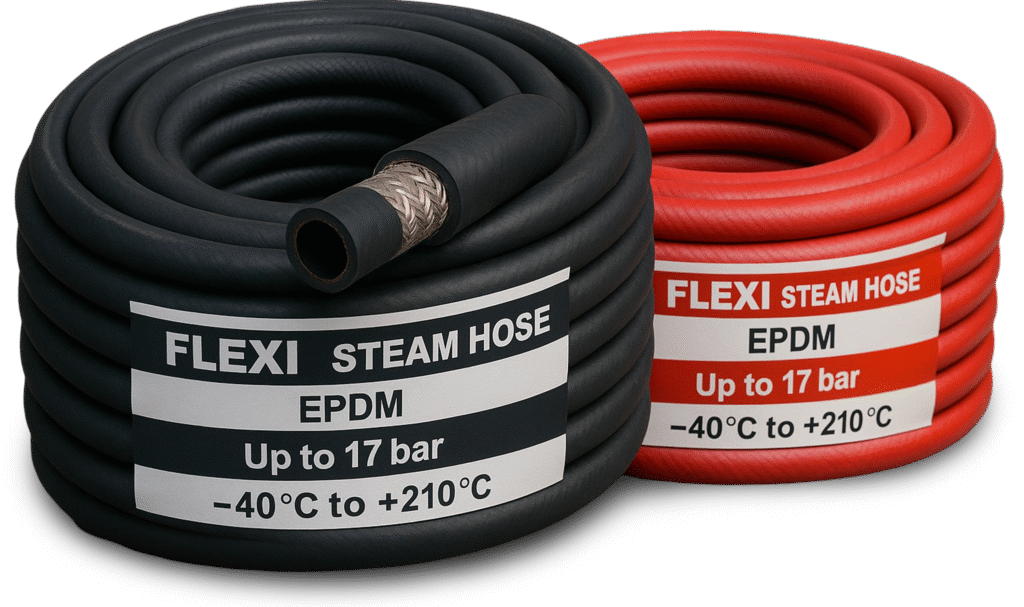
A steam hose is a flexible industrial hose designed to convey saturated or superheated steam. Unlike general-purpose hoses, steam hoses are constructed using materials that can tolerate extreme thermal and mechanical stress over extended periods.
Typical construction includes:
- A heat-resistant inner tube, often made from EPDM rubber
- Reinforcement layers to handle pressure loads
- An outer cover designed to resist heat, weathering, and abrasion
This structure allows the steam hose to maintain integrity and flexibility in demanding operating environments.
Why Steam Hose Selection Matters
Steam presents inherent risks due to its high energy content. Using hoses not specifically designed for steam service can result in premature failure, leaks, or safety incidents. A properly engineered steam hose helps address these risks while supporting operational continuity.
Key functional advantages include:
- Resistance to high operating temperatures
- Ability to withstand pressure fluctuations
- Reduced risk of blistering, cracking, or hardening
- Longer service life when used within rated conditions
These characteristics make steam hoses a necessary component in systems where reliability and safety are priorities.
Common Industrial Applications
Steam hoses are used across a wide range of industries, including:
- Chemical and petrochemical processing
- Food and beverage manufacturing for cleaning and sterilization
- Pharmaceutical production environments
- Textile processing and finishing operations
- Power generation and energy facilities
Each application may impose different requirements related to temperature, pressure, and regulatory compliance.
Key Factors to Consider When Choosing a Steam Hose
Selecting the right steam hose involves evaluating operating conditions and system requirements:
Temperature and Pressure Ratings
The hose should be rated above the maximum operating temperature and pressure to provide an adequate safety margin.
Type of Steam
System requirements differ for saturated steam, superheated steam, or combined steam and hot water applications.
Hose Size and Flexibility
Correct internal diameter and appropriate flexibility help maintain efficient flow and ease of installation.
Quality Standards and Manufacturing Consistency
Steam hoses produced under established quality systems offer more predictable performance and durability.
Installation and Maintenance Considerations
Even high-quality steam hoses can experience reduced service life if improperly installed or maintained. Common issues include excessive bending, torsion, or the use of incompatible fittings. Regular inspection is recommended to identify early signs of wear such as surface cracking, blistering, or changes in hose hardness.
Proactive replacement and adherence to recommended installation practices help minimize unplanned downtime and safety risks.
Conclusion
Steam hoses are an essential element in industrial systems where high-temperature steam transfer is required. Understanding their construction, application requirements, and maintenance needs supports safer and more efficient operations.
Manufacturers with long-standing experience in industrial hose engineering, such as FlexiHose (Vardhman Hydraulic Hoses Pvt. Ltd.), contribute to this reliability by producing steam hose solutions designed to meet the demands of diverse sectors. With decades of manufacturing expertise and adherence to recognized quality standards, such suppliers play a supporting role in helping industries manage steam applications safely and effectively.