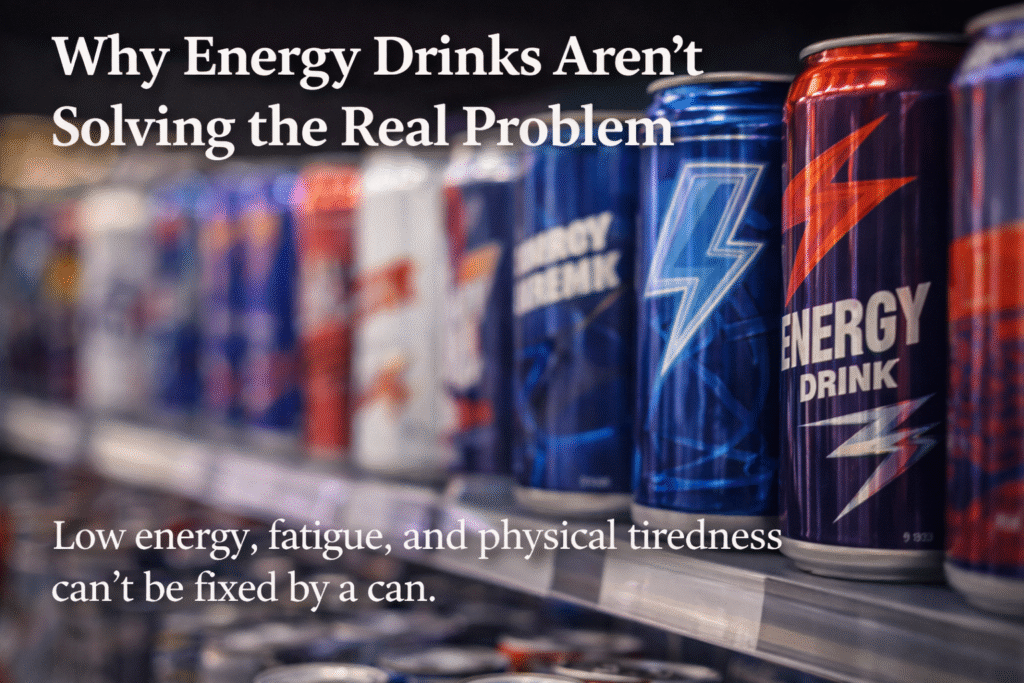
Energy drinks are everywhere. From convenience store shelves to office refrigerators, they promise quick alertness, sharper focus, and instant motivation. For many people—especially men juggling work pressure, responsibilities, and constant mental load—these drinks feel like an easy solution.
But despite their popularity, energy drinks are not solving the real problem. In fact, for many, they are quietly masking it.
The Rise of Artificial Energy
Modern life rarely slows down. Long work hours, digital overload, financial pressure, and lack of quality rest have created a generation that feels constantly drained. Instead of addressing the cause, many people turn to artificial energy sources.
Energy drinks offer:
-
A fast spike in alertness
-
Temporary mental stimulation
-
The illusion of productivity
What they don’t offer is sustainable energy.
The body interprets these drinks not as fuel, but as a signal to override fatigue. That distinction matters more than most people realize.
Energy vs. Stimulation: Not the Same Thing
True energy comes from balance—proper rest, circulation, nutrition, and recovery. Energy drinks don’t create energy; they stimulate the nervous system to ignore exhaustion.
This stimulation often comes from:
-
High caffeine levels
-
Sugar or artificial sweeteners
-
Chemical stimulants
The result is a short burst followed by a noticeable drop. Over time, this cycle trains the body to depend on stimulation rather than restoration.
Why the Boost Never Lasts
Many people notice the same pattern:
-
The first drink works well.
-
The second feels weaker.
-
Soon, multiple drinks feel barely effective.
This happens because the body adapts quickly. Receptors become less sensitive, and the baseline energy level drops even further.
Instead of fixing fatigue, the body becomes dependent on external triggers to feel “normal.”
The Hidden Cost of Constant Stimulation
Relying on energy drinks can quietly affect the body in several ways:
-
Disrupted sleep cycles, even hours after consumption
-
Increased restlessness and irritability
-
Difficulty focusing without stimulation
What starts as a productivity tool slowly becomes a coping mechanism.
Fatigue Is Often a Signal, Not a Flaw
Feeling tired doesn’t always mean laziness or lack of motivation. Often, it’s the body asking for adjustment.
Common underlying causes include:
-
Chronic stress
-
Poor sleep quality
-
Lack of physical movement
-
Mental overload
-
Irregular eating patterns
Energy drinks temporarily silence these signals, but they don’t resolve them.
Why Men Are Especially Vulnerable
Many men are conditioned to push through tiredness rather than question it. Fatigue becomes normalized as part of adulthood. Instead of slowing down, the instinct is to “power up.”
This mindset creates a loop:
Pressure → fatigue → stimulation → deeper fatigue
Over time, men may feel functional but not energized—productive but not fully present.
The Illusion of Productivity
Energy drinks can make you feel busy without making you effective. Tasks get done, but focus is scattered. Motivation feels forced. The mind moves faster than the body can comfortably support.
This disconnect often leads to:
-
Reduced satisfaction from achievements
-
Difficulty enjoying downtime
-
Feeling mentally alert but physically behind
Productivity without vitality eventually feels hollow.
What the Body Actually Needs
Sustainable energy comes from supporting the body rather than overriding it. Small, consistent changes are far more effective than artificial boosts.
Helpful shifts include:
-
Prioritizing consistent sleep timing
-
Reducing late-day stimulants
-
Moving the body to improve circulation
-
Allowing real mental breaks, not just screen switching
-
Paying attention to hydration and regular meals
These changes don’t create instant highs, but they rebuild baseline energy.
Relearning What “Feeling Good” Means
Many people forget what steady energy feels like. When stimulation becomes normal, calm energy can feel unfamiliar—or even uncomfortable at first.
True vitality feels:
-
Stable, not jittery
-
Clear, not rushed
-
Calm, not flat
-
Present, not forced
This state can’t be canned or carbonated.
Energy Drinks as a Symptom, Not the Cause
The popularity of energy drinks says less about laziness and more about exhaustion. They exist because modern life leaves little room for recovery.
But relying on them keeps the cycle going.
When the body is supported properly, the desire for constant stimulation often fades on its own.
Final Thoughts
Energy drinks aren’t failing because they’re poorly designed—they’re failing because they’re being used to solve a problem they were never meant to fix.
Fatigue isn’t always something to defeat. Sometimes, it’s something to listen to.
When men shift their focus from quick boosts to long-term balance, energy stops feeling borrowed and starts feeling natural again. Read More…